


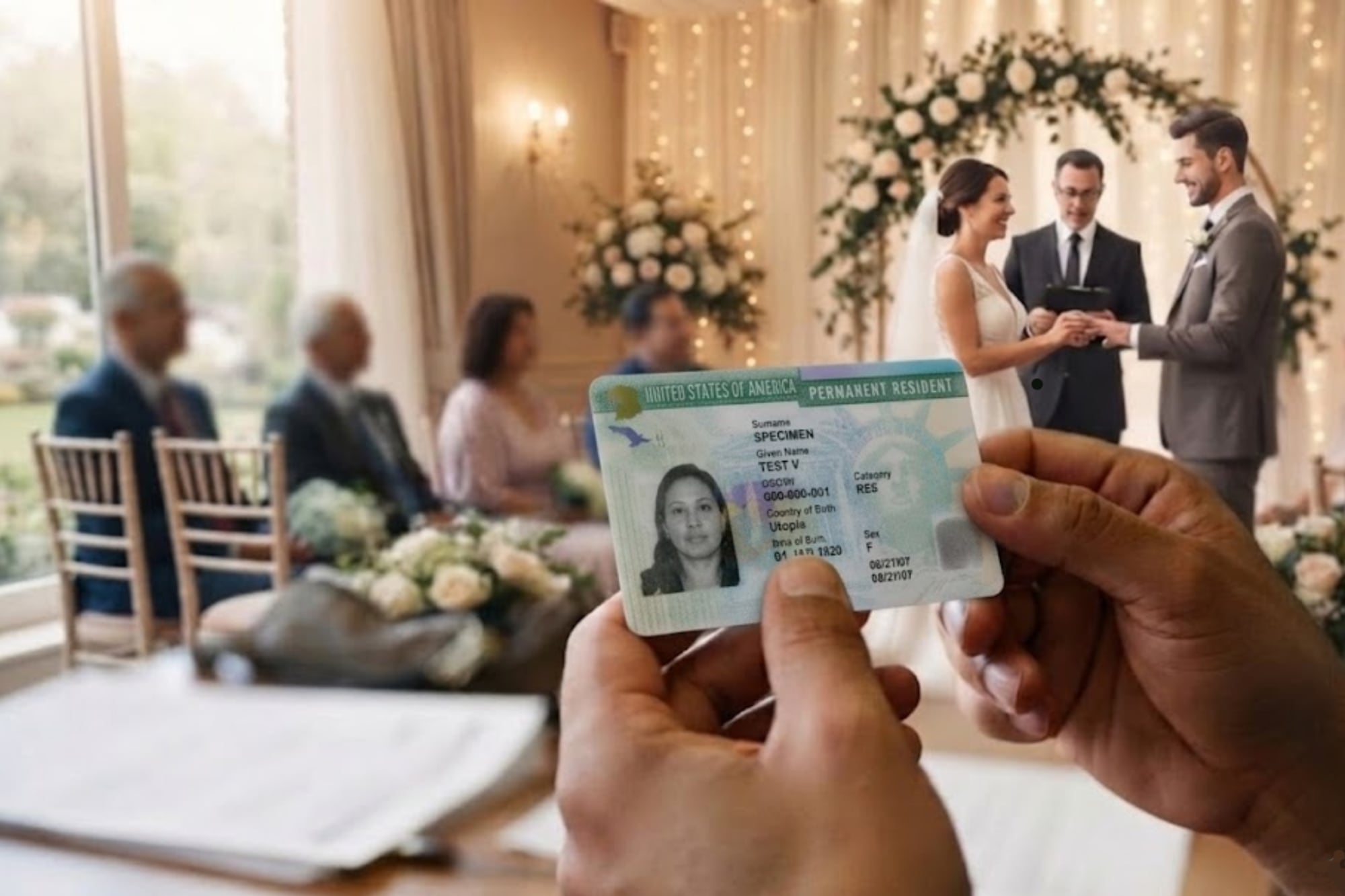
USCIS tightens marriage green card rules to detect fraud
Translated from Spanish, summarized and contextualized by DistantNews.
At a glance
News
Named sources
Context piece
- U.S. Citizenship and Immigration Services (USCIS) has increased scrutiny on marriage-based green card applications to identify fraudulent unions.
- The process, strengthened under the Trump administration, now focuses on verifying genuine relationships and adherence to immigration laws.
- Enhanced verification methods include separate interviews, neighbor checks, and employer verification.
The process for obtaining U.S. residency through marriage to a citizen has seen intensified scrutiny, with U.S. Citizenship and Immigration Services (USCIS) implementing stricter controls to detect unions established solely for immigration benefits. While the core rules remain consistent with those under the Trump administration, the evaluation of applications now involves a higher level of control.
The focus is on verifying that couples maintain a genuine relationship and comply with immigration legislation. According to Univision, approximately 300,000 individuals apply for permanent residency through marriage annually. In response to potential fraud, the Department of Homeland Security (DHS) has increased audits and reviews to identify inconsistencies in these applications.
"They can verify with employers and even conduct neighborhood visits to confirm the relationship," noted attorney Armando Olmedo. The enhanced verification process includes in-depth interviews, where spouses may be interviewed separately to compare their responses on aspects of their cohabitation and relationship history. This method aims to determine if their accounts align.
Authorities are paying particular attention to applicants with certain immigration histories, such as those who overstayed their visas or were previously in irregular immigration status. While these circumstances do not automatically disqualify an applicant, they often lead to more extensive reviews of their case. Immigration attorneys advise preparing applications with substantial documentation to demonstrate the authenticity of the relationship.
They can verify with employers and even conduct neighborhood visits to confirm the relationship.
DistantNews Editorial
Originally published by La Nación in Spanish. Translated, summarized, and contextualized by our editorial team with added local perspective. Read our editorial standards.
More Stories


From Our Blog

What Gets Lost (and Found) When News Is Translated

The Critical Role of Diaspora Media in Global News

What Travellers Should Know About Countries with Restricted Press

A Digital Nomad's Guide to Following Local News

How the Same Story Looks Different in Different Countries
