


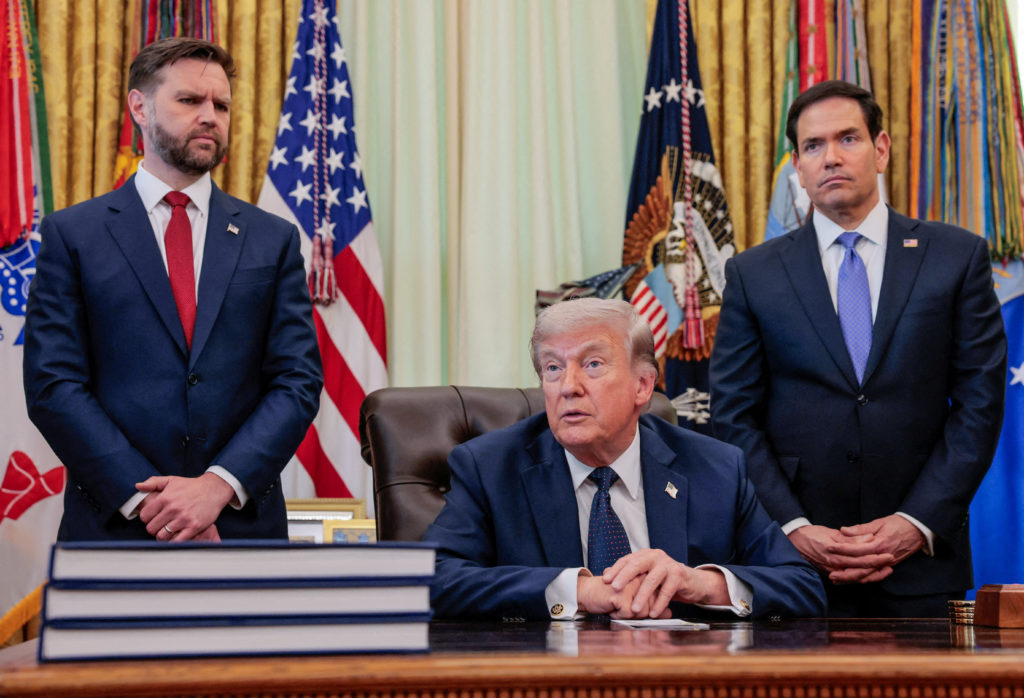
Vance and Rubio chart different courses on national security, fueling 2028 speculation
Translated from English, summarized and contextualized by DistantNews.
At a glance
News
Named sources
Context piece
- Vice President JD Vance and Secretary of State Marco Rubio are taking different approaches to President Trump's national security agenda, potentially positioning them for a 2028 presidential run.
- While publicly deferential, their divergence is most apparent in Middle East policy, particularly regarding Iran and Lebanon.
- Vance leads Iran negotiations, criticizing Israel's actions, while Rubio focuses on Lebanon and has shown more support for Israel.
Vice President JD Vance and Secretary of State Marco Rubio are charting distinct courses in executing President Donald Trump's national security agenda, a move that observers suggest could be positioning them for a potential 2028 presidential contest within a divided Republican Party.
The talk about differences is not idle speculation. There is definitely something to it.
Despite presenting a united front and denying any internal rifts, their policy stances, particularly concerning the Middle East, reveal notable differences. Rubio, the son of Cuban immigrants with extensive Senate experience and a focus on Latin America, and Vance, a Midwest native and Marine veteran with a more recent Senate tenure and a platform opposing foreign wars, have carved out separate territories. Vance has been critical of Israel's actions in Lebanon, suggesting they have complicated negotiations with Iran, while Rubio has largely supported Israel or remained silent on the issue, taking the lead on Lebanon, which recently yielded a preliminary agreement.
Sources familiar with the administration's internal deliberations suggest Rubio's skepticism about reaching a favorable deal with Iran led him to decline heading the initial ceasefire negotiations in April. Vance, however, seized the opportunity to enhance his foreign policy credentials, actively seeking and ultimately leading the U.S. delegation to talks in Pakistan and later in Switzerland. These negotiations followed a memorandum of understanding between the U.S. and Iran, with Vance publicly touting progress and the U.S. temporarily lifting oil sanctions.
Why is the legacy media obsessed with driving a wedge between Vice President Vance and Secretary Rubio that does not exist? There is one camp, President Trump's camp, and the entire administration is fully behind the president's efforts to ensure Iran can never possess a nuclear weapon.
White House and State Department spokespeople have strongly refuted any notion of a rift, emphasizing a unified approach under President Trump's leadership to prevent Iran from acquiring nuclear weapons. However, analysts like Dan Fried of the Atlantic Council acknowledge that the perceived differences are not mere speculation, indicating a tangible divergence in their strategies and priorities.
Rubio and the entire administration is 100% in lockstep behind President Trump.
DistantNews Editorial
Originally published by PBS NewsHour in English. Translated, summarized, and contextualized by our editorial team with added local perspective. Read our editorial standards.
More Stories


From Our Blog

How the Same Story Looks Different in Different Countries

What Gets Lost (and Found) When News Is Translated

The Critical Role of Diaspora Media in Global News

What Travellers Should Know About Countries with Restricted Press

A Digital Nomad's Guide to Following Local News
