

Venezuela government, opposition wrap up round of post-Maduro talks
Summarized and contextualized by DistantNews.
At a glance
News
Named sources
Outcome reported
- Venezuela's interim government and opposition concluded their first round of post-Maduro talks, agreeing on judicial reform and seeking access to frozen funds for earthquake recovery.
- Both sides committed to reforming the justice system, including changes to the Supreme Tribunal of Justice, which previously validated Maduro's disputed reelection.
- Discussions also focused on releasing Venezuela's international reserve assets held at the Bank of England to aid in recovery from recent devastating earthquakes.
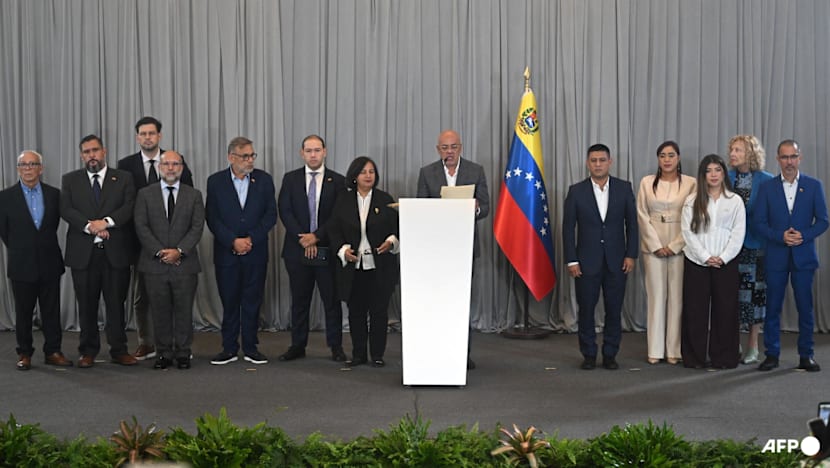
Representatives of Venezuela's interim government and the opposition have concluded their initial round of post-Maduro negotiations, marking a significant step toward national reconciliation. The talks, held over several days, yielded agreements on two key areas: reforming the judiciary and securing access to frozen international funds to aid in earthquake recovery efforts.
We are in this process to achieve a democratic and free Venezuela.
A joint statement revealed a commitment to initiating judicial reform, including amendments to the Organic Law of the Supreme Tribunal of Justice (TSJ). This move is particularly noteworthy as the TSJ had previously validated President Nicolas Maduro's 2024 reelection, despite widespread allegations of fraud and a lack of transparent results. The agreement, however, did not explicitly mention the National Electoral Council, another body the opposition seeks to overhaul following its endorsement of Maduro's contested victory.
In response to the devastating earthquakes on June 24, which claimed over 6,300 lives, both parties agreed to collaborate on releasing Venezuela's international reserve assets. These funds, held at the Bank of England, have been a point of contention, with previous attempts under Maduro to access them proving unsuccessful. The joint statement emphasized the need for transparency, traceability, and auditing mechanisms to ensure the proper utilization of these recovered assets.
There is no naivete on the part of the opposition delegation.
The government delegation was led by Jorge Rodriguez, brother of interim president Delcy Rodriguez and head of Venezuela's National Assembly. Delcy Rodriguez, formerly Maduro's vice president, now leads the country with Washington's backing and has received praise from U.S. President Donald Trump. The opposition was represented by Dinorah Figuera, leader of the political bloc that secured a majority in the 2015 National Assembly, the last legislature widely recognized internationally. Notably absent was exiled opposition leader Maria Corina Machado, who has stated she will not impede the process. Many Venezuelans harbor hopes that these transition talks will pave the way for democratic elections.
must take advantage of this window of opportunity
DistantNews Editorial
Originally published by CNA. Summarized and contextualized by our editorial team with added local perspective. Read our editorial standards.
More Stories

From Our Blog

What Gets Lost (and Found) When News Is Translated

The Critical Role of Diaspora Media in Global News

What Travellers Should Know About Countries with Restricted Press

A Digital Nomad's Guide to Following Local News

How the Same Story Looks Different in Different Countries
