


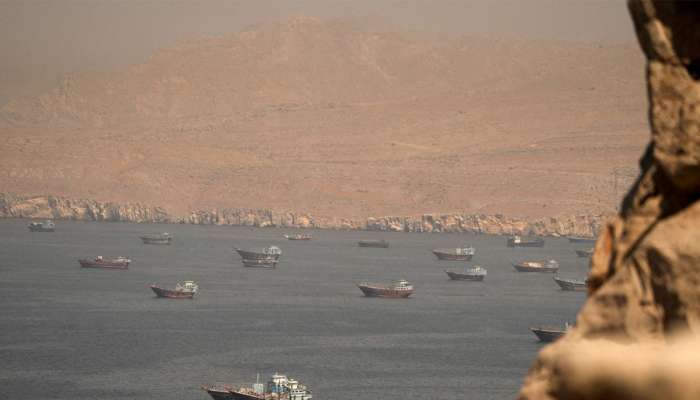
Vessel traffic through Hormuz, Bab el-Mandeb straits remains stable: Report
Summarized and contextualized by DistantNews.
At a glance
News
Named sources
Context piece
- Vessel traffic through the Bab el-Mandeb and Strait of Hormuz remained stable on July 27, according to S&P Global.
- Traffic in the Bab el-Mandeb was about three-quarters of the average daily volume from June and early July, with most vessels heading south.
- An estimated 47 million barrels of Iranian crude are currently held on tankers in the Middle East Gulf, a significant increase from mid-July.
Vessel traffic through the strategically vital Bab el-Mandeb and Strait of Hormuz straits remained stable on July 27, according to a report by S&P Global. The Bab el-Mandeb Strait saw approximately three-quarters of its average daily transit volume from June and the first half of July.
Vessel traffic through the strategically important Bab el-Mandeb and Strait of Hormuz remained broadly stable on July 27, with 32 and 15 vessel crossings respectively.
Of the 32 vessels crossing the Bab el-Mandeb, 11 moved northbound into the Red Sea, primarily heading toward the Suez Canal, Egypt, or Jordan. The remaining 21 vessels sailed southbound toward Djibouti and the Gulf of Aden. Among the southbound traffic were six tankers carrying Russian crude oil. The report also noted the movement of the VLCC NEW PEARL, which loaded about 2 million barrels of Saudi crude from Yanbu and was en route to Zhoushan.
The report highlighted that increased security risks in the Red Sea might be creating a new route for very large crude carriers (VLCCs) operating in the Mediterranean. Three VLCCs linked to DHT Holdings were observed heading north toward Ain Sukhna and the Suez Canal after loading crude at Yanbu.
Traffic through the Bab el-Mandeb Strait was around three-quarters of the average daily transit volume recorded during June and the first half of July.
At the Strait of Hormuz, 15 vessel transits were recorded on July 27. This included five vessels not transmitting automatic identification system (AIS) signals. Eight vessels entered the Gulf, while seven departed toward the Gulf of Oman. The transiting vessels comprised landing craft, bulk carriers, cargo ships, product tankers, a VLCC, and a Suezmax. S&P Global assessed five of these vessels as compliant.
The report noted that heightened security risks in the Red Sea may be creating a new outlet for very large crude carriers (VLCCs) operating in the Mediterranean.
Meanwhile, an estimated 47 million barrels of Iranian crude oil are currently stored on tankers in the Middle East Gulf. This estimate is uncertain, as only about 20 percent of the tankers are visible. This volume represents a sharp increase from less than 30 million barrels in mid-July, indicating a growing accumulation of Iranian crude on vessels in the region.
Meanwhile, an estimated 47 million barrels of Iranian crude are currently being held aboard tankers in the Middle East Gulf, although the estimate remains uncertain because only around 20 per cent of the tankers are currently visible.
DistantNews Editorial
Originally published by Times of Oman. Summarized and contextualized by our editorial team with added local perspective. Read our editorial standards.
More Stories



From Our Blog

What Gets Lost (and Found) When News Is Translated

The Critical Role of Diaspora Media in Global News

What Travellers Should Know About Countries with Restricted Press

A Digital Nomad's Guide to Following Local News

How the Same Story Looks Different in Different Countries
