

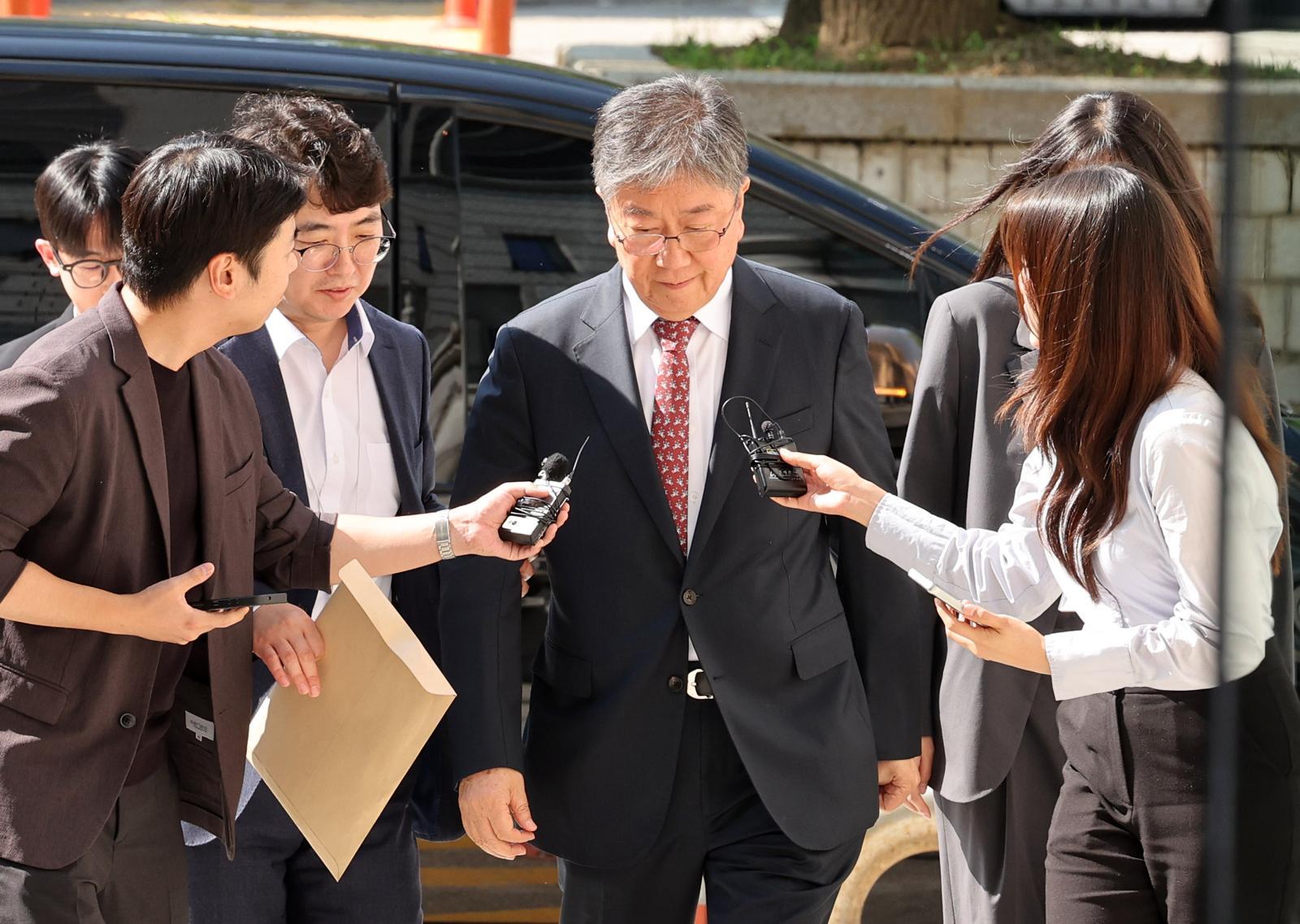

Victims demand full probe into forced conscription, informant coercion under past regimes
Translated from Korean, summarized and contextualized by DistantNews.
At a glance
News
Named sources
New plan
- Victims of forced conscription and surveillance operations are demanding a comprehensive investigation by the Truth and Reconciliation Commission.
- They allege that during military and authoritarian regimes, students were forcibly conscripted and coerced into becoming informants.
- The victims seek an official inquiry into state institutions and perpetrators, aiming to uncover the truth about these human rights abuses.
Victims of "forced conscription and surveillance operations" during South Korea's military and authoritarian regimes are urging the Truth and Reconciliation Commission to launch a full-scale investigation. The "Committee for Uncovering the Truth about Forced Conscription and Surveillance Operations" held a press conference Tuesday, submitting applications for truth verification for 110 victims.
The committee called for an "ex officio investigation" into state institutions like the Presidential Office, Ministry of National Defense, and security agencies, as well as school authorities. This type of investigation goes beyond individual victim applications to examine the entire scope of the operation.
We need an ex officio investigation into the perpetrators of the forced conscription and informant coercion operations, as well as state institutions like the Presidential Office, Ministry of National Defense, and Security Command, and school authorities.
These operations, primarily led by the Security Command under Park Chung-hee and Chun Doo-hwan, involved forcibly conscripting university students involved in activism, expelling them from school, and isolating them from society. Victims also report similar human rights violations occurred during the Kim Young-sam administration. Around 20 suspicious deaths are linked to these activities.
State violence has no statute of limitations. Chun Doo-hwan, Roh Tae-woo, and Park Joon-byung are silent in death, and the Security Command's torture experts are also silenced. The state must first condemn them in the name of history.
Victims emphasized the commission's enhanced investigative powers, which now allow for requesting search and seizure warrants against individuals or institutions refusing to submit data. Yang Chang-wook, a standing committee member and victim, shared his personal trauma, including forced conscription, a friend's suspicious death, and subsequent interrogation and coercion into becoming an informant. He urged the commission to move beyond relying solely on records and actively use its investigative tools.
The group also called for public hearings for perpetrators and the revocation of honors. "State violence has no statute of limitations," Yang stated, demanding that the state bring perpetrators to justice. They also proposed establishing a "State Violence Records Center" at the former Security Command site.
The Truth and Reconciliation Commission must break away from past investigative practices that relied on records and actively pursue enhanced investigations, including recommending search and seizure and referral for prosecution.
DistantNews Editorial
Originally published by Hankyoreh in Korean. Translated, summarized, and contextualized by our editorial team with added local perspective. Read our editorial standards.
More Stories

From Our Blog

What Gets Lost (and Found) When News Is Translated

The Critical Role of Diaspora Media in Global News

What Travellers Should Know About Countries with Restricted Press

A Digital Nomad's Guide to Following Local News

How the Same Story Looks Different in Different Countries
