

Vietnam's Poultry Farmers Battle Rising Feed Costs Amidst Oversupply
Translated from Vietnamese, summarized and contextualized by DistantNews.
TLDR
- Vietnamese poultry farmers face rising feed costs, with prices up 10-14% this year and potentially more if Middle East conflicts escalate.
- Despite high domestic supply of eggs and poultry, consumption is slow, leading to low farm-gate prices that fall below production costs.
- The industry is advised against expanding herds and encouraged to diversify into processed products and explore export markets to improve value.
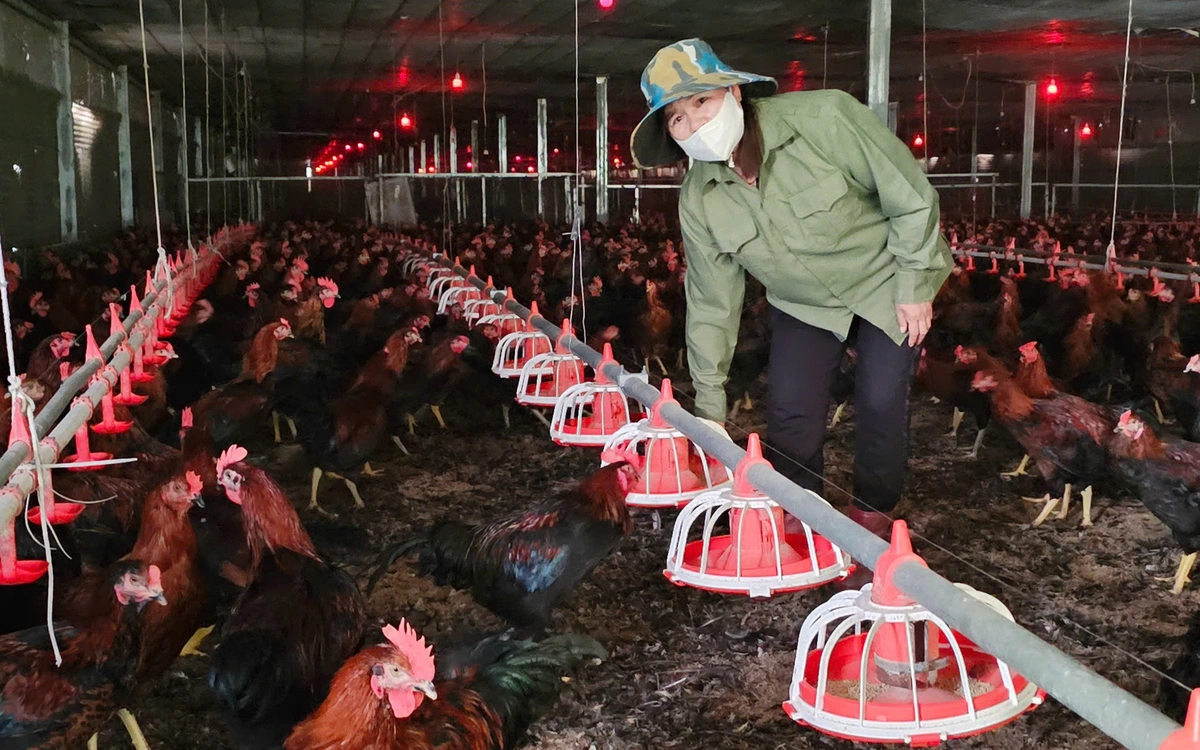
Tuổi Trẻ reports on a critical juncture for Vietnam's poultry sector, where soaring feed costs are squeezing farmers already grappling with low market prices for their products. The 10-14% increase in feed prices, with a potential further rise of 20-25% due to global instability, presents a significant challenge. This situation is particularly acute as domestic production of eggs and poultry is robust, yet demand has softened, creating a supply-demand imbalance.
This imbalance has driven down prices for industrial eggs to around 1,200-1,300 VND per egg, well below the estimated production cost of 1,600 VND. Similarly, chicken prices are also falling. The Vietnamese Animal Husbandry Association's advice to farmers to avoid expanding their herds is a stark indicator of the current market pressures. The association rightly points to the need for diversification, urging a shift towards processed products like ready-to-eat eggs and processed chicken, and a stronger focus on export markets to add value and find new outlets.
Khuyến cáo các đơn vị không tăng đàn vì cung hiện nay đã vượt cầu. Ngoài ra, chúng ta cần đa dạng hóa sản phẩm như tăng sản xuất trứng chế biến, trứng ăn liền, thịt gà chế biến... nhằm mở rộng đầu ra, hướng đến xuất khẩu để tăng giá trị cho ngành.
While Vietnam boasts impressive rankings in global livestock production—fifth in hog numbers, second in poultry, and third in ASEAN for milk—the sector remains vulnerable. As highlighted by the Department of Animal Health and Veterinary Services, challenges like disease outbreaks and increasingly stringent international quality standards persist. Crucially, the heavy reliance on imported feed ingredients, which constitute 60-70% of production costs, continuously undermines the competitiveness of domestic farming. The push for centralized slaughterhouses and technological innovation, as outlined for 2026-2030, is a necessary step towards meeting global demands for animal welfare and traceability, but addressing the feed cost and import dependency remains paramount for the sector's long-term health.
Định hướng 2026-2030, ngành chăn nuôi hạ quyết tâm phải tổ chức lại hệ thống giết mổ tập trung. Đây là yêu cầu bắt buộc để đáp ứng các tiêu chuẩn khắt khe từ thị trường quốc tế về phúc lợi động vật, truy xuất nguồn gốc. Ngoài ra, sẽ có thêm những giải pháp nhằm cải thiện nguồn cung nguyên liệu phục vụ sản xuất thức ăn chăn nuôi, ứng dụng khoa học công nghệ và đổi mới sáng tạo.
DistantNews Editorial
Originally published by Tuổi Trẻ in Vietnamese. Translated, summarized, and contextualized by our editorial team with added local perspective. Read our editorial standards.
More Stories



From Our Blog

What Gets Lost (and Found) When News Is Translated

The Critical Role of Diaspora Media in Global News

What Travellers Should Know About Countries with Restricted Press

A Digital Nomad's Guide to Following Local News

How the Same Story Looks Different in Different Countries
