

Wage Dispute: Hamburg Port Workers Begin Warning Strike as Verdi Seeks 8.2% Pay Rise
Translated from German and summarized by DistantNews. Read the original for the full story.
At a glance
Newswire
From a news agency
Ongoing story
- Verdi called a second 48-hour warning strike at Hamburg port during collective bargaining for German seaport workers.
- The union said workers had rejected an employers’ offer of a 5.1% pay increase over 18 months, while Verdi is seeking an 8.2% increase over 12 months.
- The strike affects workers at more than a dozen companies, and a demonstration is planned in the port on Friday.
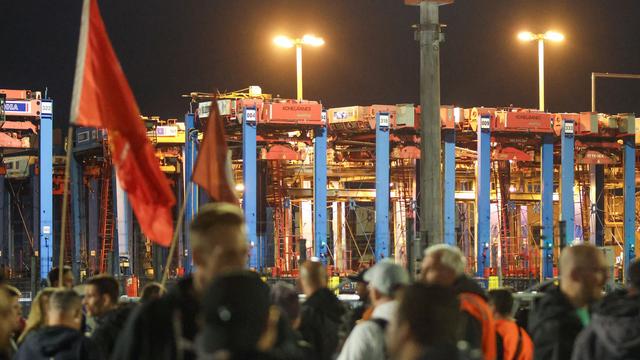
A 48-hour warning strike began at Hamburg port after Germany’s Verdi union called workers out for a second time during collective bargaining for the country’s seaports.
The stoppage includes workers at more than a dozen businesses, including HHLA’s Altenwerder, Burchardkai and Tollerort container terminals, Eurogate’s container terminal and the Gesamthafenbetriebs-Gesellschaft. Verdi said a demonstration would begin at 9 a.m. Friday at the Burchardkai container terminal parking lot and move through the port.
The union previously organized a 24-hour walkout on Aug. 18 in Hamburg, Bremerhaven, Wilhelmshaven, Bremen, Brake and Emden. That action slowed the movement of goods and halted it in some areas.
Workers rejected an offer from the Central Association of German Seaport Operators after the third round of negotiations, according to Verdi. More than 6,000 employees took part in a weeklong consultation. The employers offered a 5.1% wage increase retroactive to Aug. 1, 2026, over an 18-month contract, along with an increase of at least 1.20 euros per hour. Verdi is demanding an 8.2% increase over 12 months, with a minimum rise of 2.50 euros per hour.
“This offer is not enough. Employers cannot simply ignore that,” said André Kretschmar, Verdi’s sector head.
This offer is not enough. Employers cannot simply ignore that.
About this summary
Originally published by Die Zeit in German. Translated, summarized, and contextualized automatically by DistantNews, with a note on how the source frames the story. Not individually reviewed before publishing. How this works.
More Stories

From Our Blog

What Gets Lost (and Found) When News Is Translated

How the Same Story Looks Different in Different Countries

The Critical Role of Diaspora Media in Global News

What Travellers Should Know About Countries with Restricted Press

A Digital Nomad's Guide to Following Local News
