

Wagenknecht labels German government parts 'far-right'
Translated from German and summarized by DistantNews. Read the original for the full story.
At a glance
News
Named sources
Context piece
- Sahra Wagenknecht, founder of the BSW party, has controversially labeled parts of the German federal government as 'far-right.'
- She defines 'far-right' as promoting authoritarianism, suppressing free speech, and dismantling democracy.
- Wagenknecht also expressed openness to cooperation with the AfD, criticizing the "firewall idiocy" that prevents dialogue.
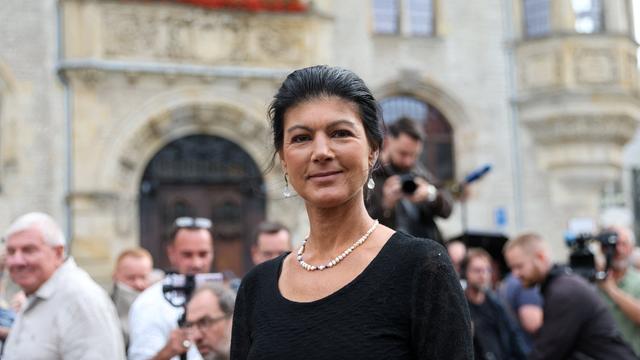
Sahra Wagenknecht, the founder of the new BSW party, has ignited a political firestorm by labeling elements within Germany's federal government as "far-right."
If I define the term this way, then we currently have right-wing extremists in the Bundesregierung.
Wagenknecht articulated her controversial definition of "far-right" in a podcast interview, stating it applies to those who advocate for a society built on authoritarianism, the suppression of free speech, and the erosion of democratic principles. "If I define the term this way," she asserted, "then we currently have right-wing extremists in the federal government."
When questioned about her stance on the Alternative for Germany (AfD) party, Wagenknecht avoided a direct classification, instead suggesting a need to "engage with their positions." She acknowledged that some individuals within the AfD hold far-right views, rhetorically questioning the fluidity of political labels: "What is right today, what is left?"
We should engage with their positions.
Wagenknecht further criticized the current government's foreign policy direction, accusing it of aiming to make Germany "Europe's largest military power." She recalled a time when such ambitions were considered right-wing, or even "far-right," suggesting a shift in political discourse.
What is right today, what is left?
Her remarks come amid ongoing discussions about potential cooperation between her BSW party and the AfD. Wagenknecht has previously called for an end to the political "firewall" isolating the AfD, arguing that rejecting dialogue alienates a significant portion of the electorate. This stance contrasts sharply with the assessment by Germany's domestic intelligence agency, which has classified several AfD state chapters as "securely far-right" or "suspected far-right."
We must get out of this 'firewall idiocy,' otherwise almost every second voter will feel 'betrayed.'
About this summary
Originally published by Die Zeit in German. Translated, summarized, and contextualized automatically by DistantNews, with a note on how the source frames the story. Not individually reviewed before publishing. How this works.
More Stories
From Our Blog

What Gets Lost (and Found) When News Is Translated

How the Same Story Looks Different in Different Countries

The Critical Role of Diaspora Media in Global News

What Travellers Should Know About Countries with Restricted Press

A Digital Nomad's Guide to Following Local News
