


Walking Among Shadows
Translated from Spanish, summarized and contextualized by DistantNews.
At a glance
In-depth
Sources not specified
Context piece
- A film about a writer teaching literature in a Buenos Aires high school highlights the perceived irrelevance of literature amidst poverty and violence.
- The article questions the purpose and practice of reading in an age of digital spectacle and vanity, contrasting it with Mexico's low book consumption statistics.
- It explores the idea that reading should be a commitment fostering critical thinking and social connection, rather than an individualistic pursuit.
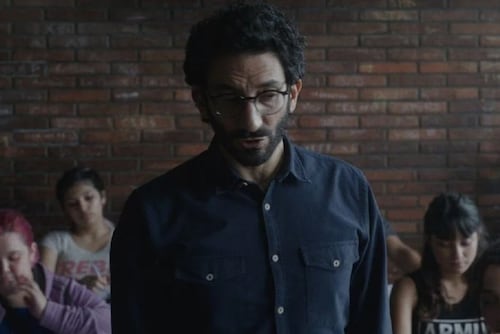
A recent Argentine film, "El Suplente," depicts a writer taking on a literature teaching role in a struggling Buenos Aires public high school. The narrative opens with a stark question posed to indifferent students: "What is literature for?" Their responses, or lack thereof, underscore a profound disconnect, suggesting that discussing literature in the face of poverty and organized crime-induced violence feels like an insult.
What is literature for?
The film's exploration of literature's purpose resonates with broader societal questions about who reads and why. The author notes a trend of "voracious reader" self-proclamations on social media, where reading is often framed as a competitive consumption activity rather than an intimate engagement. This contrasts sharply with statistical realities; a 2024 survey indicated that while 70% of Mexican adults claim to be readers, the average annual consumption is a mere 1.3 to 3.2 books per person.
If I were to choose, I would choose / this health of knowing we are very sick, / this happiness of being so unhappy. / If I were to choose, I would choose / this innocence of not being innocent, / this purity in which I walk as impure. / If I were to choose, I would choose / this love with which I hate, / this hope that eats desperate bread. / Here, ladies and gentlemen, / I risk death.
Some attribute national underdevelopment to low reading rates, suggesting that increased literacy would elevate countries to the status of Denmark, a nation known for its high book consumption and extensive public library system. The article references a 2021 declaration by Dr. Marx Arriaga, who argued that reading should be viewed as a commitment that builds social connections and fosters critical thinking, ultimately leading to the emancipation of peoples. This perspective reframes reading not as a solitary pleasure, but as a tool for societal transformation.
it is not about reading for reading's sake, but assuming that the act of reading is a commitment and creates a bond with the text and the author, and to the extent that this exercise is assumed as something that fosters social relationships where it is not about an individualistic act of pleasure, but a deep analysis of the similarities and differences with others, critical subjects will be formed who seek the emancipation of their peoples.
DistantNews Editorial
Originally published by El Universal in Spanish. Translated, summarized, and contextualized by our editorial team with added local perspective. Read our editorial standards.
More Stories

From Our Blog

What Press Freedom Means for the News You Read

What Gets Lost (and Found) When News Is Translated

The Critical Role of Diaspora Media in Global News

What Travellers Should Know About Countries with Restricted Press

A Digital Nomad's Guide to Following Local News
