

‘War’ at the EU’s Core Over Money: Why Romania Risks Losing Out in the Commission’s Clash With Germany
Translated from Romanian and summarized by DistantNews. Read the original for the full story.
At a glance
Analysis
Named sources
Ongoing story
- Germany and five other net contributor countries are calling for major reductions to the European Commission’s proposed budget of nearly €2 trillion for 2028-2034.
- Romania leads the 16-country Friends of Cohesion group, which wants stronger funding for agricultural and cohesion policies and fewer conditions on access to EU money.
- Analyst Ștefan Popescu says Germany’s coalition is likely to prevail, leaving Romania and other eastern member states with less funding.
The next EU budget is shaping up as a contest between Germany-led fiscal restraint and demands from eastern and southern member states for more money. The outcome could directly affect Romania’s access to cohesion and agricultural funds.
Germany, Denmark, the Netherlands, Austria, Finland and Sweden have formed a common position calling for the European Commission’s proposed budget for 2028-2034, worth nearly €2 trillion, to be reduced “in a balanced manner.” The six countries contribute more to the EU budget than they receive in return and want cuts amounting to several hundred billion euros.
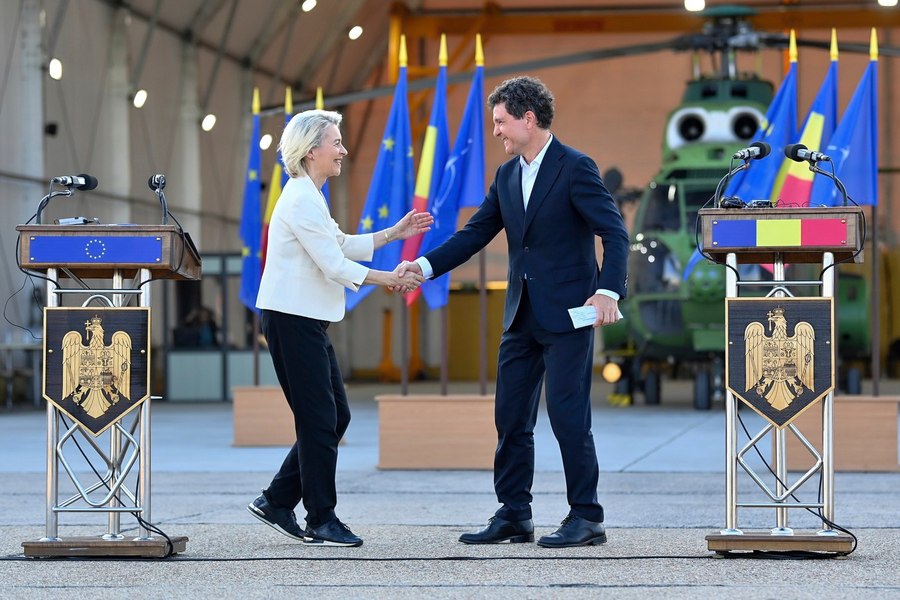
European Commission President Ursula von der Leyen is arguing for a larger budget to strengthen Europe’s “independence.” The German-led group, however, also opposes additional joint borrowing for the next seven-year financial framework. Ștefan Popescu, an international policy analyst writing for Adevărul, says the dispute signals that less money will be available for Romania and other countries that depend on cohesion policy.
Institutions above the national level have only as much power, especially on budgetary and financial matters, as the member states give them.
Romania heads the Friends of Cohesion, a grouping of 16 southern and eastern European countries. The group is seeking increased allocations for the Common Agricultural Policy and cohesion policy compared with the Commission’s proposal. It has also called for national governments to retain control over budget programming, looser conditions, continued financial mechanisms to attract funds, and balanced access to competitiveness funding.
Popescu believes the group opposing Germany will ultimately lose because EU institutions have only as much budgetary power as member states, especially the main donor countries, allow them. In his view, Germany’s renewed coalition of frugal states has the stronger position in the negotiations.
This dispute must be a very clear signal that there will be less money for Romania and the other states that need and depend on cohesion policies.
About this summary
Originally published by Adevărul in Romanian. Translated, summarized, and contextualized automatically by DistantNews, with a note on how the source frames the story. Not individually reviewed before publishing. How this works.
More Stories

From Our Blog

What Gets Lost (and Found) When News Is Translated

The Critical Role of Diaspora Media in Global News

What Travellers Should Know About Countries with Restricted Press

A Digital Nomad's Guide to Following Local News

How the Same Story Looks Different in Different Countries
