


Warioba Blames Tanzania’s Political Problems on Eroding Founding Values and Offers a Way Out
Translated from English and summarized by DistantNews. Read the original for the full story.
At a glance
News
Named sources
Context piece
- Former Tanzanian Prime Minister Joseph Sinde Warioba said the country’s political and social problems stem partly from the erosion of values established at independence.
- Speaking at a Tanzania Centre for Democracy conference, he warned that tribal, religious and regional divisions were undermining national cohesion.
- Warioba called for a return to national unity, equality, patriotism, honesty and self-reliance while preserving multiparty democracy.
Former Prime Minister Joseph Sinde Warioba says Tanzania’s present political and social challenges cannot be understood without confronting the erosion of the values that shaped the country at independence.
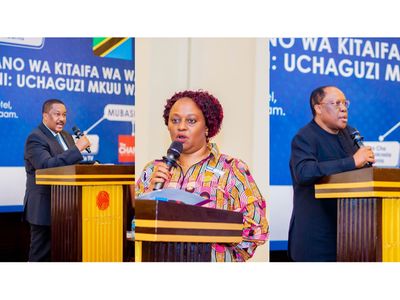
Speaking at the Tanzania Centre for Democracy’s national conference in Dar es Salaam, Warioba said the country’s founders deliberately built Tanzania around national unity, equality, patriotism, honesty and self-reliance. Those principles, he argued, helped the country avoid divisions based on tribe and religion.
We need to return to the Tanzania we knew, a Tanzania of peace, equality, patriotism, honesty and self-reliance.
He warned that their weakening had allowed political, religious, tribal and regional divisions to re-emerge, threatening the social cohesion that once held the country together. “We need to return to the Tanzania we knew, a Tanzania of peace, equality, patriotism, honesty and self-reliance,” he said.
Warioba pointed to the objectives of the Tanganyika African National Union, formed in 1954, as an example of the country’s original direction. TANU sought to prepare Tanzanians for self-government and independence while removing tribal discrimination and other barriers to African unity. “The first objective was to prepare our people for self-government and independence, and to remove tribal discrimination and anything else that prevented Africans from being united,” he said.
The first objective was to prepare our people for self-government and independence, and to remove tribal discrimination and anything else that prevented Africans from being united.
He also recalled an earlier standard for public leadership, under which office was treated as a trust rather than personal property. Leaders were expected to reject corruption and speak the truth. “Leadership was regarded as a trust. Public office was not meant to be a personal possession,” Warioba said.
Leadership was regarded as a trust. Public office was not meant to be a personal possession.
He credited those principles with helping Tanzania build a shared national identity despite its ethnic and religious diversity. But he said that achievement now faced renewed pressure. “We succeeded in building national unity, but today we are seeing tribal groupings, religious divisions and regionalism returning,” he said.
Warioba singled out multiparty politics as a particular challenge, warning that parties could become vehicles for narrow group interests. “The coming of multiparty politics turned the country into new type of discrimination, political parties became new tribes,” he said. He argued that Tanzania should retain multiparty democracy while preventing political competition from turning citizens against one another.
We succeeded in building national unity, but today we are seeing tribal groupings, religious divisions and regionalism returning.
About this summary
Originally published by The Citizen in English. Translated, summarized, and contextualized automatically by DistantNews, with a note on how the source frames the story. Not individually reviewed before publishing. How this works.
More Stories


From Our Blog

News in Translation: What Gets Lost, and How We Keep the Framing

Diaspora Media: How Communities Follow News From Home

Traveling Where the Press Is Not Free: How to Read the News There

The Digital Nomad's Guide to Local News

The Same Story, Different Countries: How Coverage Changes at the Border
