


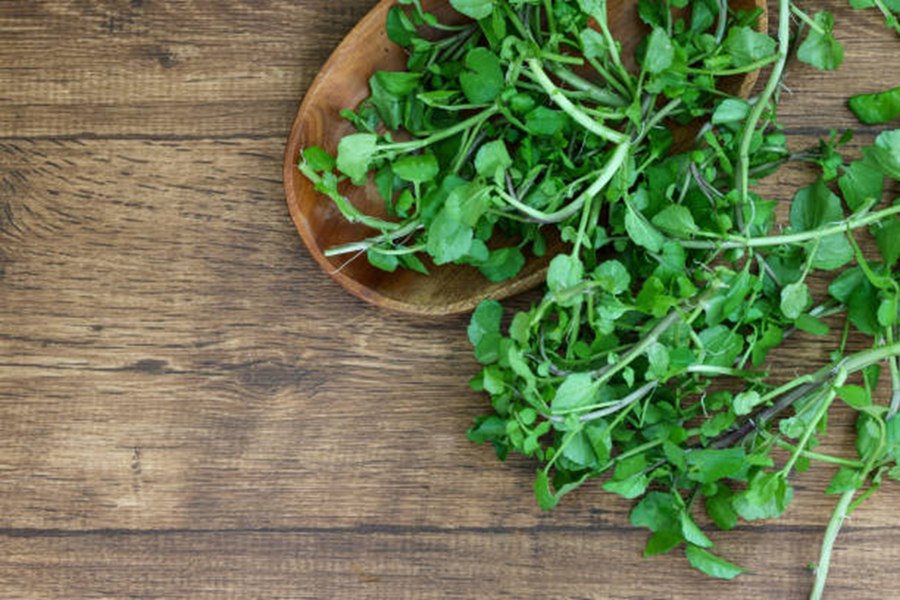
Watercress named world's healthiest vegetable by scientists
Translated from Romanian, summarized and contextualized by DistantNews.
At a glance
News
Sources not specified
Context piece
- Scientists have identified watercress (Nasturtium officinale) as the world's healthiest vegetable based on its nutrient density.
- Watercress scored a perfect 100 in a study by the Centers for Disease Control and Prevention, surpassing other nutrient-rich vegetables like spinach and kale.
- The plant, also known as brâncuță or măcriș de baltă in Romania, is rich in vitamins A, C, E, and K, as well as minerals, despite being very low in calories.
Watercress, a leafy green plant often found near springs and watercourses, has been declared the healthiest vegetable in the world by scientists. While attention often focuses on foods like avocado and salmon, watercress, known in Romania as brâncuță or măcriș de baltă, has outperformed all other analyzed foods in terms of nutritional value.
A study conducted by the Centers for Disease Control and Prevention (CDC) ranked watercress highest for nutrient density. Researchers analyzed over 40 plant-based foods, calculating the ratio of essential nutrients to calories. Watercress achieved a perfect score of 100, surpassing well-known healthy options such as spinach, broccoli, kale, and Chinese cabbage.
Watercress belongs to the Brassicaceae family, which includes cabbage, radish, and broccoli. It has a slightly peppery taste and a history of consumption dating back to antiquity, valued for both culinary and medicinal properties. In medieval Europe, it was used for breath freshening and natural remedies.
Nutritionally, watercress is a concentrated source of micronutrients. It contains significant amounts of vitamins A, C, E, and K, along with iron, calcium, potassium, iodine, and omega-3 fatty acids. A 100-gram serving contains only 12 calories, offering essential nutrients with minimal caloric intake. The plant also provides protein and fiber while being fat-free.
DistantNews Editorial
Originally published by Adevărul in Romanian. Translated, summarized, and contextualized by our editorial team with added local perspective. Read our editorial standards.
More Stories

From Our Blog

What Gets Lost (and Found) When News Is Translated

The Critical Role of Diaspora Media in Global News

What Travellers Should Know About Countries with Restricted Press

A Digital Nomad's Guide to Following Local News

How the Same Story Looks Different in Different Countries
