


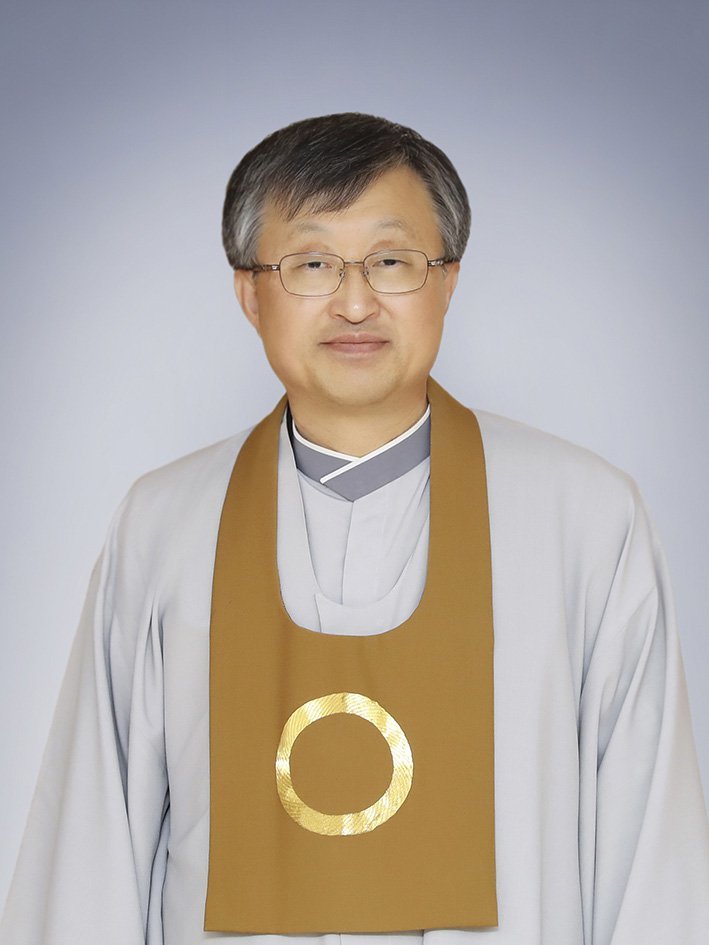
“We Will Fulfill Our Religious Duties to Heal Our Society’s Pain”
Translated from Korean, summarized and contextualized by DistantNews.
TLDR
- Won Buddhism's Chief Administrator Na Sang-ho pledged to fulfill the religion's spiritual duties by healing societal pain and fostering peace.
- The church plans to expand its suicide prevention program, 'Dasalrim,' to a national level and train more clergy as life-respecting experts.
- Additionally, Won Buddhism will promote mental well-being through meditation programs and address climate change by expanding solar power generation and collaborating with NGOs on carbon neutrality.
As the Daegakgyojeol, the greatest festival of Won Buddhism, approaches, Chief Administrator Na Sang-ho has articulated a clear vision for the religion's role in contemporary society. Speaking from the Sotaisan Memorial Hall, Na emphasized Won Buddhism's commitment to addressing the deep-seated pains within our society and actively contributing to the creation of a peaceful world. This is not merely a statement of intent but a reaffirmation of the core tenets that guide the Won Buddhist community.
We will fulfill our religious duties to heal the pain of our society and create a peaceful world.
A significant focus of Na's address was the escalating issue of suicide. Won Buddhism's existing 'Dasalrim' program, which offers suicide prevention support to vulnerable groups like the elderly, the North Korean defectors, and military personnel, is set to be broadened. The plan to extend this initiative to a nationwide scale reflects a profound understanding of the pervasive mental health challenges facing South Korea. Furthermore, the commitment to train over half of the approximately 1,500 clergy members as specialists in suicide prevention and life respect underscores the religion's dedication to this critical cause.
Beyond mental health, Won Buddhism is also extending its reach into environmental stewardship and the cultivation of inner peace. The 'Maum On (on)' meditation program, offered through 15 training centers nationwide, aims to restore the mental well-being of the populace. Concurrently, the religion is actively engaging with the climate crisis. By expanding solar power facilities across its numerous temples and institutions and partnering with NGOs, Won Buddhism is demonstrating a tangible commitment to carbon neutrality and sustainable practices.
First, to solve the high suicide rate, we will expand the Won Buddhism suicide prevention program 'Dasalrim,' currently targeting the elderly, North Korean defectors, and military personnel in the region, to a society-wide level.
Na Sang-ho's call to "foster the power of the spirit to use material civilization correctly" resonates deeply within the context of modern South Korea, a nation grappling with rapid technological advancement and its societal implications. While international media might focus on the geopolitical or economic aspects of our society, Dong-A Ilbo recognizes the crucial role that spiritual and ethical guidance plays in navigating these complexities. Won Buddhism's proactive stance on social issues, from mental health to environmentalism, offers a unique perspective rooted in its distinct philosophy, highlighting a path toward healing and sustainable coexistence that is uniquely Korean.
We will do our best to foster the power of the spirit to use material civilization correctly.
DistantNews Editorial
Originally published by Dong-A Ilbo in Korean. Translated, summarized, and contextualized by our editorial team with added local perspective. Read our editorial standards.
More Stories



From Our Blog

What Gets Lost (and Found) When News Is Translated

The Critical Role of Diaspora Media in Global News

What Travellers Should Know About Countries with Restricted Press

A Digital Nomad's Guide to Following Local News

How the Same Story Looks Different in Different Countries
