

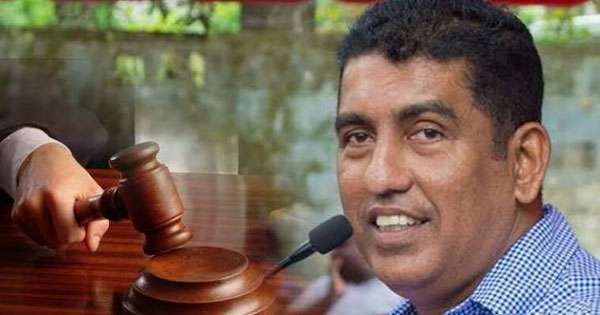

'We will inform the embassies about interference in the judiciary'
Translated from Sinhala and summarized by DistantNews. Read the original for the full story.
At a glance
News
Named sources
Context piece
- Udaya Gammanpila, leader of Pivithuru Hela Urumaya, stated that the organization will inform international bodies and embassies about the alleged undermining of the rule of law in Sri Lanka.
- Gammanpila criticized the judiciary's public interference, suggesting it leaves the public vulnerable and compromises legal supremacy.
- Sagara Kariyawasam, General Secretary of the Sri Lanka Podujana Peramuna, and Duminda Dissanayake, General Secretary of the Sri Lanka Freedom Party, also voiced concerns about judicial independence and potential political influence.
The recent press conference held by the 'Mahajana Handa' organization, featuring prominent figures like Udaya Gammanpila and Sagara Kariyawasam, highlights deep-seated concerns regarding the integrity of Sri Lanka's judicial system. Gammanpila's assertion that they will notify international organizations and embassies about alleged interference in judicial processes underscores a growing sentiment that the rule of law is under threat. This move signals a potential escalation, drawing international attention to what is perceived as a critical juncture for Sri Lanka's legal and democratic foundations.
If the country's first citizen and the citizen above him publicly interfere with the judiciary, the people of this country cannot avoid falling into a helpless state, and therefore, the 'Mahajana Handa' organization intends to inform international organizations and all major embassies about the undermining of the rule of law in Sri Lanka.
From the perspective of Lankadeepa, these statements reflect a broader public anxiety about accountability and fairness within the justice system. The specific allegations, such as those mentioned by Kariyawasam regarding threats and alleged coercion in judicial proceedings, paint a disturbing picture. The call for immediate investigation into Rangana Disanayake and the suspension of his duties, based on sworn affidavits, points to a demand for transparency and impartial application of the law, regardless of the individuals involved. The questioning of judicial independence, particularly in light of statements attributed to President Anura Kumara, further fuels this public apprehension.
Ranga Dissanayake threatened to commit suicide in the same way as a person who was summoned, questioned, and hanged in a previous case, and that he signed the statement after the former president and his son were named.
Duminda Dissanayake's remarks add another layer to this complex situation, questioning the necessity of the judiciary if decisions are perceived to be influenced by the executive or specific political factions. The reference to the coal scam investigation and a predicted favorable verdict for 'Malimawa' members raises serious questions about due process and the potential for political manipulation. This narrative, where legal outcomes appear predetermined or influenced by external pressures, erodes public trust. For Sri Lankans, the principle of an independent judiciary is not just a legal concept but a cornerstone of stability and justice, and any perceived erosion of this principle is met with significant concern and calls for immediate rectification.
The law of this country is not enforced against Ranga Dissanayake, so we demand that Ranga Dissanayake's work be immediately suspended and an investigation be conducted into the allegations against him to reveal the truth to the people of this country.
About this summary
Originally published by Lankadeepa in Sinhala. Translated, summarized, and contextualized automatically by DistantNews, with a note on how the source frames the story. Not individually reviewed before publishing. How this works.
More Stories

From Our Blog

News in Translation: What Gets Lost, and How We Keep the Framing

Diaspora Media: How Communities Abroad Follow Home

Traveling Where the Press Is Not Free: How to Read the News There

The Digital Nomad's Guide to Local News

The Same Story, Different Countries: How Coverage Changes at the Border
