


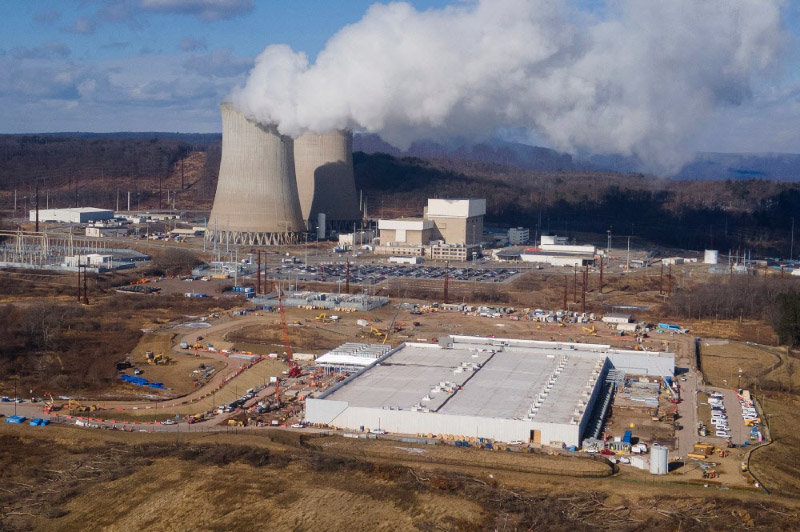

Westinghouse has changed hands four times, tying it to US nuclear controls
Translated from Korean and summarized by DistantNews. Read the original for the full story.
At a glance
Explainer
Documents & data
Context piece
- South Korea is considering a partial acquisition of Westinghouse by Korea Electric Power and Korea Hydro & Nuclear Power as part of investment in the United States.
- The nuclear company changed owners four times after the industry downturn and entered bankruptcy in 2017 before Canadian companies took control.
- Westinghouse’s technology claims and links to US nonproliferation and export-control rules have complicated South Korea’s nuclear exports, including its Czech project.
Westinghouse is drawing renewed attention as Korea Electric Power and Korea Hydro & Nuclear Power prepare to acquire part of the nuclear company as part of the South Korean government’s investment in the United States. Behind the deal is a company with a long and turbulent history, having changed hands four times since the nuclear industry entered a prolonged downturn.
Founded in 1896 as a general electrical company, Westinghouse suffered a major decline after the 1979 Three Mile Island accident halted new nuclear plant construction in the United States. It sold its nuclear business to the British state-owned nuclear fuel company BNFL in 1999. Japan’s Toshiba bought the business in 2006, but Westinghouse filed for bankruptcy in 2017 after accumulating losses of more than 7 trillion won. The company passed to Canadian private-equity firm Brookfield the following year. In 2023, Canadian uranium supplier Cameco acquired a 49% stake, leaving the company owned by Canadian firms.
Westinghouse built South Korea’s first commercial nuclear plants, Kori units 1 and 2. Korean companies began participating from Kori 3 and received technology transfers. The OPR1000 design, the predecessor of South Korea’s latest APR1400 reactor, also drew on technology from Combustion Engineering, which was later absorbed into Westinghouse.
The company has used those origins to challenge South Korean nuclear exports. During South Korea’s 2024-2025 effort to win a Czech nuclear contract, Westinghouse sued while asserting intellectual-property rights over Korean-designed reactors. The two sides agreed in January 2025 to suspend the dispute, but controversy grew after details emerged about an agreement requiring approval from Westinghouse for every nuclear export for the next 50 years.
Westinghouse’s role also connects it to the US nuclear nonproliferation and export-control system. US nuclear technology exports are subject to Energy Department rules and other controls that treat domestic technology as a strategic national asset. In its lawsuit against KHNP, Westinghouse argued that KHNP could not export the technology to a third country without US government consent, while Westinghouse could obtain that approval. The company is private, but the dispute rests on a broader structure in which Washington seeks to control the spread of nuclear technology.
About this summary
Originally published by Hankyoreh in Korean. Translated, summarized, and contextualized automatically by DistantNews, with a note on how the source frames the story. Not individually reviewed before publishing. How this works.
More Stories



From Our Blog

News in Translation: What Gets Lost, and How We Keep the Framing

Diaspora Media: How Communities Follow News From Home

Traveling Where the Press Is Not Free: How to Read the News There

The Digital Nomad's Guide to Local News

The Same Story, Different Countries: How Coverage Changes at the Border
