


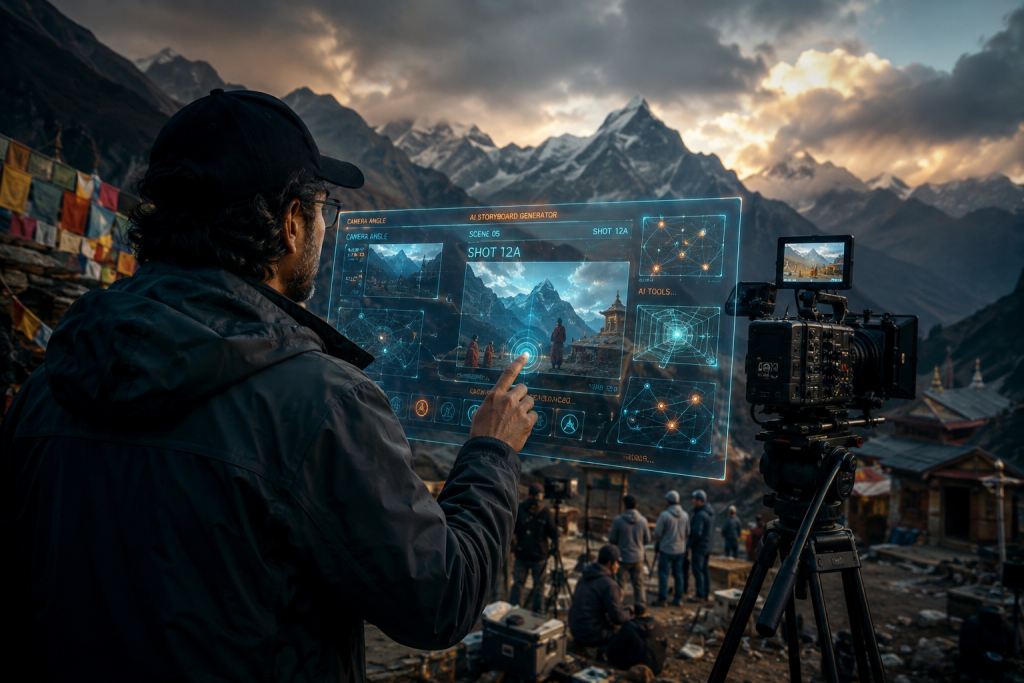
What AI Means for the Future of Filmmaking in Nepal
Translated from English, summarized and contextualized by DistantNews.
At a glance
In-depth
Sources not specified
Context piece
- Artificial intelligence presents both opportunities and challenges for the future of filmmaking in Nepal.
- AI tools can automate tasks in pre-production and post-production, potentially speeding up processes and reducing costs for filmmakers working with limited resources.
- Concerns exist regarding the impact of AI on existing skills, job security, ownership, and the nature of truth in filmmaking.
The advent of artificial intelligence is stirring familiar anxieties within the filmmaking industry, particularly in countries like Nepal where resources are often constrained. Just as digital cameras and editing software once challenged traditional film methods, AI now promises to revolutionize various stages of production. This technology can generate images from text prompts, create video, remove unwanted elements from frames, mimic voices, translate dialogue, and even produce rough storyboards, tasks that once took days can now be completed in hours.
For Nepal's filmmakers, who frequently operate with limited budgets, small crews, and tight deadlines, AI offers a genuine opportunity to streamline processes. McKinsey identifies AI applications across development, production, and post-production, including pre-visualization, editing, audio synchronization, tagging, subtitling, and dubbing. Companies are experimenting with AI video generators like Higgsfield, Runway, Kling, and Seedance, as well as tools from Google, Adobe, and OpenAI. These platforms can transform text or reference images into short clips, test camera movements, and help build concept films before a full shoot.
While AI can significantly reduce repetitive work, allowing filmmakers to concentrate on more creative and judgment-based decisions, it also raises profound questions about the future of work, ownership, and authenticity. The ability of AI to produce options quickly can aid in communicating ideas and testing creative directions. However, the core challenge remains: AI can generate possibilities, but a filmmaker must still discern which option best serves the narrative. The industry faces the delicate balance of harnessing AI's efficiency without compromising the human element and artistic integrity essential to filmmaking.
DistantNews Editorial
Originally published by OnlineKhabar English in English. Translated, summarized, and contextualized by our editorial team with added local perspective. Read our editorial standards.
More Stories


From Our Blog

What Gets Lost (and Found) When News Is Translated

The Critical Role of Diaspora Media in Global News

What Travellers Should Know About Countries with Restricted Press

A Digital Nomad's Guide to Following Local News

How the Same Story Looks Different in Different Countries
