

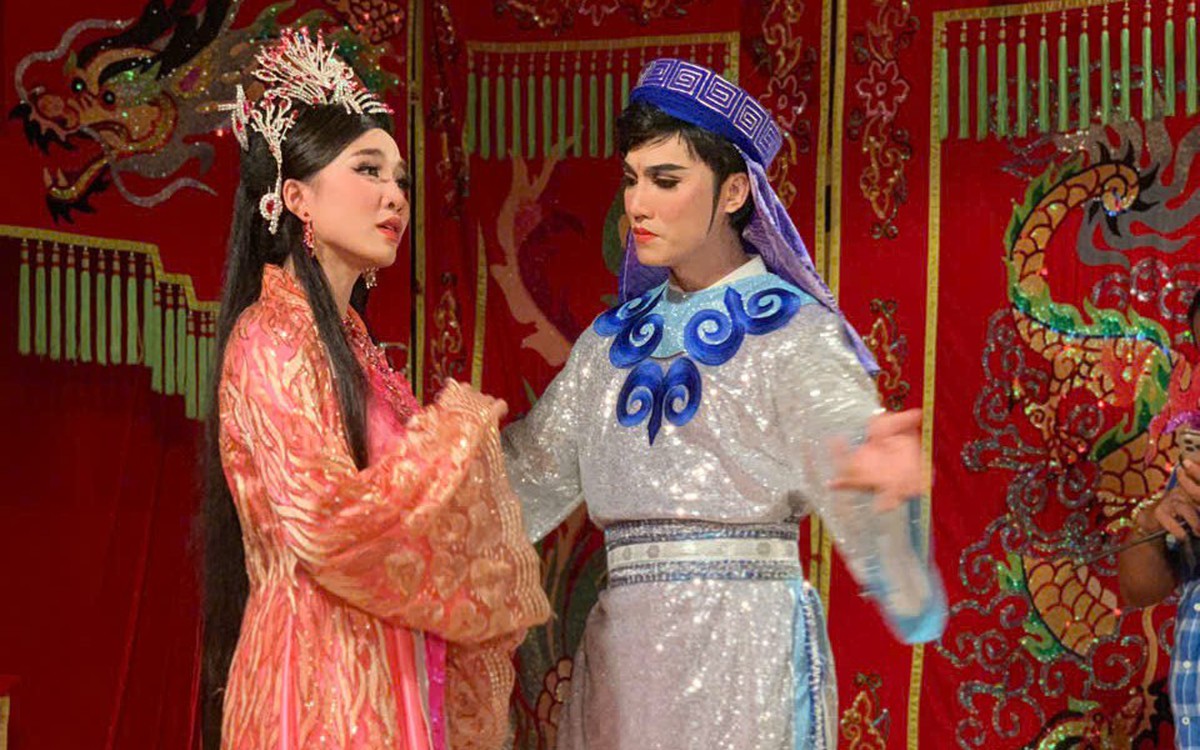
What is this 'Nợ đời vay trả' cải lương song that sounds so good?
Translated from Vietnamese, summarized and contextualized by DistantNews.
At a glance
In-depth
Sources not specified
Context piece
- The Vietnamese film "Nợ đời vay trả" (Debt of Life, Loan of Payment) is praised for its authentic depiction of Southern Vietnamese culture, particularly its integration of traditional cải lương opera.
- Audiences have responded positively to the film's costumes, performances, and the inclusion of cải lương, with many expressing delight at seeing the art form featured.
- The production team meticulously recreated a 1920s Southern Vietnamese setting, including a fictional cải lương troupe, to capture the essence of the era, despite copyright challenges for specific musical pieces.
The Vietnamese film "Nợ đời vay trả" (Debt of Life, Loan of Payment) is garnering praise for its vivid portrayal of early 20th-century Southern Vietnamese life, with particular acclaim for its authentic integration of traditional cải lương opera. The film has resonated with audiences, who have lauded its detailed production design, costumes, and the compelling performances, especially those featuring the iconic Southern Vietnamese musical theater.
Design, costumes, actors are too ok.
Social media buzz highlights viewer satisfaction, with comments praising the "too ok" design, costumes, and actors, noting the "pure Vietnamese" attire. Many viewers expressed particular delight in the film's inclusion of cải lương, calling the singing "good" and the actors "cute," awarding it "10 points." This positive reception underscores a public appreciation for cultural heritage being showcased in contemporary media.
The filming is a bit flawed, but the costumes are purely Vietnamese.
To authentically recreate the atmosphere of the 1920s Mekong Delta, the production team introduced the fictional cải lương troupe "Bông Mai" (Cotton Flower) into the narrative. The character of Vũ Phương, a handsome and eloquent lead performer, quickly captivates two young women from the household, leading to dramatic plot developments as they use family assets to support him. Future episodes promise to depict the troupe's traveling performances on boats, a familiar image of traditional Southern Vietnamese entertainment.
The singing is good and the actors are cute, 10 points.
Despite facing copyright restrictions for specific musical works, the filmmakers managed to incorporate a segment from the renowned cải lương play "Vầng trăng ai xẻ" (Who Carved the Moon?) by the late playwright Quy Sắc, alongside classic tân nhạc songs and Southern folk melodies. The production involved collaborating with cải lương artists and the playwright's family to secure necessary permissions. The team focused on capturing the "soul" of the bygone era, ensuring that modern audiences could connect with the historical context. The film also weaves in traditional Southern folk verses, known as "câu hò," used for entertainment and courtship, further enriching the cultural tapestry presented on screen.
This is the first time I've seen a movie that includes cải lương.
DistantNews Editorial
Originally published by Tuổi Trẻ in Vietnamese. Translated, summarized, and contextualized by our editorial team with added local perspective. Read our editorial standards.
More Stories

From Our Blog

What Gets Lost (and Found) When News Is Translated

The Critical Role of Diaspora Media in Global News

What Travellers Should Know About Countries with Restricted Press

A Digital Nomad's Guide to Following Local News

How the Same Story Looks Different in Different Countries
