

'What was their crime?': BBC visits Iran school where strike killed 120 children
Summarized and contextualized by DistantNews.
At a glance
News
Named sources
Context piece
- A BBC investigation visited Shajareh Tayyebeh Primary School in Minab, Iran, a site of devastation where 120 children and 36 adults were killed in a strike on February 28.
- The strike occurred in the opening hours of the US-Israeli war with Iran, marking the conflict's deadliest single incident for civilians.
- Evidence suggests US forces hit the school, though the US has not admitted responsibility, while Iranian authorities highlight the civilian cost of the conflict.
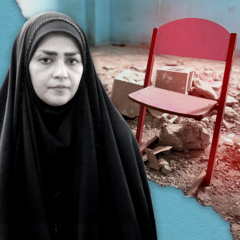
The ruins of Shajareh Tayyebeh Primary School in Minab, southern Iran, stand as a stark testament to a conflict's devastating cost. Amaineh Nademi, a 33-year-old teacher, walks through the debris, recalling the layout of classrooms where she taught first-grade girls. The school, once adorned with colorful murals and children's artwork, is now a scene of destruction, with chunks of concrete hanging precariously and rubble filling former classrooms.
On February 28, in the initial hours of the US-Israeli war with Iran, a strike on the school transformed an ordinary Saturday morning into one of the conflict's most tragic events. The Minab prosecutor's office confirmed 156 fatalities, including 120 children, a pregnant woman, and her unborn child. Experts point to evidence suggesting US forces were responsible for the strike, although the US has not officially acknowledged it. Some US media reports indicate military investigators believe American forces likely carried out the strike unintentionally.
The pain remains palpable for the school's community. Teachers gather daily at the site to pray, and rescue workers continue their search for remains. Amaineh describes the remaining walls as smelling of "death, grief and the blood that was shed here." Iranian authorities brought the BBC to the school, presenting it as evidence of the devastating impact on civilians from what Washington has framed as an attack on Iran's military infrastructure.
Amaine, who was in a corridor when the first explosion occurred, recounts rushing back to her classroom. Only five of her 15 pupils remained when she heard the blast. She was preparing to leave with them when the missile struck. The school day had begun like any other, with children gathered in the prayer hall for Quran recitation due to the Islamic holy month of Ramadan, before the attacks unfolded.
You can't call it a school. Walls that smell of death, grief and the blood that was shed here.
DistantNews Editorial
Originally published by BBC News. Summarized and contextualized by our editorial team with added local perspective. Read our editorial standards.
More Stories


From Our Blog

What Gets Lost (and Found) When News Is Translated

The Critical Role of Diaspora Media in Global News

What Travellers Should Know About Countries with Restricted Press

A Digital Nomad's Guide to Following Local News

How the Same Story Looks Different in Different Countries
