

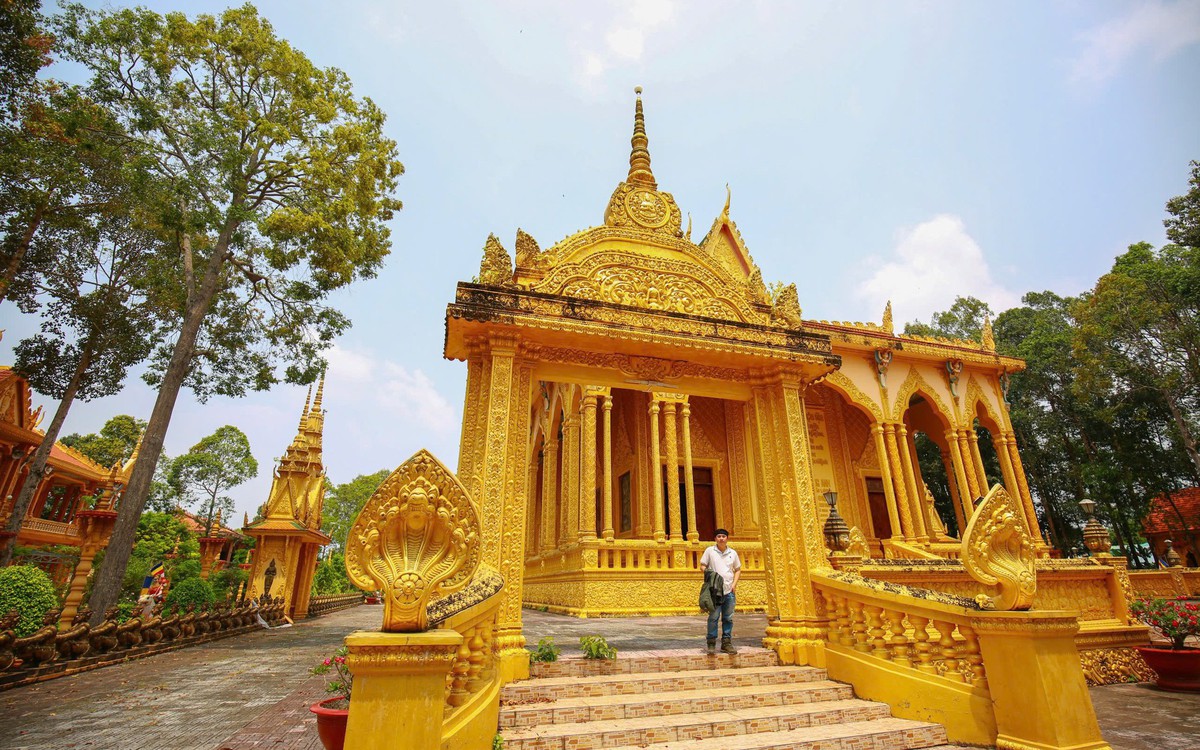

What Will Ho Chi Minh City Leave Behind 100 Years From Now?
Translated from Vietnamese and summarized by DistantNews. Read the original for the full story.
At a glance
Interview
Named sources
Context piece
- Researcher Tran Huu Phuc Tien says a ticket from the city’s first test metro journey could become evidence of a new era in urban transport.
- He argues that heritage includes contemporary culture, from milk tea and Gen Z language to artificial intelligence, as well as older buildings and landscapes.
- Tien identifies the historic core around the Ben Nghe river mouth, along with parks, waterways and other natural spaces, as priorities for preservation.
A small metro ticket may one day become a treasured artifact of Ho Chi Minh City’s history. Tran Huu Phuc Tien has kept the ticket from the city’s first test journey, believing that decades from now it could document the moment a new transport culture began.
For the journalist and urban researcher, heritage is not limited to what is already old. Milk tea, the words used by Gen Z and Gen Alpha, and even artificial intelligence can become traces of the present that deserve recognition and transmission to future generations.
Tien grew up in the working-class Bàn Cờ neighborhood and spent much of his life studying and working in the former inner districts of Saigon. He remembers winding alleys, modest corrugated-metal homes, sidewalk coffee stalls, markets, temples and pagodas. His work in journalism later took him deeper into the city’s streets, workshops, docks and mansions, each carrying its own private and shared memories.
He recalls the tree-lined streets, old schools, national library and green parks that marked his youth. But he says he was slow to preserve personal keepsakes. His mother carefully stored old photographs and her wedding áo dài, while students of his generation wrote autograph books, produced handmade newspapers and drew cards. He kept few of them until his university years, especially after he began working in journalism.
The city’s heritage is not only what is old.
Today, collecting books, newspapers, films, oral accounts and objects forms part of his work and responsibility as an urban historian. These materials show how a family and a city lived before memories disappear, he says, echoing a reflection by musician Trịnh Công Sơn.
Tien also argues that buildings cannot be separated from their surroundings. The value of Notre-Dame Cathedral, for example, lies not only in its architecture and brickwork, but also in its setting, trees and nearby Central Post Office. He points to the 930-hectare area stretching inward from the riverbank and Bến Nghé river mouth as the historic core of old Saigon, preserving layers of architecture and landscape from three centuries.
Gardens, rivers, canals, ponds and the coastline should also be treated as heritage, he says. As urbanization and concrete spread, shrinking these spaces would mean losing part of the city’s memory.
They help future generations know how a family and a city lived before the wind carried it away.
About this summary
Originally published by Thanh Niên in Vietnamese. Translated, summarized, and contextualized automatically by DistantNews, with a note on how the source frames the story. Not individually reviewed before publishing. How this works.
More Stories


From Our Blog

News in Translation: What Gets Lost, and How We Keep the Framing

Diaspora Media: How Communities Abroad Follow Home

Traveling Where the Press Is Not Free: How to Read the News There

The Digital Nomad's Guide to Local News

The Same Story, Different Countries: How Coverage Changes at the Border
