


When and How to Repot Houseplants: A Simple Guide
Translated from Croatian and summarized by DistantNews. Read the original for the full story.
At a glance
Explainer
Sources not specified
Context piece
- Repotting houseplants is necessary when a plant stops growing, the soil is dry, or it visibly outgrows its container.
- Unlike outdoor plants, houseplants can be repotted at any time of year, with the key being to monitor the plant's condition and signs of needing more space or nutrients.
- Signs include roots filling the pot, roots emerging from drainage holes, or the plant appearing too large for its current pot; changes in the soil's water absorption or the plant's growth rate are also indicators.
Repotting houseplants is a crucial aspect of plant care, often signaled by a plant's sudden cessation of growth and dry soil that pulls away from the pot's edges. Unlike outdoor plants, which are subject to strict seasonal repotting schedules due to external environmental factors, houseplants offer more flexibility. The primary determinant for repotting is the plant's condition and its visible signs of needing a larger container or fresh substrate.
If the plant has suddenly stopped growing, and the soil looks dry and separates from the edges of the pot, it may be time to repot it into a larger pot.
Several indicators suggest a plant has outgrown its current pot. During watering, if water drains too quickly, it may mean the soil can no longer retain sufficient moisture for the roots. Conversely, if water sits too long, it could indicate that the root system has become dense and occupies most of the available space. Slowed growth or a plant that appears disproportionately large for its pot are also strong reasons to inspect the root system.
Repotting houseplants does not have as strict rules as changing the position of plants in the garden.
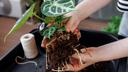
A thorough check involves carefully removing the plant from its pot to examine the roots. Tightly intertwined roots that fill the entire pot, roots emerging from the drainage holes, or new shoots appearing around the main stem all signify that the pot has become too small. Changes in the plant itself, such as a sudden slowdown in growth or leaf drop, might also necessitate a repotting, although these symptoms can also be caused by other issues like insufficient water, light, disease, or pests.
The most important thing is to monitor the condition of the plant and the signs that show it needs new substrate or a larger pot.
Before repotting, it's important to rule out other problems and ensure the plant is receiving adequate water and light. Sometimes, the issue isn't the pot size but the soil. A white or grayish layer on the soil's surface can indicate a buildup of mineral salts, while compacted soil can impede water and air circulation to the roots. In such cases, replacing the soil may be beneficial even if the pot size is adequate. When choosing a new pot, select one only a few centimeters larger than the previous one to avoid excessive moisture retention. Gently firm the new soil around the roots, avoiding over-compaction. While early spring is generally the most favorable time for repotting most houseplants as they begin active growth, a plant showing distress can be repotted at any time.
Tightly intertwined roots that have almost completely occupied the space are signs that the existing pot has become too small.
About this summary
Originally published by Večernji List in Croatian. Translated, summarized, and contextualized automatically by DistantNews, with a note on how the source frames the story. Not individually reviewed before publishing. How this works.
More Stories



From Our Blog

What Gets Lost (and Found) When News Is Translated

The Critical Role of Diaspora Media in Global News

What Travellers Should Know About Countries with Restricted Press

A Digital Nomad's Guide to Following Local News

How the Same Story Looks Different in Different Countries
