


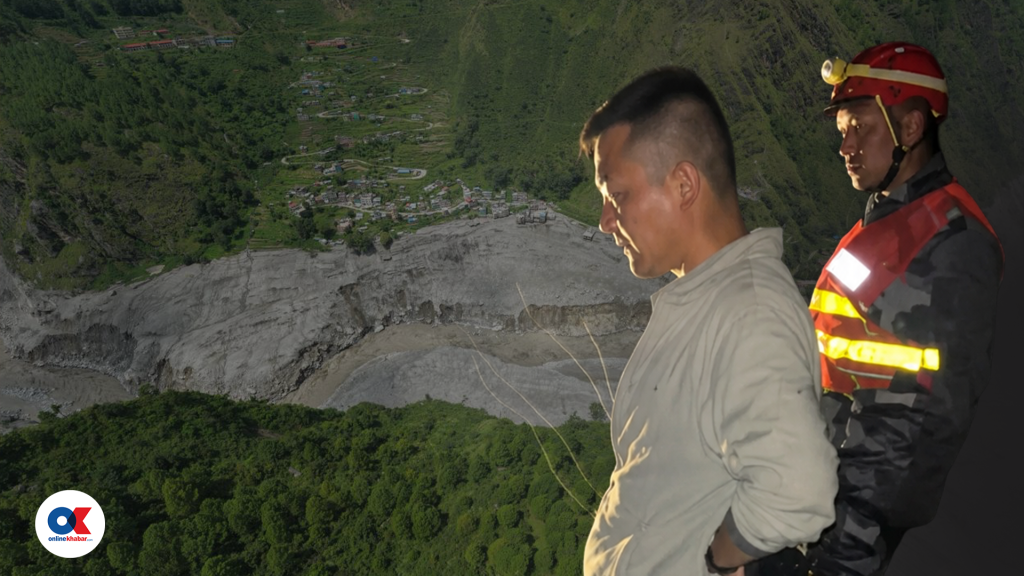
When Nepal’s home minister becomes a rescuer, who leads the disaster response?
Translated from English and summarized by DistantNews. Read the original for the full story.
At a glance
Analysis
Named sources
Ongoing story
- Nepal’s Home Minister Sudan Gurung has personally joined tunnel searches for people missing after the Aug. 26 Bhotekoshi flood, prompting questions about command and coordination.
- Experts and relatives say the broader response requires ministerial coordination, skilled rescue workers, equipment and relief distribution rather than the minister’s direct participation in excavation.
- Chinese and Indian rescue teams later began work at the Trishuli site, while reports said relief supplies were not reaching some badly affected communities in Rasuwa.
Nepal’s Home Minister Sudan Gurung has spent days helping dig through a hydropower tunnel for people missing after a devastating flood. His hands-on effort has won public appreciation, but it has also raised a sharper question: who is coordinating the wider disaster response?
Under Nepal’s 2026 Allocation of Business Rules, the Home Minister oversees disaster-related functions including early-warning systems, national disaster policy, relief and rehabilitation, and the national disaster fund. That places the minister at the centre of the country’s disaster command structure.
The role should include coordinating security personnel, setting rescue priorities, identifying shortages of equipment and resources, and directing relief across affected areas after the Aug. 26 flooding of the Bhotekoshi River. Instead, Gurung has focused on excavation at the Trishuli site while families wait for news of missing relatives.
His eagerness to do something is clearly visible. I had openly praised him earlier. But it appears that he needs to improve his way of working.
A former home secretary told Onlinekhabar, “His eagerness to do something is clearly visible. I had openly praised him earlier. But it appears that he needs to improve his way of working.”
Sobhit Pokhrel of Lamjung, who had waited six days for news at the Trishuli barracks in Nuwakot, said the minister’s presence could not replace specialist capacity. “The problem is that they built the tunnel, but there is no skilled manpower to carry out the rescue. The Home Minister himself went into the tunnel and worked. He deserves thanks for that. But even if he stays there and works for 10 days, it won’t solve the problem. Rescue requires skilled manpower,” Pokhrel said.
Foreign rescue teams had not started work when Gurung joined the excavation on Aug. 29. Chinese and Indian teams arrived later that evening. At the same time, reports said relief supplies were failing to reach some of the worst-hit communities in Rasuwa, even as large quantities of relief material remained elsewhere.
The problem is that they built the tunnel, but there is no skilled manpower to carry out the rescue. The Home Minister himself went into the tunnel and worked. He deserves thanks for that. But even if he stays there and works for 10 days, it won’t solve the problem. Rescue requires skilled manpower.
About this summary
Originally published by OnlineKhabar English in English. Translated, summarized, and contextualized automatically by DistantNews, with a note on how the source frames the story. Not individually reviewed before publishing. How this works.
More Stories


From Our Blog

What Gets Lost (and Found) When News Is Translated

The Critical Role of Diaspora Media in Global News

What Travellers Should Know About Countries with Restricted Press

A Digital Nomad's Guide to Following Local News

How the Same Story Looks Different in Different Countries
