


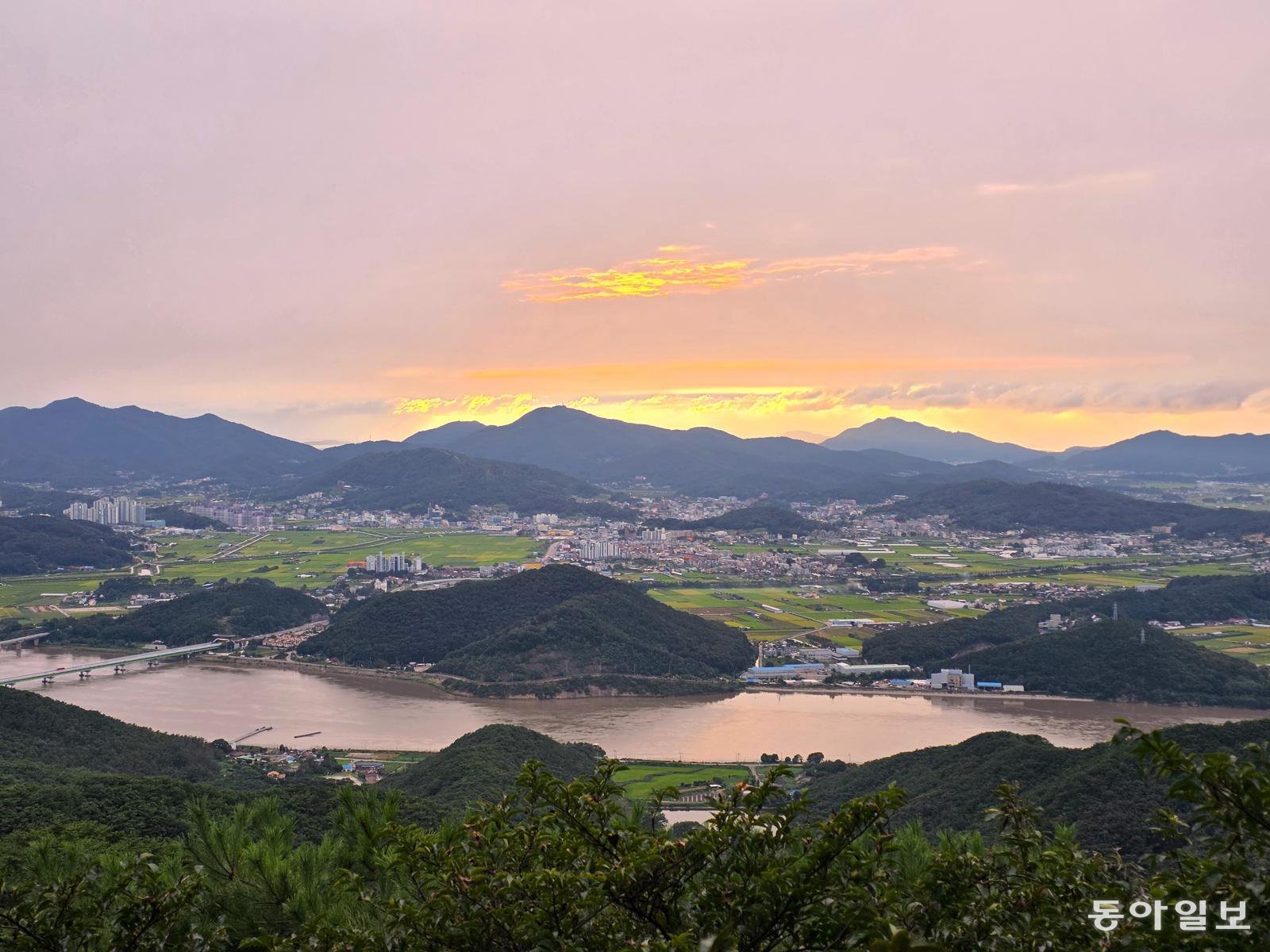
Where rivers meet the sea: Sunset over the historic Jogang estuary
Translated from Korean and summarized by DistantNews. Read the original for the full story.
At a glance
In-depth
Sources not specified
Context piece
- The Jogang estuary, where the Han, Imjin and Yeseong rivers meet the sea, combines tranquil landscapes with a history of invasions and battles.
- From Munsusan Fortress, visitors can see Gimpo, Ganghwa Island, the surrounding islands and, in clear conditions, Gaeseong’s Songaksan Mountain.
- The Yeomha waterway served as a strategic route toward Hanyang and later became the scene of conflicts involving France, the United States and Japan.
At the point where the Han, Imjin and Yeseong rivers meet the sea, the Jogang estuary looks almost like a peaceful lake. From Gimpo’s Munsusan Fortress and Aegibong, the western sky fills with sunset light over water that has witnessed some of Korea’s most painful conflicts.
The journey begins at Munsusan, the highest mountain in the Gimpo plains at 376 meters. A steep climb leads to a roughly four-kilometer path along the fortress walls. From the summit, the view opens in every direction: the Han River and Seoul’s Samgaksan to the east, Ganghwa, Seokmodo and Gyodong islands to the west, and Gaeseong’s Songaksan to the north.
As the sun drops behind Ganghwa’s mountains, red light spreads across the narrow Yeomha channel between Gimpo and Ganghwa. Although it resembles a river, Yeomha is saltwater and technically part of the sea. Its position explains its historical importance. Ships traveling from the open Yellow Sea toward Hanyang could either take a longer route around the western side of Ganghwa or enter Yeomha and continue up the Han River toward Mapo and Yongsan.
That waterway served as a major artery for Joseon grain ships and a direct route toward the capital. Goryeo moved its capital to Ganghwa while fleeing the Mongols, and Joseon treated the island as a final refuge. The island’s forts, batteries and watch posts formed a broad defensive system, matched on the Gimpo shore by Munsusan Fortress and Deokpojin.
The area also saw the 1866 French expedition, the 1871 American expedition and the 1875 approach of Japan’s Unyo, which helped lead to the opening of Joseon’s ports and the signing of the Ganghwa Treaty the following year. Nearby Aegibong was later known for a Christmas tree visible across the border, a symbol of Cold War psychological operations whose lights changed with inter-Korean relations.
About this summary
Originally published by Dong-A Ilbo in Korean. Translated, summarized, and contextualized automatically by DistantNews, with a note on how the source frames the story. Not individually reviewed before publishing. How this works.
More Stories


From Our Blog

What Gets Lost (and Found) When News Is Translated

The Critical Role of Diaspora Media in Global News

What Travellers Should Know About Countries with Restricted Press

A Digital Nomad's Guide to Following Local News

How the Same Story Looks Different in Different Countries
