


WHO: Sudan's Cholera Outbreak May Worsen Amid Conflict and Rains
Translated from English, summarized and contextualized by DistantNews.
At a glance
News
Named sources
Ongoing story
- The World Health Organization warned that Sudan's cholera outbreak could worsen due to ongoing conflict and the rainy season.
- The outbreak, declared in late June, has resulted in at least 114 deaths and over 1,300 infections, spreading across several states.
- Access to aid and healthcare is severely limited in affected regions like Darfur and Kordofan, with particular concern for the besieged city of al-Obeid.
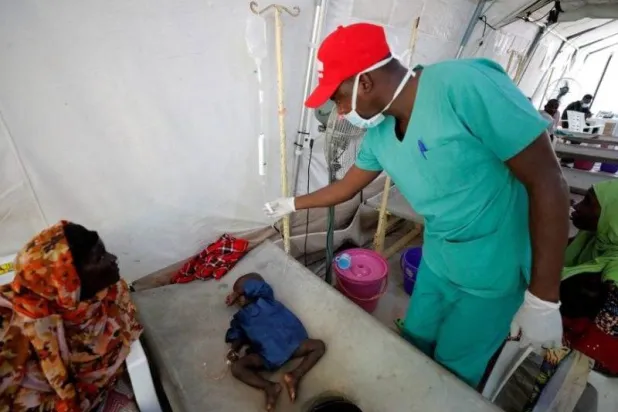
Sudan's cholera outbreak, declared on June 27, is poised to worsen as the nation grapples with escalating conflict and the onset of the rainy season, the World Health Organization warned Friday. The disease has already claimed at least 114 lives and infected more than 1,300 people, spreading across multiple Sudanese states, notably in Darfur and Kordofan.
Access for humanitarian aid and healthcare workers remains severely constrained in these regions, exacerbating the crisis. "Cholera is back," stated Shible Sahbani, the WHO representative in Sudan, highlighting an extremely high case fatality rate of 13.7%. He cautioned that the expected rainy season would likely worsen the situation.
Cholera is back. There is (a) case fatality rate of 13.7%, which is extremely high, and of course, the rainy season is expected to worsen the situation.
Cholera, a severe diarrheal disease, spreads rapidly when sewage and drinking water systems are compromised. Sudan is currently facing the world's largest humanitarian emergency, with over 33 million people requiring assistance and 21 million needing health services, according to the WHO.
Sahbani expressed particular concern for al-Obeid, the capital of North Kordofan, where health facilities are overwhelmed and fighting between the Sudanese army and the Rapid Support Forces (RSF) hinders humanitarian access. A UN official had previously warned of a human rights catastrophe unfolding in the city, drawing parallels to al-Fashir, which the RSF captured last year after a prolonged siege. Sahbani fears al-Obeid could become a similar or even worse situation.
There is the risk that it will become the second al-Fashir, or even worse.
DistantNews Editorial
Originally published by Asharq Al-Awsat in English. Translated, summarized, and contextualized by our editorial team with added local perspective. Read our editorial standards.
More Stories


From Our Blog

What Gets Lost (and Found) When News Is Translated

The Critical Role of Diaspora Media in Global News

What Travellers Should Know About Countries with Restricted Press

A Digital Nomad's Guide to Following Local News

How the Same Story Looks Different in Different Countries
