


WHO Warns of Approaching Heatwave, Stresses Preparedness
Translated from Croatian, summarized and contextualized by DistantNews.
At a glance
News
Named sources
Context piece
- The World Health Organization (WHO) warns that a new heatwave is forming over the Atlantic, with the most dangerous weeks of summer potentially still ahead.
- Several European countries, including Portugal, Spain, France, and the Benelux nations, are bracing for extreme temperatures, while parts of Central Asia are already experiencing heat above 40°C.
- WHO emphasizes that countries with developed national heatwave health protection plans respond more quickly and effectively, highlighting examples of good practices from Italy, Spain, Austria, Belgium, France, and North Macedonia.
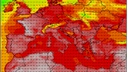
As a new heatwave forms over the Atlantic, the World Health Organization (WHO) is issuing a stark warning: the most severe weeks of this summer may still be on the horizon. Portugal and southern Spain are anticipating temperatures as high as 43°C this week, while France and the Benelux countries are preparing for another surge of extreme heat. Meanwhile, parts of Central Asia are already grappling with temperatures exceeding 40°C.
Extreme heat must now be viewed primarily as a public health threat, not exclusively as a meteorological phenomenon.
Recognizing the gravity of the situation, the WHO convened an extraordinary meeting with representatives from 41 European member states, the European Commission, and civil society organizations. The primary goal was to assess lessons learned from recent heatwaves and to strategize for the challenges ahead. Dr. Hans Henri P. Kluge, WHO Regional Director for Europe, stressed that extreme heat should now be viewed primarily as a public health threat, moving beyond a purely meteorological phenomenon.
The meeting, attended by over 130 participants, analyzed successful measures implemented during past heatwaves and identified areas requiring increased investment and improved coordination. A key takeaway emphasized by the WHO is that nations with robust national plans for health protection during heatwaves demonstrate significantly faster and more effective responses. Examples of best practices were highlighted, including Italy's real-time mortality monitoring system in 45 cities, Spain's enhanced public communication through media collaboration, and Austria's activation of an updated national plan with additional worker protections and improved inter-institutional coordination.
Countries that have developed national plans for health protection during heatwaves respond significantly faster and more effectively.
Further examples of effective strategies included Belgium's activation of its highest heat warning level, France's demonstration of cross-sectoral collaboration to alleviate the healthcare system, and North Macedonia's partnership with the Red Cross to reach homeless individuals. The WHO noted that a common thread among these successful cases is the pre-crisis preparation of plans that clearly define responsibilities and enable rapid action when temperatures become dangerous. These comprehensive plans integrate meteorological warnings with concrete public health measures, ensuring healthcare facilities are prepared, vulnerable populations are protected, and various sectors like social welfare, occupational safety, and urban planning are coordinated.
The common characteristic of all successful examples is that the plans were prepared before the crisis, clearly define the responsibilities of all services, and allow for a quick response when temperatures reach dangerous levels.
DistantNews Editorial
Originally published by Večernji List in Croatian. Translated, summarized, and contextualized by our editorial team with added local perspective. Read our editorial standards.
More Stories



From Our Blog

What Gets Lost (and Found) When News Is Translated

The Critical Role of Diaspora Media in Global News

What Travellers Should Know About Countries with Restricted Press

A Digital Nomad's Guide to Following Local News

How the Same Story Looks Different in Different Countries
