


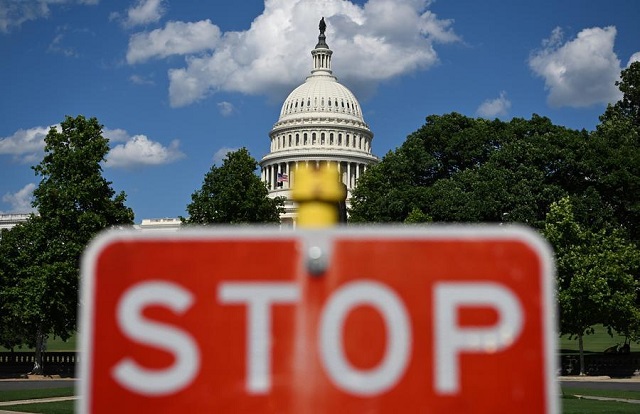
Why do Americans keep electing politicians who fail to deliver?
Summarized and contextualized by DistantNews.
At a glance
News
Sources not specified
Context piece
- Americans repeatedly elect politicians who fail to deliver on promises for better lives, higher wages, and safer streets.
- U.S. elections are heavily influenced by big money, with a small share of the population contributing the majority of campaign funds.
- Researchers note that overpromising is common across the political spectrum, with campaigns often acting as dramatic performances rather than policy discussions.
As the 2026 U.S. midterm primaries commence, candidates are actively seeking their parties' nominations by pledging solutions to the nation's most pressing challenges. However, for many voters, these promises echo past elections where similar pledges ultimately fell short.
The pattern of "you vote, I don't deliver" persists from Washington to local city halls. This phenomenon raises the question: why do politicians continue to win elections despite a track record of unfulfilled promises?
There are two things that are important in politics. The first is money, and I can't remember what the second one is.
A significant factor is the pervasive influence of money in American politics. As former U.S. senator Mark Hanna famously stated, "There are two things that are important in politics. The first is money, and I can't remember what the second one is." U.S. elections have become exceptionally costly, with the 2024 election alone costing an estimated $15.9 billion. A disproportionately large share of this funding originates from a tiny fraction of the population, with contributions from the top 1 percent of donors rising significantly after 2010.
By the time you pay for groceries, that's your whole work week of pay gone.
This financial influence often translates into politicians maintaining closer ties with major donors and lobbyists than with their average constituents. Meanwhile, as campaign spending escalates, ordinary Americans grapple with a cost-of-living crisis, feeling the pinch of tightened household budgets. Nick Marsh, a restaurant manager in Atlanta, Georgia, shared with Bloomberg, "By the time you pay for groceries, that's your whole work week of pay gone."
Researchers from Washington University observe that overpromising is a widespread practice across all levels of government and the political spectrum. Political science professor Murray Edelman described political campaigns not as policy discussions, but as "a highly ritualistic and dramatic performance." Ambitious proposals like "Medicare for All" gain traction as powerful campaign messages, despite facing significant legislative hurdles. Similarly, promises to resolve conflicts swiftly, such as Trump's pledge to end the Ukraine conflict "on day one," or local pledges like free bus service, exemplify this trend of prioritizing campaign rhetoric over deliverable outcomes.
The political campaign is not a discussion of alternative policies… It is a highly ritualistic and dramatic performance.
DistantNews Editorial
Originally published by The Independent Uganda. Summarized and contextualized by our editorial team with added local perspective. Read our editorial standards.
More Stories


From Our Blog

What Gets Lost (and Found) When News Is Translated

The Critical Role of Diaspora Media in Global News

What Travellers Should Know About Countries with Restricted Press

A Digital Nomad's Guide to Following Local News

How the Same Story Looks Different in Different Countries
