


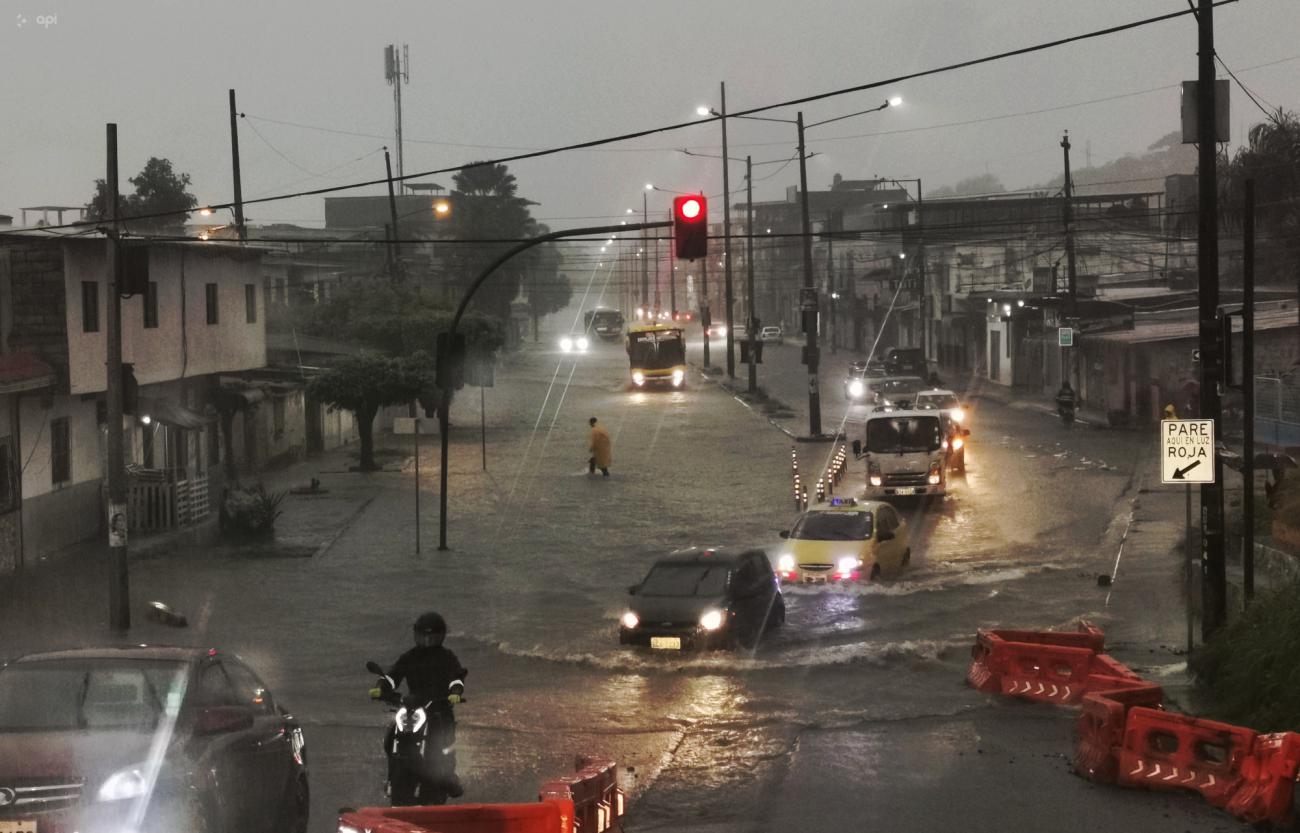
Why Guayaquil floods every time it rains
Translated from Spanish, summarized and contextualized by DistantNews.
At a glance
News
Sources not specified
Context piece
- Guayaquil experienced severe flooding after intense rain on June 7, affecting 25 sectors of the city.
- The city received rainfall equivalent to 50% of May's total precipitation in just two hours.
- Experts cite factors like low elevation, rising sea levels due to global warming, poor drainage, sediment accumulation from river confluences, and garbage obstructing storm drains as causes for the recurring floods.
Guayaquil faced significant flooding across 25 sectors following a powerful thunderstorm on Sunday, June 7. The intense rainfall, which included electrical storms, overwhelmed the city's drainage systems. In a mere two hours, Guayaquil recorded rainfall equivalent to half of the total precipitation for the entire month of May, measuring 65 millimeters per square meter. This event highlighted the city's chronic vulnerability to inundation. Urban planning expert Brick Reyes points to Guayaquil's low elevation, just 4 meters above sea level, as a primary risk factor, exacerbated by rising sea levels from global warming. The city's location at the confluence of the Babahoyo and Daule rivers contributes to sediment buildup, further complicating drainage. Reyes explained that high tides, even without rain, can cause flooding in low-lying areas. The accumulation of garbage in storm drains is another critical issue, with 23 of the 25 affected areas showing blockages from plastic bags and other debris, according to Alex Anchundia, manager of Risk Management at Segura EP. He specifically noted issues in sectors like Urdenor, Urdesa, and Guayacanes. The city's historical development, with many areas built on mangroves, also increases susceptibility to flooding, even in slightly elevated zones due to inadequate drainage planning.
Guayaquil is located among the four cities with the highest risk of flooding.
DistantNews Editorial
Originally published by El Comercio in Spanish. Translated, summarized, and contextualized by our editorial team with added local perspective. Read our editorial standards.
More Stories


From Our Blog

What Gets Lost (and Found) When News Is Translated

The Critical Role of Diaspora Media in Global News

What Travellers Should Know About Countries with Restricted Press

A Digital Nomad's Guide to Following Local News

How the Same Story Looks Different in Different Countries
