


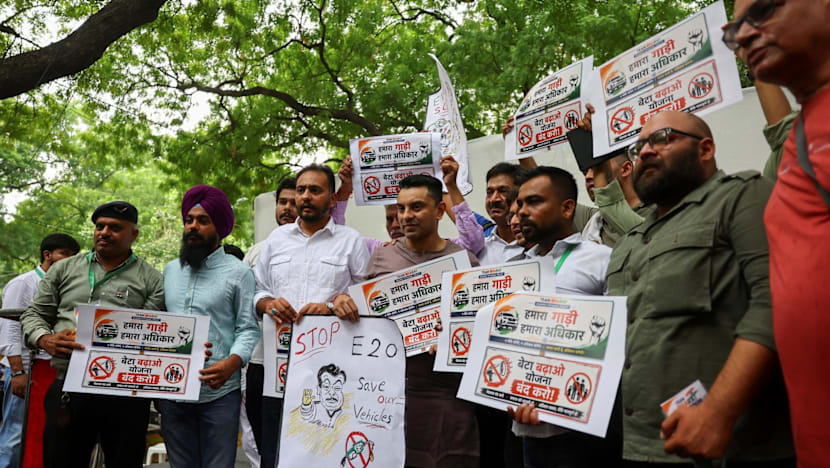
Why is India’s ethanol-blended fuel policy facing consumer backlash?
Summarized and contextualized by DistantNews.
At a glance
News
Sources not specified
Context piece
- India's accelerated rollout of E20 fuel, a 20% ethanol blend, is facing consumer backlash over alleged vehicle issues and mileage loss.
- The government promoted E20 to reduce oil dependence, boost farmer income, and cut emissions, but the transition has become a heated controversy.
- Motorists and mechanics report concerns about compatibility with older vehicles and the limited availability of pure petrol, while experts suggest improved fuel storage and consumer choice could ease the transition.
India's push to make E20 fuel, a blend of 20% ethanol with petrol, the standard choice for motorists has ignited a fierce consumer controversy, transforming a technical energy policy into a heated debate. While the government champions the move to curb oil imports, support farmers, and lower emissions, drivers are increasingly vocal about alleged problems.
Reports of vehicles breaking down and experiencing reduced mileage have surfaced, fueling anxiety among consumers. A viral video by YouTuber Manish Kashyap, alleging his vehicle malfunctioned due to the new blend, sparked a wave of similar claims on social media. Some drivers displayed fuel that appeared to have separated layers, attributing damage to their vehicles to the E20 blend. Although the automaker denied Kashyap's claims, citing fuel contamination, a criminal case was registered against him for spreading misinformation.
Those without legal status who haven't applied for asylum are extremely cautious. They're afraid of being arrested by ICE (Immigration and Customs Enforcement).
Mechanics and vehicle owners echo these concerns. Denzil Dmello, an IT executive from Mumbai, worries about his 12-year-old car, while a Pune-based motorist reported his wife's scooter repeatedly stalling. Gaurav Deshpande, a mechanic in Thane, noted instances of cars with fuel pump problems, though he cautioned that contaminants at petrol stations could also be a factor. Experts acknowledge these issues but suggest that India could ease the transition by enhancing fuel storage standards, maintaining consumer choice, and learning from other countries that introduced higher ethanol blends gradually alongside compatible vehicles and multiple fuel options.
Indonesians may not be targeted the way Latino communities are, but the fear is still there, especially because of how aggressively ICE carries out its operations.
DistantNews Editorial
Originally published by CNA. Summarized and contextualized by our editorial team with added local perspective. Read our editorial standards.
More Stories


From Our Blog

What Gets Lost (and Found) When News Is Translated

The Critical Role of Diaspora Media in Global News

What Travellers Should Know About Countries with Restricted Press

A Digital Nomad's Guide to Following Local News

How the Same Story Looks Different in Different Countries
