


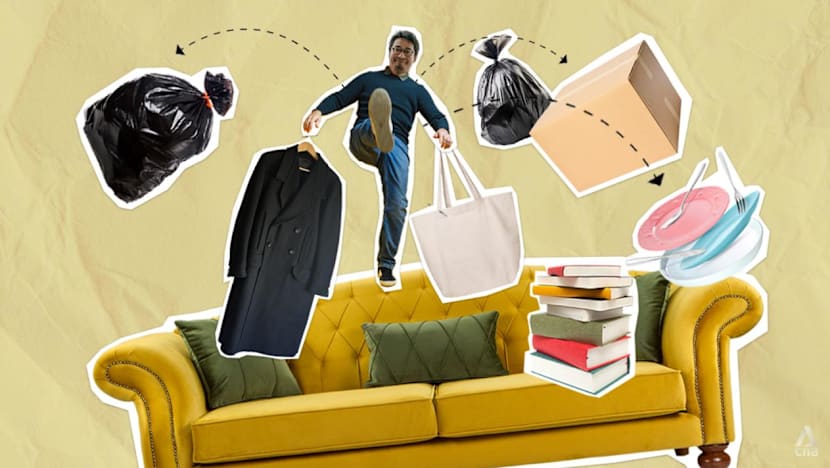
Why is it so hard to let go of the things we own?
Summarized and contextualized by DistantNews.
At a glance
In-depth
Sources not specified
Context piece
- The author reflects on the difficulty of letting go of possessions accumulated over nearly two decades in a London flat.
- A decision to move to Asia prompted a significant clear-out, revealing an overwhelming amount of unneeded items like coats and dinnerware.
- The process of decluttering highlights the emotional attachment to objects, often tied to unfulfilled future versions of oneself.
For almost 19 years, a London flat has been a cherished home, filled with light and a rare sense of open space. Yet, this beloved space has become overwhelmingly full, not in a way that was noticed as it happened, but through a gradual accumulation of objects.
It is also, I’ve come to realise, very full, though not in any way I noticed happening at the time.
The decision to shift focus to Asia and close the London chapter brought the issue of space into sharp relief. With a new home in Singapore already established with its own accumulated life, there was simply no room for two households' worth of history. This realization triggered a difficult process of sorting through nearly two decades of belongings.
The coats were the first to present a significant challenge. Fifteen wool and cashmere coats, many bought with pride, were laid out. The author questioned the necessity of owning so many, realizing they were kept not for current needs, but as symbols of a future, busier, colder life that never materialized. Letting go of these items brought an unexpected sense of grief.
There was simply no room left for two households’ worth of history under one roof, however small or cherished any single object happened to be.
Next came the tote bags, 25 of them, all expensively branded, and then the crockery. The discovery of three or four dinner services in a home where the author had never hosted more than four guests highlighted the tendency to keep items for a version of oneself who entertains constantly and meticulously caters to every need, a persona that never fully emerged.
Most of them, I realised, I had kept only because getting rid of a coat – especially one bought with such pride at Giorgio Armani – felt like giving up on some future, busier, colder version of my life that had never quite arrived.
The accumulation of possessions, from a sofa bought for its magazine-worthy appearance but never properly utilized, to inherited art and souvenirs from travels, created a 'knotted life.' This clear-out process reveals the deep emotional ties we form with our belongings, often representing aspirations and past selves rather than practical needs.
Turns out I had been keeping table settings for a version of myself who entertains constantly and remembers everyone’s allergies.
DistantNews Editorial
Originally published by CNA. Summarized and contextualized by our editorial team with added local perspective. Read our editorial standards.
More Stories


From Our Blog

What Gets Lost (and Found) When News Is Translated

The Critical Role of Diaspora Media in Global News

What Travellers Should Know About Countries with Restricted Press

A Digital Nomad's Guide to Following Local News

How the Same Story Looks Different in Different Countries
