



Why It Is So Hard for South Korea’s President to Make Good Appointments
Translated from Korean and summarized by DistantNews. Read the original for the full story.
At a glance
Opinion
Documents & data
Context piece
- President Lee Jae Myung recently dismissed six ministers and the policy chief, but public approval of both his performance and the reshuffle reached post-inauguration lows in two polls.
- The article argues that controversial nominees, weak vetting and poor political judgment have intensified criticism of the appointments.
- It says Lee faces deeper personnel challenges because he has a limited personal network, favors bureaucrats and tries to control appointments closely.
“Personnel is everything,” a familiar Korean political saying holds. Choosing the right people and placing them in the right jobs sits at the heart of governing. Yet President Lee Jae Myung’s latest reshuffle has drawn mostly negative public reactions after he dismissed six ministers and the policy chief.
A Korea Society Opinion Institute poll released on September 2 put Lee’s positive job rating at 41.2% and his negative rating at 53.9%, the worst since he took office. Respondents viewed the cabinet reshuffle negatively by a margin of 46.6% to 37.7%. A September 4 Gallup Korea poll found a 40% positive rating and a 51% negative rating, also the lowest of his presidency. Real estate policy and the economy ranked as the main reasons for dissatisfaction, but personnel decisions followed with 9%.
Personnel is everything.
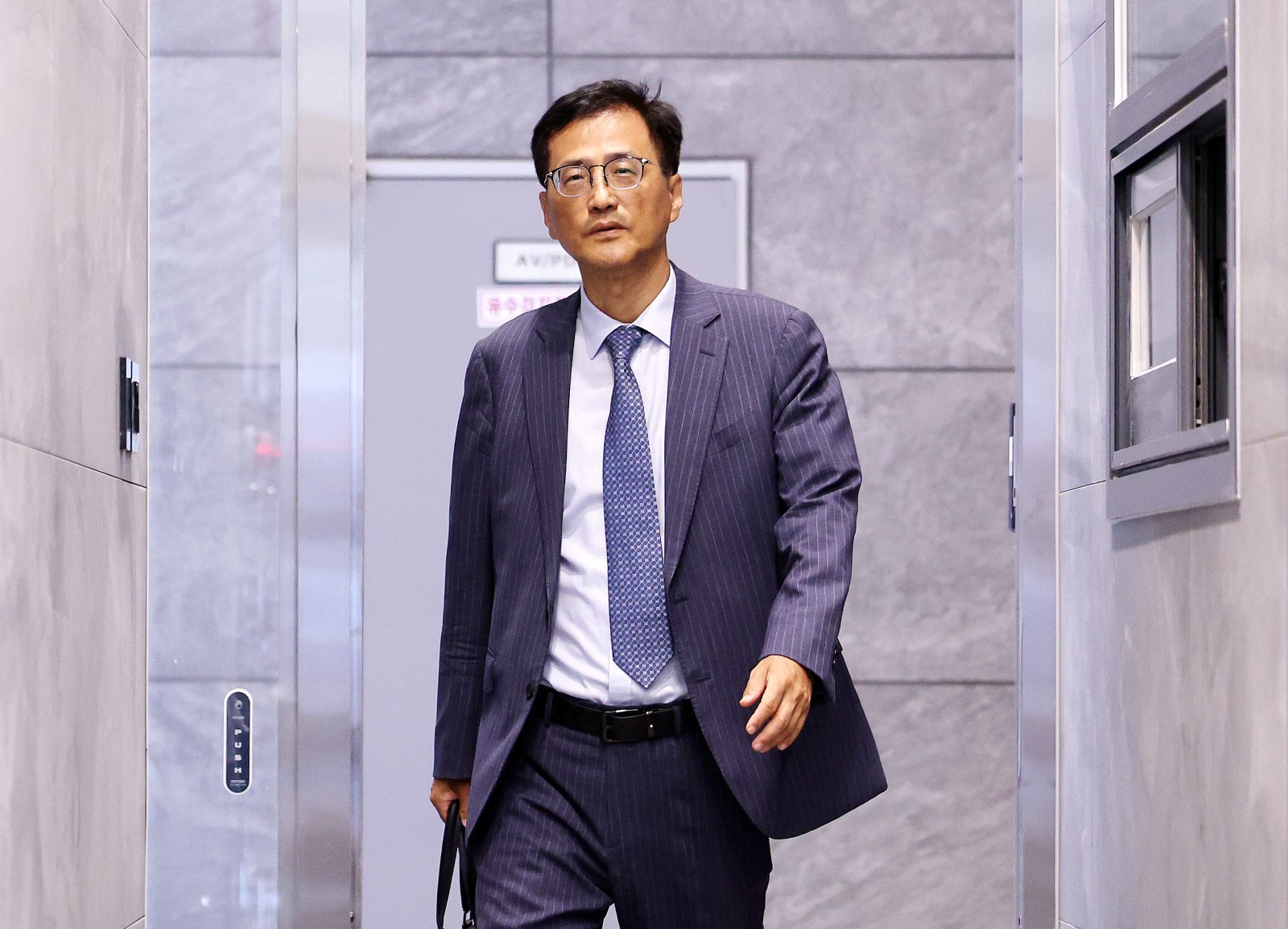
The article says Lee made some appointments to take responsibility for anxiety over housing policy and increased stock-market volatility. But criticism has focused on Kim Seung-won, the nominee for justice minister, and Yong Hye-in, the nominee for the minister of gender equality and family. It questions whether the presidential office’s vetting was adequate and argues that political judgment was the larger problem.
I judged that the first team of the civilian government needed people with reformist qualities and moral integrity. But it was not easy to find people who met those appointment standards.
Kim co-led a group of Democratic Party lawmakers who called for the withdrawal of criminal indictments. The article says his pledge not to direct such decisions would be difficult to trust, making the justice ministry nomination one that should have been avoided. It argues that Yong’s nomination could be seen by people in their 20s and 30s as an unfair favor, rather than as meaningful generational representation.
The broader argument is that presidential appointments are difficult because no candidate combines every desired quality. The article says Lee has a smaller network than previous presidents, having moved from Andong to Seongnam as a child, completed secondary education through an equivalency examination and built his career outside established academic and regional networks. It also criticizes his preference for bureaucrats and his tendency to handle appointments personally through a small circle from Seongnam. In the article’s view, distrust and hasty decisions have made the process more vulnerable to serious mistakes.
If you entrust work to bureaucrats, there is no task they cannot do and no task they can do.
About this summary
Originally published by Hankyoreh in Korean. Translated, summarized, and contextualized automatically by DistantNews, with a note on how the source frames the story. Not individually reviewed before publishing. How this works.
More Stories


From Our Blog

News in Translation: What Gets Lost, and How We Keep the Framing

Diaspora Media: How Communities Follow News From Home

Traveling Where the Press Is Not Free: How to Read the News There

The Digital Nomad's Guide to Local News

The Same Story, Different Countries: How Coverage Changes at the Border
