


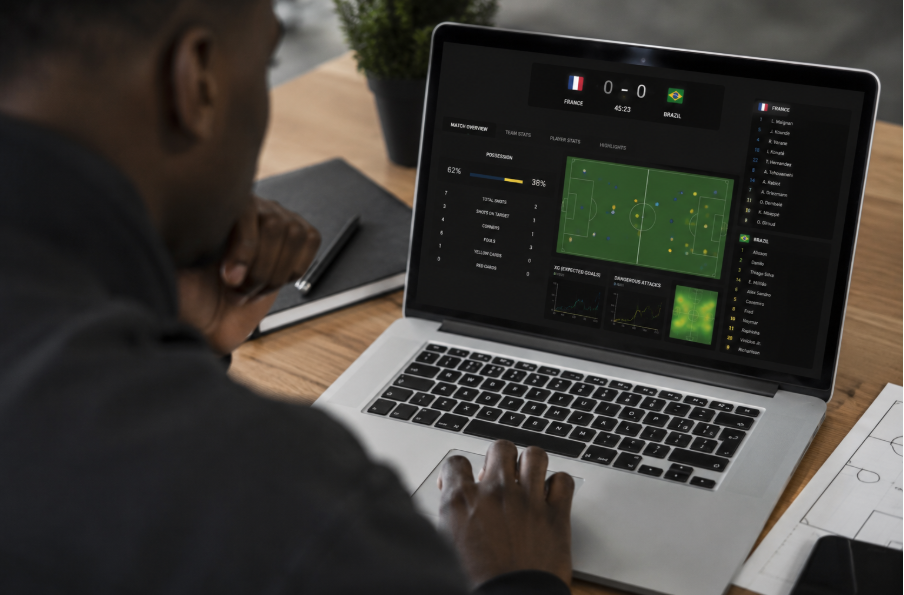
Why National Team Selection Predictions Are Less Reliable
Translated from French, summarized and contextualized by DistantNews.
At a glance
Analysis
Sources not specified
Context piece
- Predicting outcomes for national teams is more difficult than for club teams due to fewer matches and changing player rosters.
- Limited data availability hinders the construction of reliable statistical models for international fixtures.
- Short preparation times and diverse player backgrounds further complicate predictions for national team games.
Predicting the outcomes of international football matches presents a greater challenge than forecasting club games, primarily due to the significantly lower number of encounters and the constant flux in national team squads. These factors make it harder for even seasoned analysts to anticipate results accurately.
A key difficulty lies in the scarcity of data. While a club team might play between 40 to 50 official matches per season, national teams, even prominent ones like France or England, typically play only 8 to 12 official games annually. This limited data pool restricts the ability of statistical models to measure team consistency, offensive efficiency, or performance against varied opponents. Both qualifying matches and friendlies offer smaller sample sizes, inherently increasing prediction uncertainty.
Furthermore, the composition of national teams adds another layer of complexity. Unlike clubs that train together daily and develop consistent tactical automatisms, national team players come from different leagues and clubs, often with varying levels of match fitness. The limited preparation time, often just seven to ten days before a competition or international window, leaves little room for implementing new strategies or making significant tactical adjustments. This was evident in the 2022 World Cup, where Saudi Arabia upset Argentina, and in the 2018 World Cup qualifiers, where Italy failed to overcome Sweden despite having a competitive squad.
DistantNews Editorial
Originally published by Journal du Cameroun in French. Translated, summarized, and contextualized by our editorial team with added local perspective. Read our editorial standards.
More Stories



From Our Blog

What Gets Lost (and Found) When News Is Translated

The Critical Role of Diaspora Media in Global News

What Travellers Should Know About Countries with Restricted Press

A Digital Nomad's Guide to Following Local News

How the Same Story Looks Different in Different Countries
