


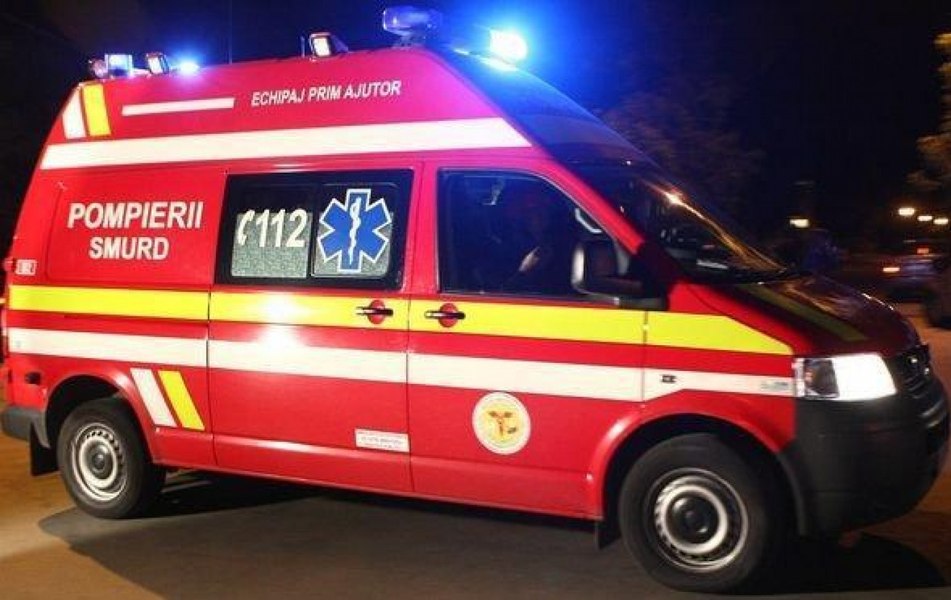
Why Romanian ambulances sometimes drive slowly with sirens on: A neonatal care perspective
Translated from Romanian, summarized and contextualized by DistantNews.
At a glance
News
Named sources
Context piece
- Ambulances in Cluj, Romania, sometimes drive slowly even with sirens on due to the critical condition of patients, particularly newborns.
- The slower speed prioritizes patient stability and safety over maximum velocity, especially for fragile infants in incubators.
- Sirens indicate priority for passage through traffic, not necessarily maximum speed, as medical teams must balance urgency with the need to avoid jarring movements.
Drivers in Cluj, Romania, have sometimes expressed frustration, honking and showing impatience when ambulances, despite using sirens and lights, proceed at a reduced speed. This behavior stems from a misunderstanding of the critical nature of certain medical transports. A message from a SMURD (Mobile Emergency Service for Resuscitation and Extrication) intensive care driver for newborns, shared by ISU Cluj, clarifies the reasons behind these seemingly slow emergency responses.
The driver explained that not all emergencies are the same. In cases involving the intensive care unit for newborns, the patients are critically ill infants transported in incubators and connected to medical equipment. For these extremely fragile patients, maintaining stability is as crucial as reaching the hospital quickly. Sudden acceleration, abrupt braking, or driving too fast over bumps can have severe consequences for a newborn's delicate condition.
In such missions, the priority is not always maximum speed, but patient safety. Strong acceleration, sudden braking, or speeding over bumps can have consequences for an extremely fragile newborn.
Therefore, the medical crew may intentionally reduce speed, even during an emergency, to prevent any movement that could destabilize the infant. This does not mean the ambulance is any less urgent; rather, it signifies a heightened level of care and caution. The siren's primary function is to secure priority passage through traffic, not to mandate maximum speed in all situations.
While some missions demand maximum speed within safety limits, others require meticulous calculation of every acceleration and deceleration. Ambulances transporting neonatal intensive care patients fall into this latter category. The driver urged the public to consider the diverse missions of ambulances before judging their speed, emphasizing that a slower pace does not diminish the urgency of the situation but reflects a commitment to the patient's well-being.
Please, before you judge or get angry, think that every ambulance has a different mission. The fact that it is not going very fast does not mean it is not an emergency.
DistantNews Editorial
Originally published by Adevărul in Romanian. Translated, summarized, and contextualized by our editorial team with added local perspective. Read our editorial standards.
More Stories



From Our Blog

What Gets Lost (and Found) When News Is Translated

The Critical Role of Diaspora Media in Global News

What Travellers Should Know About Countries with Restricted Press

A Digital Nomad's Guide to Following Local News

How the Same Story Looks Different in Different Countries
