

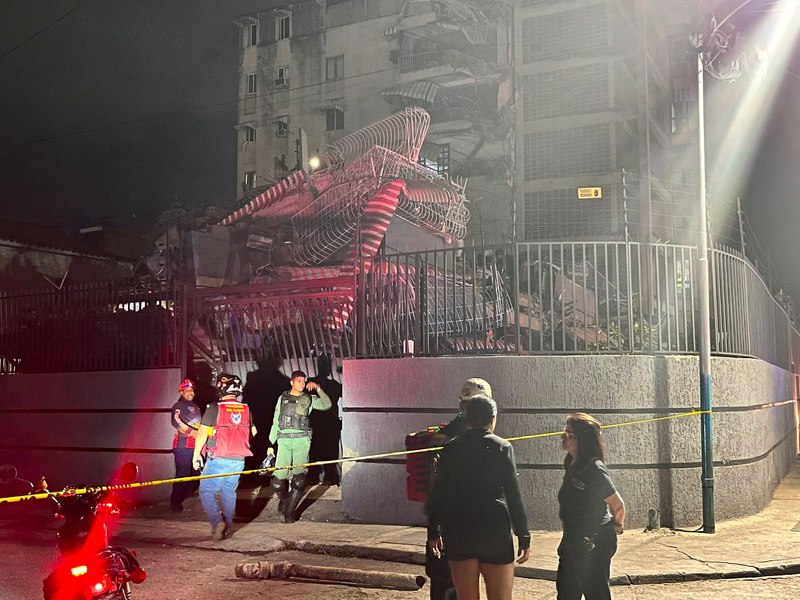

Why Two Huge Earthquakes Hit Venezuela in Just One Hour: Seismologists Explain 'Buildings Kill People'
Translated from Romanian, summarized and contextualized by DistantNews.
At a glance
News
Sources not specified
Ongoing story
- Two powerful earthquakes, measuring 7.2 and 7.5 magnitude, struck northern Venezuela within an hour.
- Seismologists explain the event as a geological inevitability due to over a century of accumulated tectonic tension.
- Experts emphasize that poorly constructed buildings, not earthquakes themselves, are the primary cause of casualties.
Northern Venezuela was struck by a rare and powerful seismic "doublet" within a single hour, with two major earthquakes registering magnitudes of 7.2 and 7.5. This intense seismic activity has caused widespread panic and destruction, leaving millions of Venezuelans facing the aftermath of collapsed homes and damaged infrastructure.
Earthquakes do not kill people, buildings do.
Geologists and seismologists describe the event not as an anomaly, but as a predictable outcome of long-term geological processes. The region has been accumulating tectonic stress between the South American and Caribbean plates for over a century. According to seismologist Gina Paola Villalobos Escobar, this tension buildup is akin to slowly bending a raw spaghetti strand until it snaps.
Imagine a raw spaghetti that you bend slowly. It deforms gradually, without breaking immediately. The tension continues to build until, suddenly, you hear a snap and the spaghetti fractures. That's exactly how an earthquake occurs.
Villalobos stressed that the primary danger lies not in the earth's movements but in the built environment. She highlighted that outdated construction standards and vulnerable buildings in many Latin American cities are the main culprits behind earthquake-related fatalities. The shallow depth of these earthquakes, occurring just 10-20 kilometers below the surface, amplified the seismic waves, making their impact particularly devastating in densely populated areas like Caracas. The interval of 126 years since the last major earthquake in the area is considered insignificant on a geological timescale, underscoring the long-term nature of tectonic energy accumulation.
We cannot measure geological time with the instruments of human time. Each fault has its own rhythm. There are regions where major earthquakes occur every 15 or 20 years and others where energy accumulates for a century before being released.
DistantNews Editorial
Originally published by Adevărul in Romanian. Translated, summarized, and contextualized by our editorial team with added local perspective. Read our editorial standards.
More Stories



From Our Blog

What Gets Lost (and Found) When News Is Translated

The Critical Role of Diaspora Media in Global News

What Travellers Should Know About Countries with Restricted Press

A Digital Nomad's Guide to Following Local News

How the Same Story Looks Different in Different Countries
