


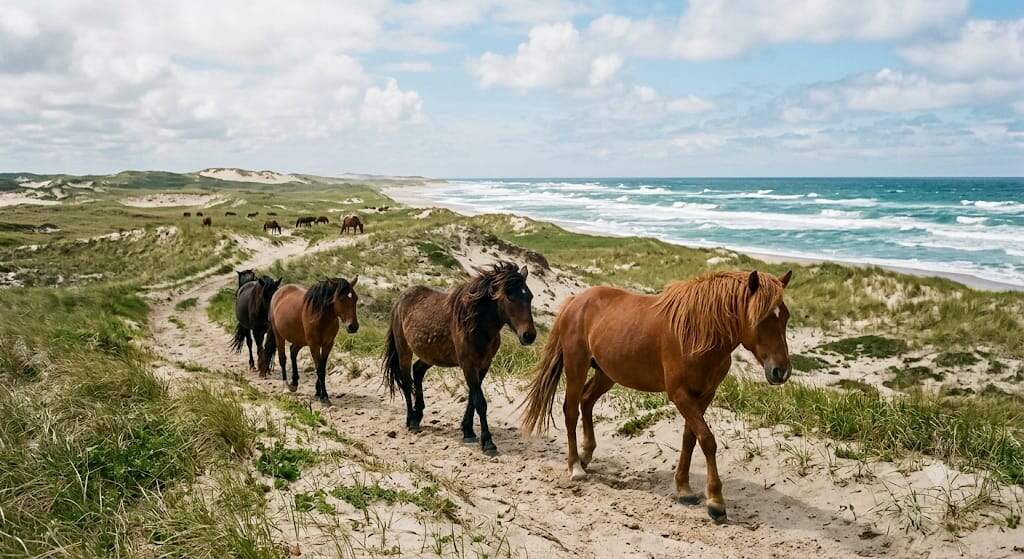
Wild horses roam Sable Island, a remote Canadian sand haven
Translated from English, summarized and contextualized by DistantNews.
At a glance
News
Sources not specified
Context piece
- Sable Island, a remote sand island 300 kilometers off Nova Scotia, Canada, is home to approximately 500 wild horses and a unique ecosystem.
- The island, protected as a national park reserve, has no permanent residents and is characterized by shifting sand dunes, harsh weather, and a history of shipwrecks.
- The wild horses, descended from animals brought in the 18th century, have adapted to isolation and are protected by Canadian law, allowing natural processes to govern their population.
Sable Island, a remote crescent of sand located more than 300 kilometers off the coast of Nova Scotia, Canada, presents a unique and extraordinary natural landscape. This narrow island, rarely wider than 1.5 kilometers, is constantly reshaped by powerful Atlantic winds and storms, making it one of the world's longest and narrowest sand islands. Despite its harsh weather and shifting dunes, Sable Island supports a thriving population of approximately 500 wild horses.
These iconic residents are descendants of horses brought to Nova Scotia in the 18th century, which were eventually released or abandoned on the island. Over generations, they have adapted to a life of complete isolation, without predators, fences, or human intervention. Canadian law now protects these feral horses, ensuring that natural processes dictate their survival and reproduction. Scientists have studied the Sable Island horses for decades, gaining valuable insights into animal adaptation due to their centuries-long isolation.
Sable Island is recognized as a national park reserve, managed by Parks Canada, with strictly regulated public access to protect its fragile environment. The island's surrounding waters have historically been dangerous for sailors, earning it the nickname "Graveyard of the Atlantic" due to numerous shipwrecks caused by hidden sandbars, dense fog, and unpredictable weather. Today, it serves as a haven for wildlife and a living laboratory for scientists studying coastal erosion and animal behavior within its distinct island ecosystem.
DistantNews Editorial
Originally published by Times of India in English. Translated, summarized, and contextualized by our editorial team with added local perspective. Read our editorial standards.
More Stories


From Our Blog

What Press Freedom Means for the News You Read

What Gets Lost (and Found) When News Is Translated

The Critical Role of Diaspora Media in Global News

What Travellers Should Know About Countries with Restricted Press

A Digital Nomad's Guide to Following Local News
