


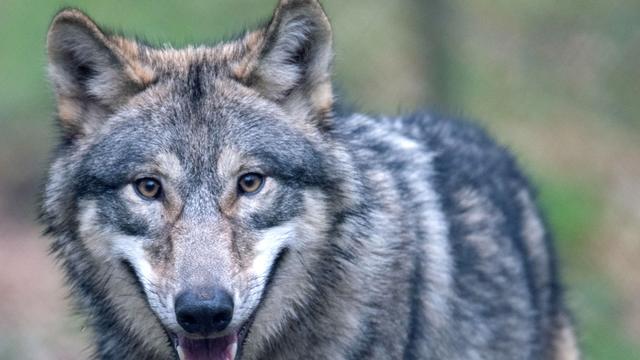
Wolf Attacks Claim 136 Livestock in Schleswig-Holstein This Year
Translated from German and summarized by DistantNews. Read the original for the full story.
At a glance
News
From a news agency
Context piece
- Around 136 livestock, mostly sheep, have been killed by confirmed wolf attacks in Schleswig-Holstein by early August this year.
- In the first half of 2025, approximately 123 livestock died in confirmed wolf attacks.
- The state environmental agency noted that no attacks have occurred behind fully intact, wolf-proof fences, highlighting their effectiveness as a preventative measure.
Schleswig-Holstein has recorded approximately 136 livestock deaths due to confirmed wolf attacks by early August this year, with the majority of victims being sheep. Several other animals were injured in these incidents. The State Office for Environmental Protection (LLU) in Schleswig-Holstein confirmed that some cases are still undergoing expert evaluation. This follows a similar trend in the first half of 2025, when around 123 livestock were killed in confirmed wolf attacks.
Some cases are still undergoing expert evaluation.
According to the LLU spokesperson, a significant finding is that no attacks have been registered behind fully intact, wolf-proof fences. The agency emphasized that these specialized fences have proven to be an "effective preventative measure." To minimize livestock losses from wolf predation, farmers in Schleswig-Holstein are advised to prepare for potential wolf presence and implement appropriate protective measures, especially if their pastures are located within designated wolf prevention areas.
These designated areas are established by the Ministry for Energy Transition, Climate Protection, Environment, and Nature, typically when a wolf or pack has been present for at least six months or if a series of recent attacks has occurred. Within these zones, the state can cover the costs of preventative measures upon application. However, outside these designated areas, the state does not cover such costs, which the LLU suggests might lead to fewer preventative fences being erected in those regions. Wolf attacks are also noted to be less frequent outside these specific zones.
A wolf that was particularly conspicuous in the attacks has not been present recently.
The LLU reports that no single wolf has been consistently identified as the primary aggressor in recent attacks; rather, various wolves have been implicated in the investigated incidents. Schleswig-Holstein is home to an estimated six resident wolves. Specific territories are confirmed for a pair in Segeberg (two adults), a pair in Sachsenwald (two adults), and a pack in Langenlehstener Heide (two adults and an unknown number of pups). Nationally, Germany documented 219 confirmed wolf packs, 43 pairs, and 14 resident lone wolves in 2024/2025, an increase from 209 packs with over 1,600 animals in 2023/2024.
We have proven that these special fences have proven to be an effective preventative measure.
About this summary
Originally published by Die Zeit in German. Translated, summarized, and contextualized automatically by DistantNews, with a note on how the source frames the story. Not individually reviewed before publishing. How this works.
More Stories


From Our Blog

What Gets Lost (and Found) When News Is Translated

How the Same Story Looks Different in Different Countries

The Critical Role of Diaspora Media in Global News

What Travellers Should Know About Countries with Restricted Press

A Digital Nomad's Guide to Following Local News
