


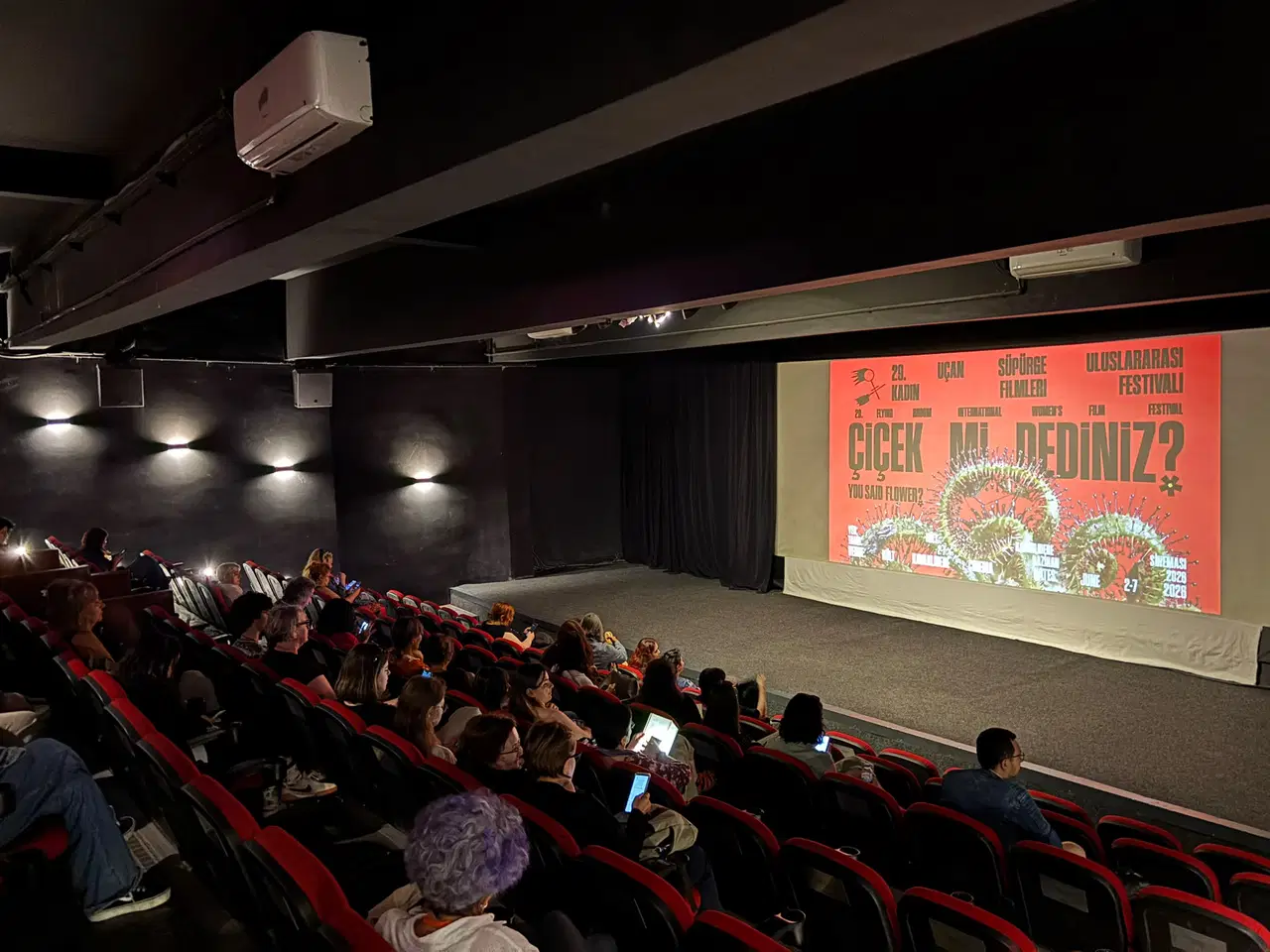
Women's labor in cinema's technical field debated at Flying Broom festival
Translated from Turkish, summarized and contextualized by DistantNews.
At a glance
In-depth
Sources not specified
Context piece
- The 29th Flying Broom International Women's Film Festival highlighted cinema's role in social memory, resistance, and solidarity.
- A panel at the festival focused on the challenges and solidarity networks for women in the technical aspects of the Turkish film and TV industry.
- Speakers shared experiences of inequality, mansplaining, and exploitation, emphasizing the importance of organization for an egalitarian future in cinema.
The 29th Flying Broom International Women's Film Festival underscored cinema's power as a tool for social memory, resistance, and solidarity. A key event on its fourth day was a panel at the Kültür Kavaklıdere Cinema, moderated by Prof. Dr. Mutlu Binark, titled "Women's Labor in the Technical Field of Cinema and TV Series Industries in Turkey."
Composer, sound engineer, and sound designer Mine Pakel, editor Tuvana Simin Günay, and writer Dr. Aysun Öner shared their struggles, encountered obstacles, and the significance of solidarity networks in their careers. Pakel recounted early career challenges and difficulties in receiving fair compensation for her work. Günay noted that women often face less trust in technical roles and experience "mansplaining."
Women are often trusted less in technical roles and sometimes face 'mansplaining.'
Dr. Öner highlighted that women are often excluded from cinema industry jobs even before hiring, citing excuses like heavy equipment. She also pointed out exploitation through unpaid labor in intern or assistant positions. The panel also discussed initiatives like "Susma Bitsin" (Don't Stay Silent, End It) and the Editors' Solidarity (KUDA), formed to combat harassment and discrimination in the sector. The importance of organization and strong solidarity networks for an egalitarian future in cinema was re-emphasized.
The festival also featured a rich program of film screenings. The morning session included "Short Reflections from Around the World," a selection of experimental stories by female directors from different continents, and "The Three Ways of Coming Home," co-directed by Xiaolu Guo, Andrea Luka Zimmerman, and Mania Akbari. The 2 PM screening featured Sophie Heldman's "The Education of Jane Cumming," followed by a discussion with producer Nadira Murray about historical justice. Farnoosh Samadi's "Between Dreams and Hopes," about an individual's struggle for survival under an oppressive regime, was also shown. The 4:30 PM session presented the Emmy-winning documentary "Nuns vs. the Vatican" by Lorena Luciano, exploring abuse within the Catholic Church and the determined struggle of nuns, followed by an emotional discussion with producer Filippo Piscopo and nun Vida. Lucia Murat's "Memories Told to Me," which centers on memory inquiries, was also screened, with a discussion with the director following.
Women are often kept away from cinema sector jobs even before they start, with excuses like heavy equipment, and are subjected to unpaid labor exploitation in intern or assistant positions.
DistantNews Editorial
Originally published by Cumhuriyet in Turkish. Translated, summarized, and contextualized by our editorial team with added local perspective. Read our editorial standards.
More Stories

From Our Blog

What Gets Lost (and Found) When News Is Translated

The Critical Role of Diaspora Media in Global News

What Travellers Should Know About Countries with Restricted Press

A Digital Nomad's Guide to Following Local News

How the Same Story Looks Different in Different Countries
