


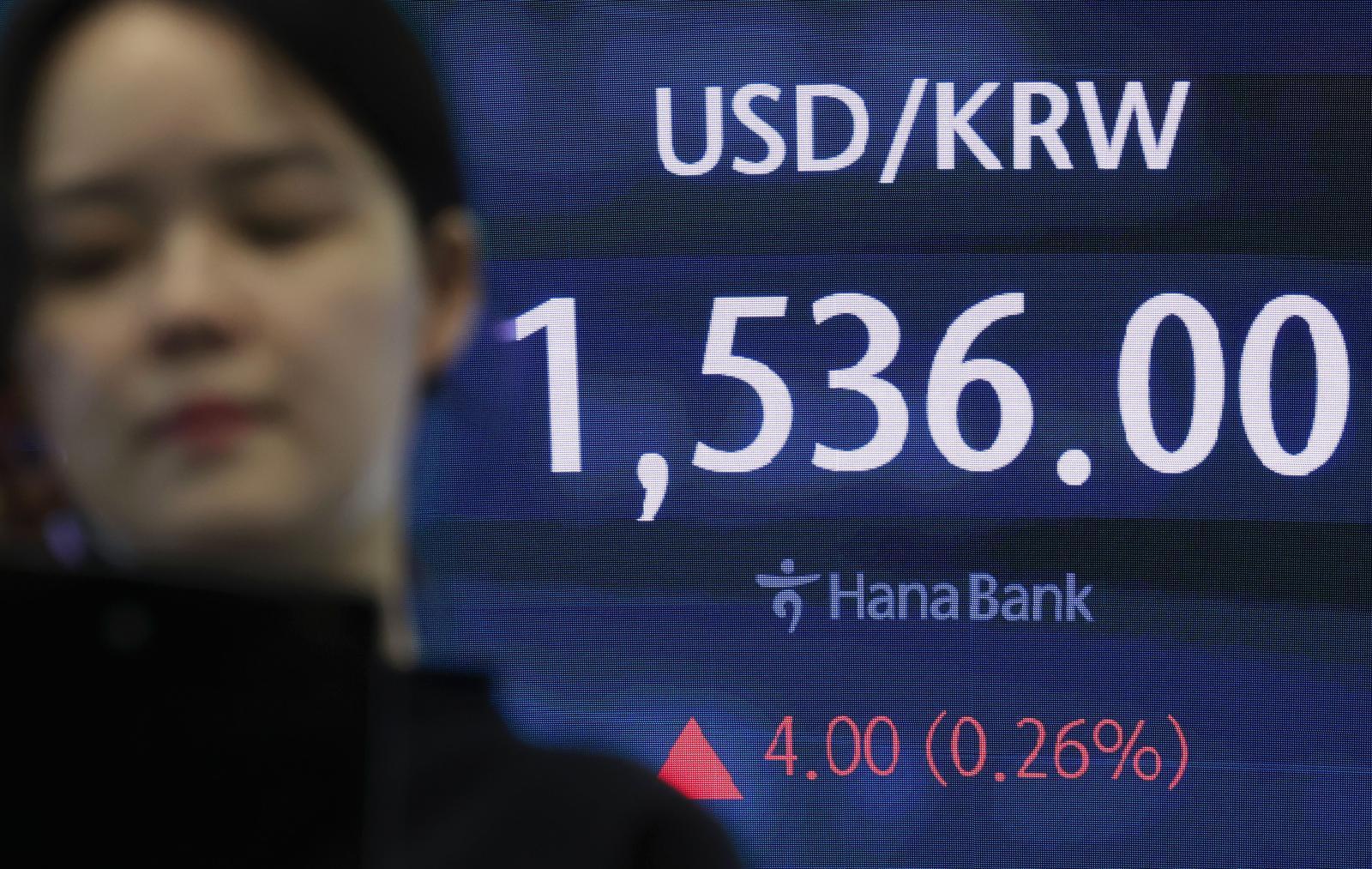
Won-Dollar Exchange Rate Closes Up 13.2 Won at 1545.2 Amid Middle East Instability
Translated from Korean, summarized and contextualized by DistantNews.
At a glance
News
Sources not specified
Ongoing story
- The South Korean Won weakened against the US Dollar, closing at 1545.2 Won per Dollar amid Middle East tensions.
- Despite a de-escalation agreement between the US and Iran, market risk aversion persisted, driving the Won's decline.
- Foreign investors continued to sell off domestic stocks, further pressuring the Korean currency.
The South Korean Won depreciated against the US Dollar, closing at 1,545.2 Won on Friday, June 29. This decline occurred despite an agreement between the United States and Iran to halt mutual attacks, as market sentiment remained cautious due to lingering Middle East tensions. The Won opened the trading day at 1,536.5 Won per Dollar and saw its value erode throughout the session.
Despite the weekend's offshore dollar weakness and oil price drop, it will show mixed results due to the resurgence of Middle East risk.
The Dollar Index, which measures the Dollar's strength against a basket of major currencies, slightly decreased to 101.29 from the previous day's 101.36. However, this did not translate into a stronger Won. The underlying cause for the currency's weakness appears to be a persistent risk-aversion sentiment in the market, fueled by renewed concerns over the US-Iran situation. Although both nations reportedly agreed to cease hostilities, disagreements over clauses related to the Strait of Hormuz in their Memorandum of Understanding (MOU) have resurfaced, with Iran reiterating the need for coordination in shipping traffic.
Adding to the pressure on the Won, foreign investors continued their net selling of South Korean stocks. This outflow of capital from the domestic stock market further weakened the Korean currency. Analysts suggest that the market's familiarity with the cycle of negotiations, agreements, and subsequent flare-ups between the US and Iran has made it difficult to quell investor anxiety.
The market's anxiety, accustomed to the repeated pattern of negotiations, agreements, and renewed conflict, is unlikely to be easily calmed.
Looking ahead, market watchers anticipate that the Won could face further upward pressure if the Dollar Index and oil prices rebound. The ongoing geopolitical uncertainty, coupled with potential sell-offs in the tech sector due to delays in the IPO of companies like OpenAI, could also contribute to continued foreign capital outflows from the South Korean market.
The possibility of a delay in OpenAI's listing could lead to sell-offs in tech stocks, and foreign capital outflows from the domestic stock market are likely to continue due to external uncertainties.
DistantNews Editorial
Originally published by Dong-A Ilbo in Korean. Translated, summarized, and contextualized by our editorial team with added local perspective. Read our editorial standards.
More Stories


From Our Blog

What Gets Lost (and Found) When News Is Translated

The Critical Role of Diaspora Media in Global News

What Travellers Should Know About Countries with Restricted Press

A Digital Nomad's Guide to Following Local News

How the Same Story Looks Different in Different Countries
