


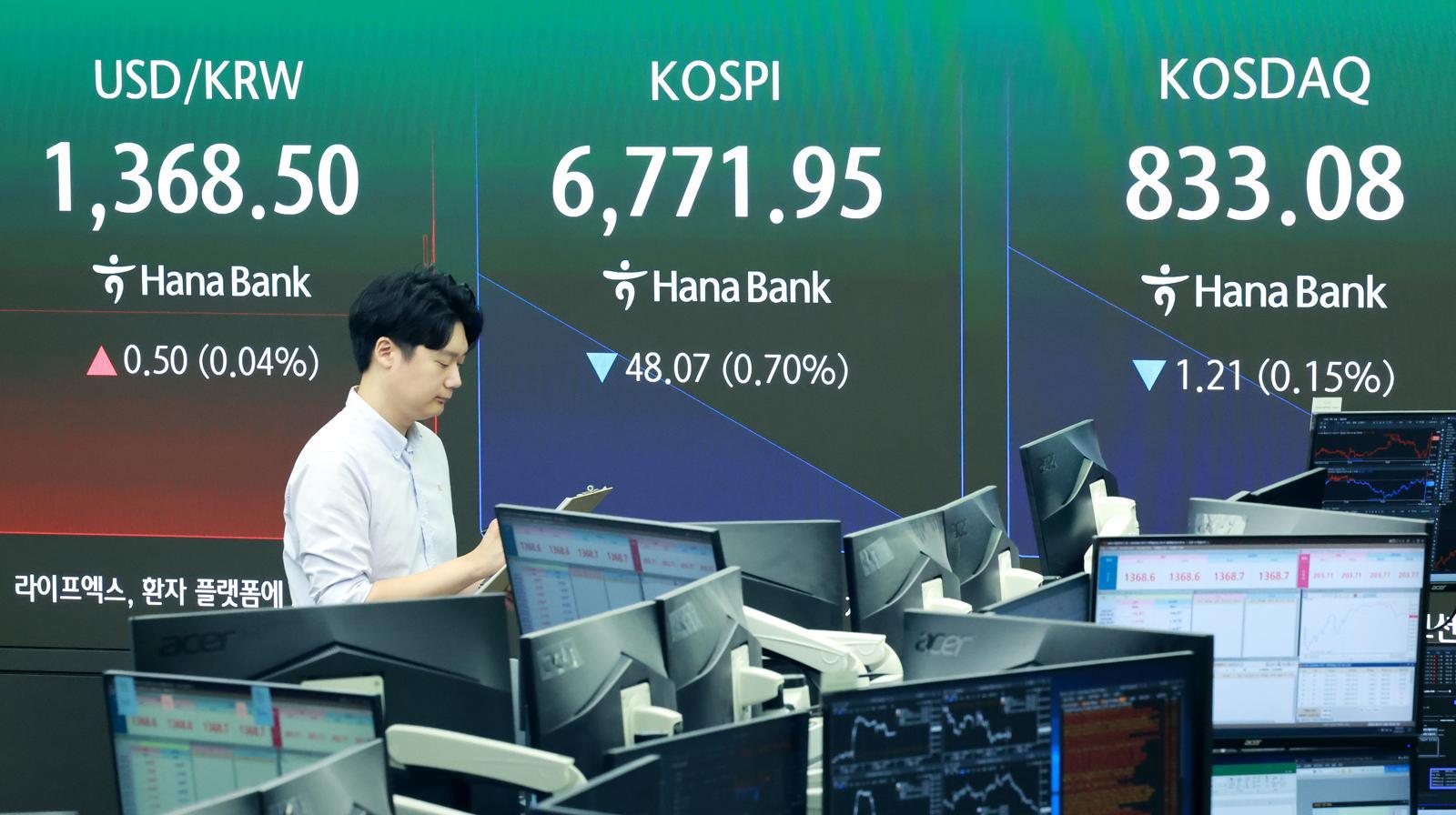
Won-dollar rate falls into the 1,360s during trading, reaching a 13-month low
Translated from Korean and summarized by DistantNews. Read the original for the full story.
At a glance
News
Named sources
Context piece
- The won-dollar exchange rate fell as low as 1,364.3 won during trading in Seoul, its lowest intraday level since July 7 last year.
- The rate later closed at 1,370.4 won, up 1.8 won from the previous session.
- Continued dollar selling by exporters, easing market conditions and expectations for a stronger yen supported the won, while higher oil prices limited the decline.
The won-dollar exchange rate dropped into the 1,360-won range during trading on Sept. 1, reaching its lowest level in about 13 months before recovering slightly by the close.
The rate opened at 1,368.0 won, down 0.6 won from the previous session’s close of 1,368.6 won. It then fell to an intraday low of 1,364.3 won, the lowest since the rate touched 1,361.7 won on July 7 last year. The currency pair ended the Seoul session at 1,370.4 won, up 1.8 won from the previous day.
The most important focus for the Fed right now should be inflation.
The decline followed continued dollar selling by export companies through Aug. 31, which increased the supply of dollars in the foreign-exchange market. The dollar had strengthened after Federal Reserve Chair Wash said in a speech in Jackson Hole, Wyoming, on Aug. 28 that “the most important focus for the Fed right now should be inflation.” However, the dollar’s rise was limited as markets later stabilized.
The Japanese government and the Bank of Japan will take measures leading to a stronger yen.
Expectations that the yen could strengthen also supported the won, which often moves in tandem with Japan’s currency. U.S. Treasury Secretary Scott Bessent recently told CNBC that the Japanese government and the Bank of Japan would take measures leading to a stronger yen.
The rate’s decline was limited by rising international oil prices amid renewed tensions between the United States and Iran. Min Kyung-won, a researcher at Woori Bank, said renewed fighting in the Middle East had pushed oil prices higher, while bargain buying after the sharp currency fall could also prevent a deeper drop. The Kospi rose 0.23% to 6,835.80, while the Kosdaq fell 1.56% to 821.25.
Fighting has resumed in the Middle East, and oil prices have turned higher in response. In addition, bargain buying is emerging among those expecting a rebound after the sharp currency decline, making a large fall difficult.
About this summary
Originally published by Dong-A Ilbo in Korean. Translated, summarized, and contextualized automatically by DistantNews, with a note on how the source frames the story. Not individually reviewed before publishing. How this works.
More Stories

From Our Blog

What Gets Lost (and Found) When News Is Translated

The Critical Role of Diaspora Media in Global News

What Travellers Should Know About Countries with Restricted Press

A Digital Nomad's Guide to Following Local News

How the Same Story Looks Different in Different Countries
