

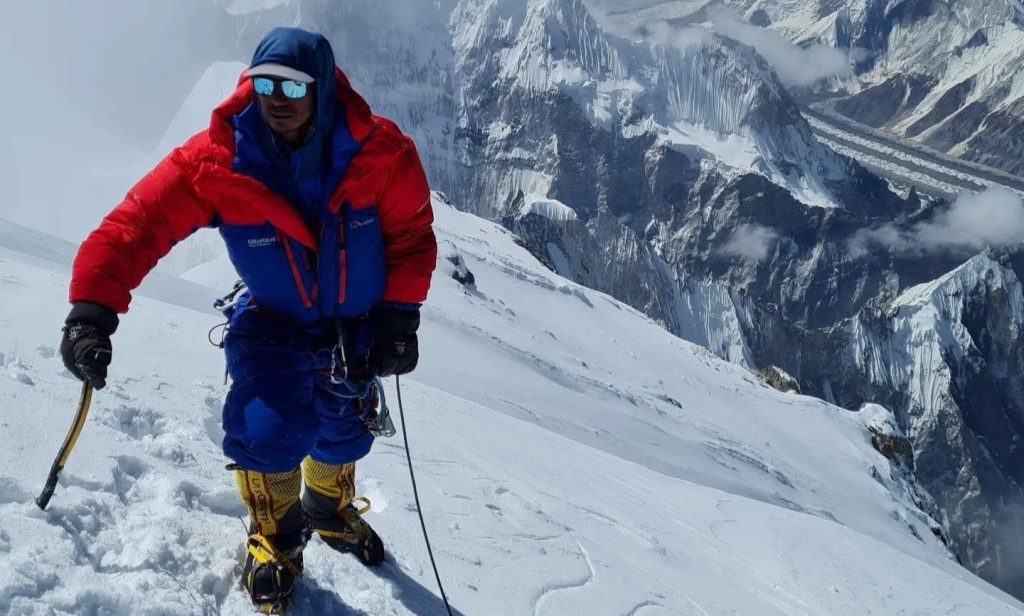

World awaits status of missing climbers, including Nirmal Purja
Summarized and contextualized by DistantNews.
At a glance
News
Sources not specified
Ongoing story
- Rescue teams located six additional climbers by drone on Pakistan's Broad Peak after an avalanche swept away a 10-member team, including renowned mountaineer Nirmal Purja.
- Three bodies were recovered, and the condition of the tenth climber remained unknown more than 30 hours after the Thursday morning avalanche.
- The avalanche occurred at approximately 7,600 meters as the team ascended towards the summit, with GPS data indicating a rapid descent after the incident.
Rescue teams are racing against time to determine the fate of climbers on Pakistan's Broad Peak, following an avalanche that struck a 10-member expedition. Among the missing is Nirmal Purja, a celebrated Nepali mountaineer known for his speed records.
By late Friday, drone surveillance had located six additional climbers, bringing the total number of sighted individuals to nine. However, their identities and conditions were not immediately confirmed by authorities. Three bodies had already been recovered earlier in the day, including those of Nepali climber Pur Bahadur Gurung and Omani climber Nadhira Al Harthy. The whereabouts of the tenth climber remain unknown.
The avalanche hit the team around 9 a.m. Thursday at an altitude of roughly 7,600 meters, between Camp 2 and Camp 3, as they were ascending the 8,051-meter peak. GPS tracking data provided the first indication of the disaster, showing climbers moving rapidly downhill. Purja's own tracking device indicated movement until Friday morning, shifting downhill shortly after the avalanche.
Rescue operations, coordinated from base camp, faced delays due to darkness on Thursday night. Search teams resumed at first light Friday, recovering the first bodies by mid-morning. A Pakistani Army helicopter later transported them for further processing. The pace of rescue efforts in Pakistan has been noted as slower than in Nepal, primarily due to reliance on military resources rather than the immediate private helicopter response available in Nepal.
The GPS track showed people coming straight down from above 7,000 metres. That’s when I understood the situation wasn’t good.
DistantNews Editorial
Originally published by Kathmandu Post. Summarized and contextualized by our editorial team with added local perspective. Read our editorial standards.
More Stories


From Our Blog

What Gets Lost (and Found) When News Is Translated

The Critical Role of Diaspora Media in Global News

What Travellers Should Know About Countries with Restricted Press

A Digital Nomad's Guide to Following Local News

How the Same Story Looks Different in Different Countries
