


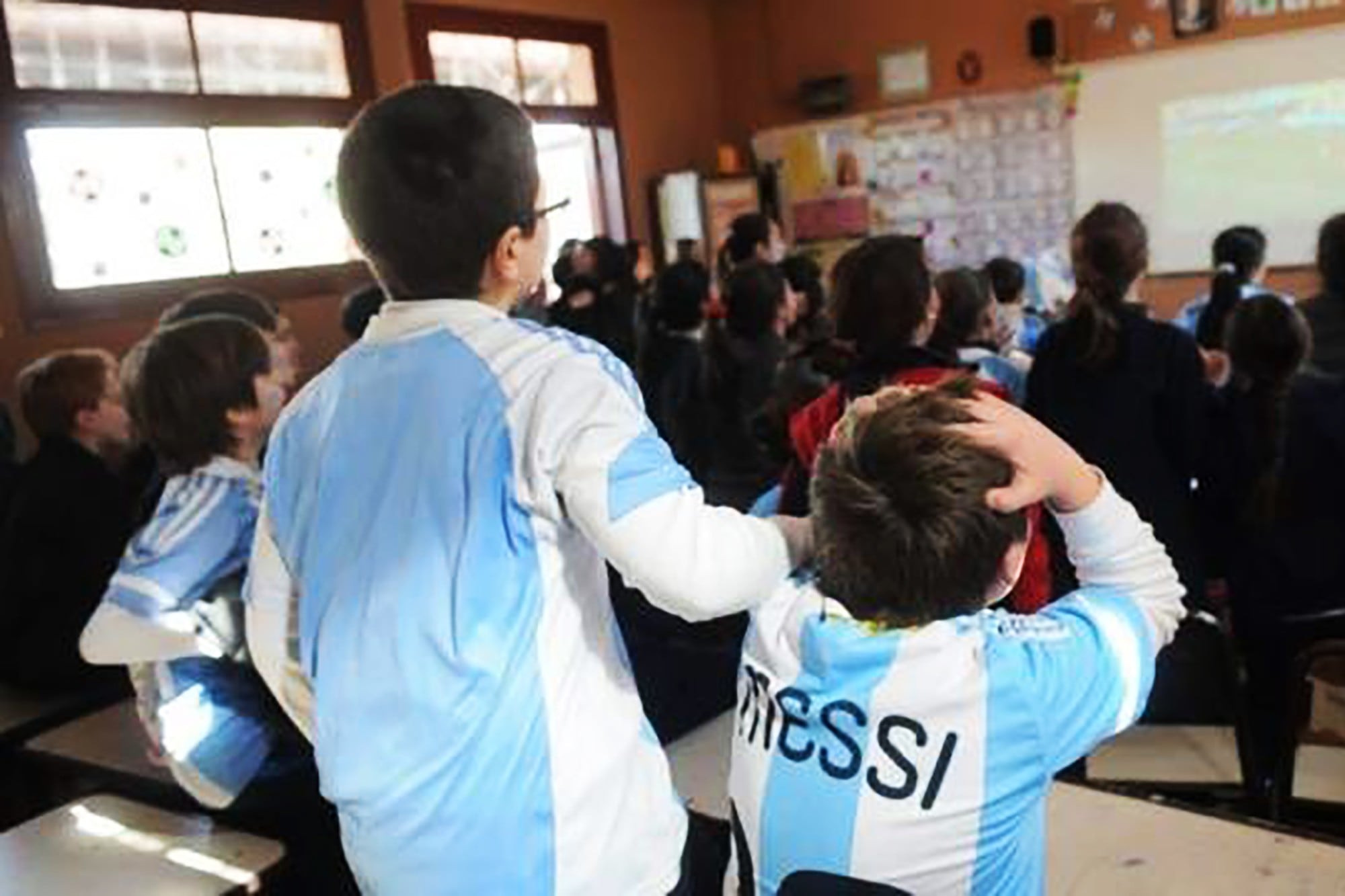
World Cup 2026: Argentina's Schools Turn Tournament Fever into Learning Opportunities
Translated from Spanish, summarized and contextualized by DistantNews.
At a glance
In-depth
Named sources
Context piece
- Schools and families in Argentina are using the 2026 World Cup as an educational opportunity beyond just supporting the national team.
- Specialists and teachers see the tournament as a tool to teach subjects like math, geography, and emotional education.
- The World Cup's popularity allows educators to integrate student interests into classroom activities, turning enthusiasm into learning experiences.
The 2026 World Cup is proving to be more than just a sporting event for schools and families in Argentina; it's becoming a powerful educational tool. Specialists and teachers are leveraging the global tournament to engage students in a wide range of subjects, from mathematics and geography to emotional education and social skills.
The school cannot be thought of in isolation from culture and the events that mobilize society.
Schools like Aletheia recognize that major social events are integral to school life. "The school cannot be thought of in isolation from culture and the events that mobilize society," explains Laura Burzomi, director of Early Childhood and Primary Education. By tapping into students' curiosity about the World Cup, educators are developing projects that explore the geography of participating countries, their languages, traditions, and national symbols. The sport also serves as an entry point for statistical analysis and even scientific aspects of athletic performance.
At the Nueva Escuela Argentina 2000 (NEA 2000), the craze for trading cards has been integrated into learning. Director Alejandra Salonia noted, "The cards invaded the school's play areas, and we decided to capitalize on the children's genuine interest." This led to natural math lessons as students calculated missing cards, duplicates, and exchange needs. Activities also expanded to include flags, countries, and cultures from around the world.
The cards invaded the school's play areas, and we decided to capitalize on the children's genuine interest.
For Florencia Z., a third-grade teacher in a school in the northern suburbs, the World Cup is a unique chance to boost student motivation. "The kids feel the World Cup intensely. They are soccer fanatics and fans of Messi. That motivation adds a huge plus to daily activities," she shared. She designed a themed booklet that spans all subjects, demonstrating how the passion for the game can be channeled into diverse academic pursuits.
The kids feel the World Cup intensely. They are soccer fanatics and fans of Messi. That motivation adds a huge plus to daily activities.
DistantNews Editorial
Originally published by La Nación in Spanish. Translated, summarized, and contextualized by our editorial team with added local perspective. Read our editorial standards.
More Stories



From Our Blog

What Gets Lost (and Found) When News Is Translated

The Critical Role of Diaspora Media in Global News

What Travellers Should Know About Countries with Restricted Press

A Digital Nomad's Guide to Following Local News

How the Same Story Looks Different in Different Countries
