

World Cup 2026: England dominates possession but draws with Norway at halftime in quarter-final
Translated from Spanish, summarized and contextualized by DistantNews.
At a glance
News
Sources not specified
Context piece
- England dominated possession in the first half of their 2026 World Cup quarter-final against Norway but could not convert it into a lead.
- Norway's organized and effective play maintained a 1-1 draw at halftime, leaving the tie open.
- Statistics show England's ball control with 65% possession and 95% pass accuracy, while Norway was more direct and solid defensively.
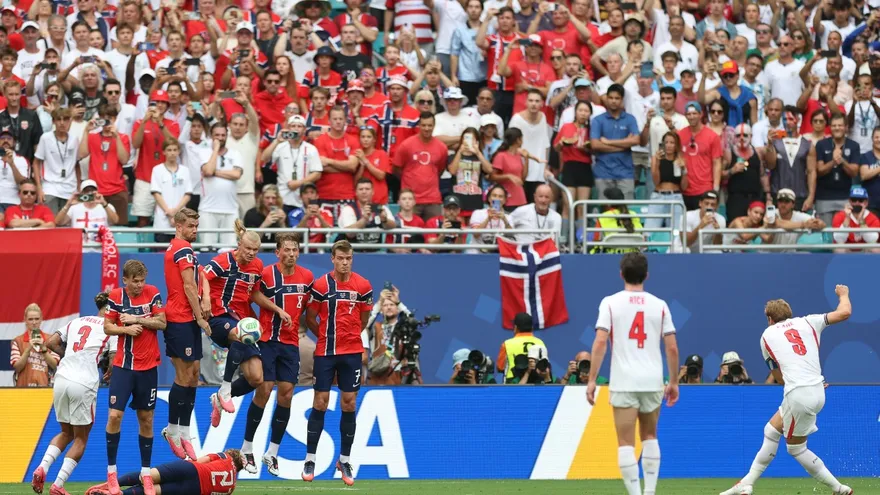
England controlled the ball throughout the first half of their 2026 World Cup quarter-final match against Norway. However, they failed to translate this dominance into a lead on the scoreboard. Norway, employing an organized and effective strategy, capitalized on their opportunities to maintain a 1-1 draw at halftime, leaving the tie completely open.
Statistics highlight England's control, with 65% possession and an impressive 95% pass completion rate, far exceeding Norway's 145 successful passes with 82% accuracy. England completed 361 passes overall, compared to Norway's 176, confirming England's superiority in ball circulation.
Despite less possession, Norway compensated with more direct play and a solid defensive effort. Both teams had a similar number of shots (five for Norway, four for England) and each recorded one assist for their goals. Norway's defense was particularly notable with nine clearances and twelve ball recoveries, contrasting sharply with England's single clearance and two recoveries.
In other metrics, England generated more danger from set pieces with two corner kicks, while Norway had none. The English side was caught offside three times, compared to none for their opponent. The match was played with intensity, marked by five fouls from Norway and three from England, promising further excitement in the second half.
DistantNews Editorial
Originally published by TVN Panamá in Spanish. Translated, summarized, and contextualized by our editorial team with added local perspective. Read our editorial standards.
More Stories

From Our Blog

What Gets Lost (and Found) When News Is Translated

The Critical Role of Diaspora Media in Global News

What Travellers Should Know About Countries with Restricted Press

A Digital Nomad's Guide to Following Local News

How the Same Story Looks Different in Different Countries
