


World Cup 2026: Why Japanese fans clean stadiums after every game
Translated from Spanish, summarized and contextualized by DistantNews.
At a glance
News
Named sources
Context piece
- Japanese football fans are gaining global attention for cleaning stadiums after matches.
- This practice, seen as a sign of respect and cultural education, has been observed at various sporting events.
- The gesture highlights Japanese cultural values of responsibility and cleanliness.
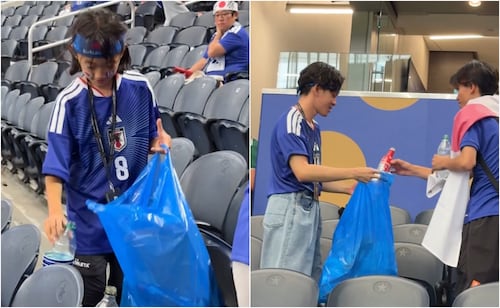
Japanese football fans have captured the world's attention with their remarkable display of education and respect during the 2026 FIFA World Cup. Following a surprising 2-2 draw between the Netherlands and Japan in Dallas, Texas, spectators from Japan were observed meticulously cleaning the stadium.
Viral videos shared by FIFA show fans diligently collecting trash, including cups, bottles, and plates, into blue bags they brought with them. This act of tidiness is not unique to football; it is a well-established practice among Japanese citizens at various sporting events, such as the World Baseball Classic.
One fan explained that the practice stems from a deep-seated cultural value of respect for everyone involved in an event and the venue itself. "Respect for everything. Respect for the players, for the fans, and also for the stadium," she stated. "It is an honor for us to be here, so we do not want to leave it all a mess. I think that is the reason why we do it."
The gesture has been widely praised on social media as a demonstration of responsibility and discipline, with many calling for it to be emulated by fans worldwide. It serves as a powerful example of how cultural norms can positively influence public behavior on a global stage.
Respect for everything. Respect for the players, for the fans, and also for the stadium. It is an honor for us to be here, so we do not want to leave it all a mess. I think that is the reason why we do it.
DistantNews Editorial
Originally published by El Universal in Spanish. Translated, summarized, and contextualized by our editorial team with added local perspective. Read our editorial standards.
More Stories


From Our Blog

What Press Freedom Means for the News You Read

What Gets Lost (and Found) When News Is Translated

The Critical Role of Diaspora Media in Global News

What Travellers Should Know About Countries with Restricted Press

A Digital Nomad's Guide to Following Local News
