


World Cup fan passion has scientific explanation; UNAM expert explains phenomenon
Translated from Spanish, summarized and contextualized by DistantNews.
At a glance
News
Sources not specified
Context piece
- Intense fan reactions during the FIFA World Cup have a neurobiological explanation, according to a UNAM expert.
- The prefrontal cortex, responsible for impulse control and emotional regulation, plays a key role in collective identification with national teams.
- Fans express their identification through symbolic actions like wearing national colors, fostering empathy and a sense of collective identity.
The intense euphoria, shouts, and embraces among strangers during the FIFA World Cup 2026 have a scientific basis, according to a neurobiologist from the National Autonomous University of Mexico (UNAM). Hugo Sánchez Castillo, a researcher at UNAM's Faculty of Psychology, explained that these collective phenomena are linked to the prefrontal cortex, the brain region governing impulse control, emotional regulation, and decision-making.
The prefrontal cortex, located behind the forehead in the anterior part of the frontal lobes, functions as the executive center of the brain and is responsible for complex thinking, personality, emotional regulation, and behavioral control.
Castillo detailed that the prefrontal cortex, located at the front of the brain, acts as the executive center responsible for complex thought, personality, and behavioral control. During major sporting events, this area's activity can decrease, temporarily reducing behavioral regulation mechanisms. This allows actions that might normally be inhibited, such as shouting in public or celebrating exuberantly, to manifest more easily.
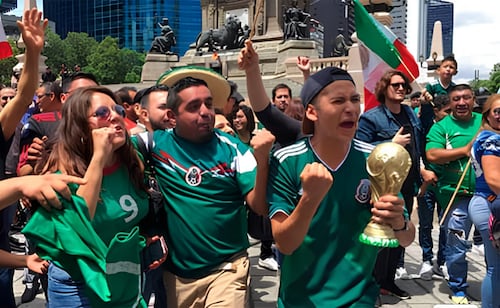
How do you recognize German fans, Norwegian fans, Mexican fans? Because they come dressed in their nation's colors.
This collective identification with national teams allows fans to deeply connect with their country's squad, acting as a unified social entity. While fans may not match players' athletic skills, they share symbolic elements like wearing national jerseys and colors, and participating in collective celebrations. These actions enhance empathy and identification with the national team.
The empathy that it generates leads to identification; it touches a sensitive chord because it is linked to idiosyncrasy and nationality.
"How do you recognize German fans, Norwegian fans, Mexican fans? Because they come dressed in their nation's colors," Castillo exemplified. Wearing national colors signifies a shift where individuality recedes, replaced by a collective identity. Fans begin to see themselves not just as individuals but as emotionally integrated into a mass representing their country. This identification is closely tied to empathy, enabling fans to emotionally align with their team, touching a sensitive chord linked to idiosyncrasy and nationality.
During a football match in Mexico, mimetization occurs, the...
DistantNews Editorial
Originally published by El Universal in Spanish. Translated, summarized, and contextualized by our editorial team with added local perspective. Read our editorial standards.
More Stories



From Our Blog

What Press Freedom Means for the News You Read

What Gets Lost (and Found) When News Is Translated

The Critical Role of Diaspora Media in Global News

What Travellers Should Know About Countries with Restricted Press

A Digital Nomad's Guide to Following Local News
