


World Cup final to have clearer skies as thunderstorms clear wildfire smoke from Northeast
Translated from English, summarized and contextualized by DistantNews.
At a glance
News
From a news agency
Context piece
- Thunderstorms are expected to clear wildfire smoke from the Northeastern United States before Sunday's World Cup final.
- Air quality warnings had been in effect across a wide swath of the U.S. on Saturday due to smoke from Canadian wildfires.
- Meteorologists predict air quality will improve to moderate levels, posing little to no health risk for spectators.
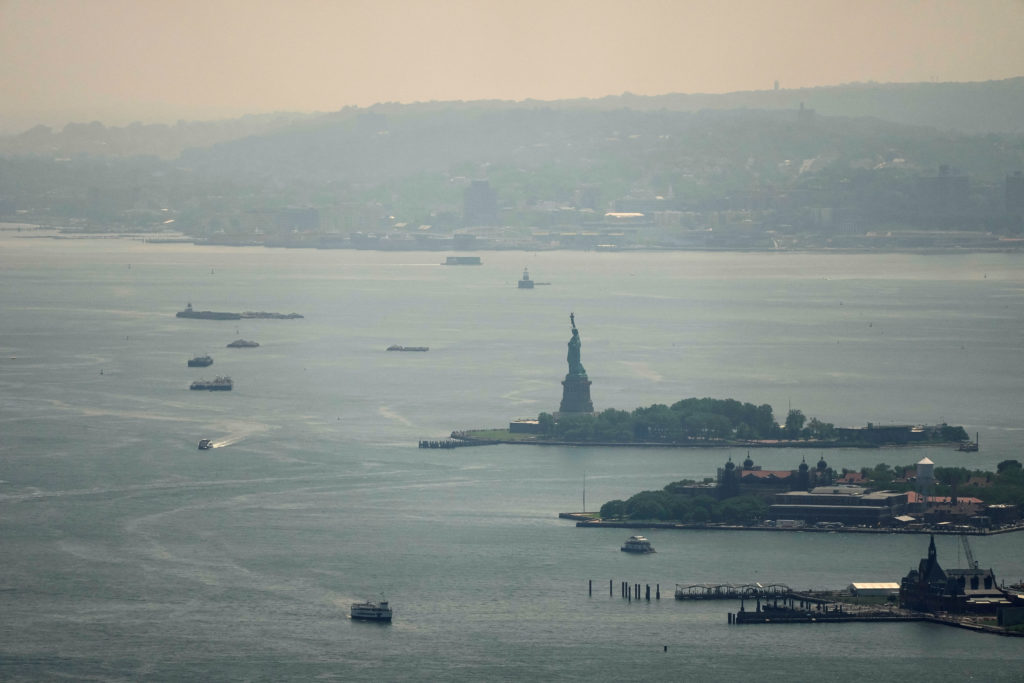
Wildfire smoke that has choked the Northeast in haze is expected to largely dissipate before Sunday's World Cup final, thanks to an incoming storm front. Air quality warnings had blanketed much of the United States on Saturday.
This storm front will largely move the smoke out of the Northeast before the final between Spain and Argentina.
At MetLife Stadium in East Rutherford, New Jersey, where the final between Spain and Argentina will be held, heavy rain and thunder arrived Saturday, forcing state police to urge attendees to seek shelter. Spain's training session was suspended due to the storms and lightning.
There could be some lingering smoke that would make things hazy, but very faint.
"This storm front will largely move the smoke out of the Northeast before the final," said Tyler Roys, a senior meteorologist at AccuWeather. He anticipates only faint, lingering smoke, not the "eye-popping" haze that has led to poor air quality.
In terms of the thickest smoke, the smoke that has really been eye-popping and leads to poor air quality, that is not expected across New York City or much of the Northeast.
Meteorologists predict the air quality index will improve from "unhealthy for sensitive groups" on Saturday to "moderate" on Sunday in East Rutherford. This level poses little to no health risk for the general public. "It won't be dangerous anymore," said WFLA-TV Chief Meteorologist Jeff Berardelli. "It's going to be dramatically better."
It won't be dangerous anymore.
DistantNews Editorial
Originally published by PBS NewsHour in English. Translated, summarized, and contextualized by our editorial team with added local perspective. Read our editorial standards.
More Stories

From Our Blog

How the Same Story Looks Different in Different Countries

What Gets Lost (and Found) When News Is Translated

The Critical Role of Diaspora Media in Global News

What Travellers Should Know About Countries with Restricted Press

A Digital Nomad's Guide to Following Local News
