


WWII 'Death Railway' Station Surfaces from Thai Reservoir
Translated from Vietnamese, summarized and contextualized by DistantNews.
At a glance
News
Sources not specified
Context piece
- The Nithe railway station, part of the WWII "death railway," has emerged from the Vajiralongkorn Dam reservoir in Kanchanaburi, Thailand, after water levels dropped for maintenance.
- Historians and researchers are rushing to study the site and search for artifacts before the reservoir refills in August.
- The Burma-Siam railway, built by Allied POWs and Asian laborers, was notorious for its high death toll.
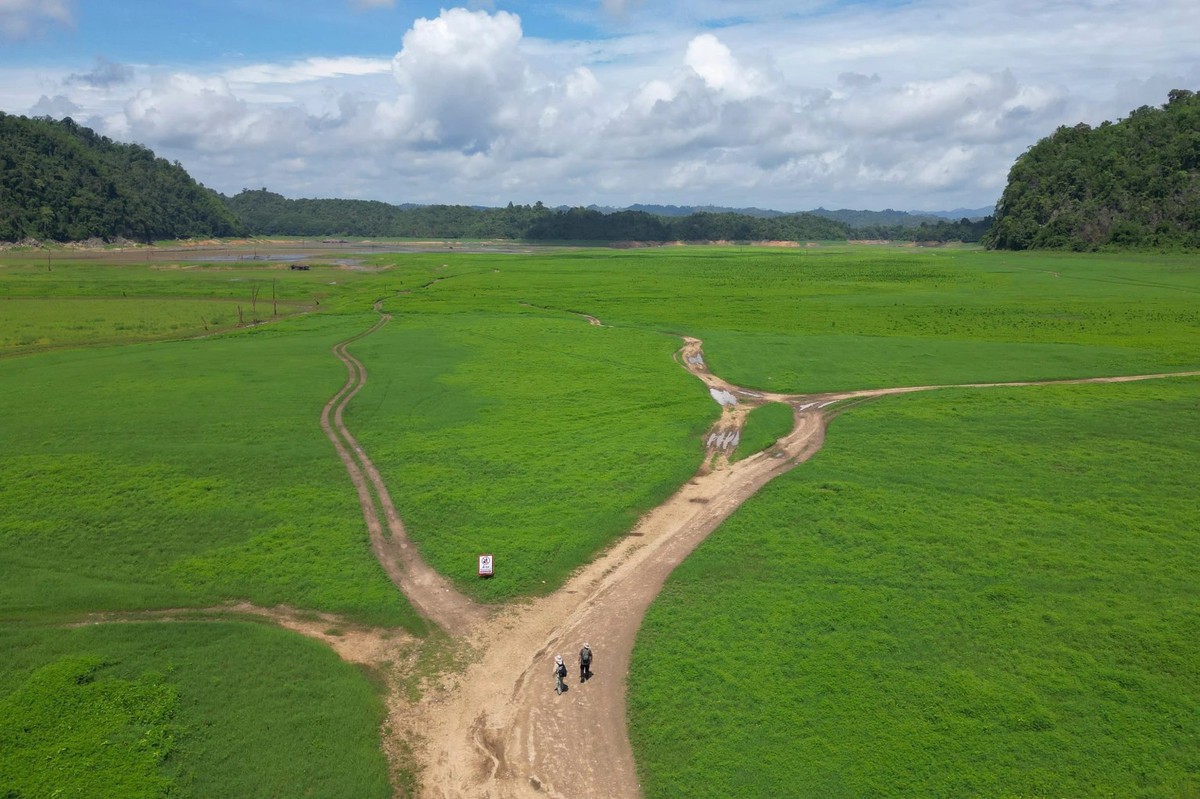
Nithe station, a relic of the infamous "death railway" from World War II, has reappeared from the depths of the Vajiralongkorn Dam reservoir in Thailand's Kanchanaburi province. The station emerged after the Thai Electricity Authority (EGAT) drained the reservoir for maintenance, revealing the historic site after decades underwater.
The receding water levels have created a rare opportunity for historians and researchers, who are now racing against time to explore the station and search for artifacts. The window for study is limited, as the dam's maintenance is expected to conclude in August, after which the monsoon season will likely refill the reservoir.
The Burma-Siam railway, stretching 415 kilometers between Thailand and Myanmar, was constructed between 1940 and 1943. It was built by approximately 60,000 Allied prisoners of war and hundreds of thousands of Asian laborers, known as romusha. The brutal conditions and immense suffering during its construction led to the tragic nickname "death railway," with an estimated 12,500 POWs and 75,000 laborers perishing.
Australian researcher Martyn Fryer, whose grandfather died during the railway's construction, visited Nithe station. He noted that previous visits were hampered by high water levels, preventing a full appreciation of the site's remaining infrastructure and layout. Fryer is using wartime aerial photographs and hand-drawn maps to help locate POW camps in the area.
Local residents have also flocked to witness the phenomenon. Mr. Andrew Snow, a researcher at the Thailand-Myanmar Railway Centre, explained that while the dry season usually exposes parts of Nithe station, this year's exceptionally low water levels and rapid recession have made research easier by preventing vegetation from regrowing. The site's emergence has drawn hundreds of Thai tourists eager to see this unique historical spectacle.
I have visited Nithe station three times before, but the water level was always too high for me to truly appreciate all the wonderful things this place has to offer, from the remaining infrastructure to the layout of the railway.
DistantNews Editorial
Originally published by Tuổi Trẻ in Vietnamese. Translated, summarized, and contextualized by our editorial team with added local perspective. Read our editorial standards.
More Stories



From Our Blog

What Gets Lost (and Found) When News Is Translated

The Critical Role of Diaspora Media in Global News

What Travellers Should Know About Countries with Restricted Press

A Digital Nomad's Guide to Following Local News

How the Same Story Looks Different in Different Countries
