


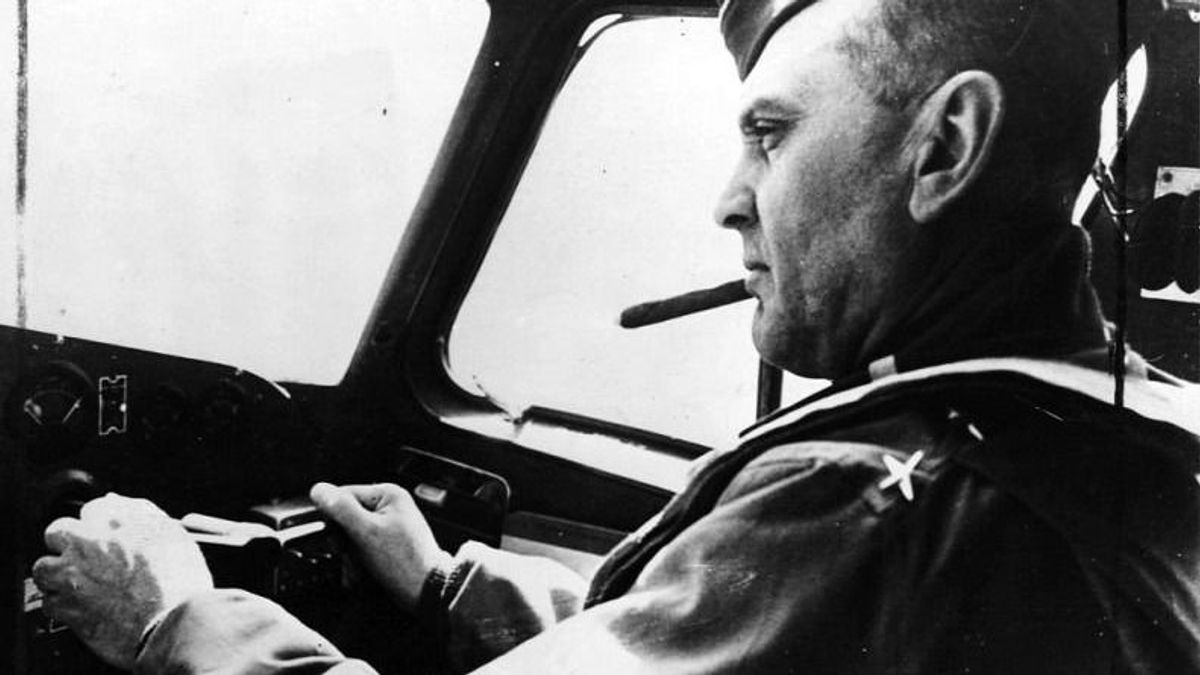
WWII Decision at Casablanca Conference Led to Bombing Campaign Over Hungary
Translated from Hungarian, summarized and contextualized by DistantNews.
At a glance
News
Sources not specified
Context piece
- The article details the strategic decisions made during World War II that led to Allied bombing campaigns over Hungary.
- A decision at the first Casablanca conference in 1943 set the stage for expanding the air war into Central Europe.
- The plan involved relocating the 15th Air Force to Southern Italy to target infrastructure and military sites in Hungary.
The fate of Hungary was sealed during the first Casablanca Conference in January 1943, where Allied leaders Franklin D. Roosevelt and Winston Churchill decided on comprehensive strategic bombing campaigns against targets in Central Europe, including Hungary. Following the successful occupation of North Africa and the subsequent invasion of Italy, the 15th Air Force was slated for relocation from North Africa to Southern Italy.
From this new base, the air war was to be extended into Central Europe. Roosevelt and Churchill approved the "Plane CBO," a plan for a significant development of Allied strategic bomber forces in Southern Italy. This plan mandated that by March 1944, these forces must be ready for operations against Central European targets. The Anglo-American allies had fully defeated Axis forces in North Africa by May 1943, paving the way for the Sicilian landings. Mussolini's fascist regime collapsed in July 1943, and Southern Italy came under Allied control. Extensive airbase construction began rapidly in the Bari and Foggia regions in the autumn of 1943.
Lieutenant General Ira C. Eaker, the newly appointed commander of the U.S. 15th Air Force, reported to his superiors in January 1944 that his air force had achieved the necessary combat readiness for continuous strategic missions, even before the deadline set in Plane CBO. By January 1944, the 15th Air Force, relocated to Southern Italy, comprised 21 strategic bomber groups and 7 fighter groups, totaling 1,500 four-engine strategic bombers and 800 fighter planes, awaiting their first combat orders.
Meanwhile, Hungarian Governor Horthy and Prime Minister Kállay were unaware that the Anglo-American allies, engaged in secret negotiations behind the scenes, had already treated the planned bombing campaign against Hungary as a foregone conclusion by the autumn of 1943. The issuance of specific combat orders depended solely on achieving full combat readiness and favorable meteorological conditions. The primary targets throughout the bombing offensive, from its inception until its conclusion in late March 1945, consistently included transportation infrastructure, particularly railway networks and stations, oil industry facilities, and war-related industrial plants and factories. The first American bombing raid was only prevented by bad weather on February 2, 1944, nearly a month and a half before the German occupation of Hungary.
DistantNews Editorial
Originally published by Magyar Nemzet in Hungarian. Translated, summarized, and contextualized by our editorial team with added local perspective. Read our editorial standards.
More Stories


From Our Blog

Countries Without a Free Press: What You Need to Know

What Press Freedom Means for the News You Read

What Gets Lost (and Found) When News Is Translated

The Critical Role of Diaspora Media in Global News

What Travellers Should Know About Countries with Restricted Press
