

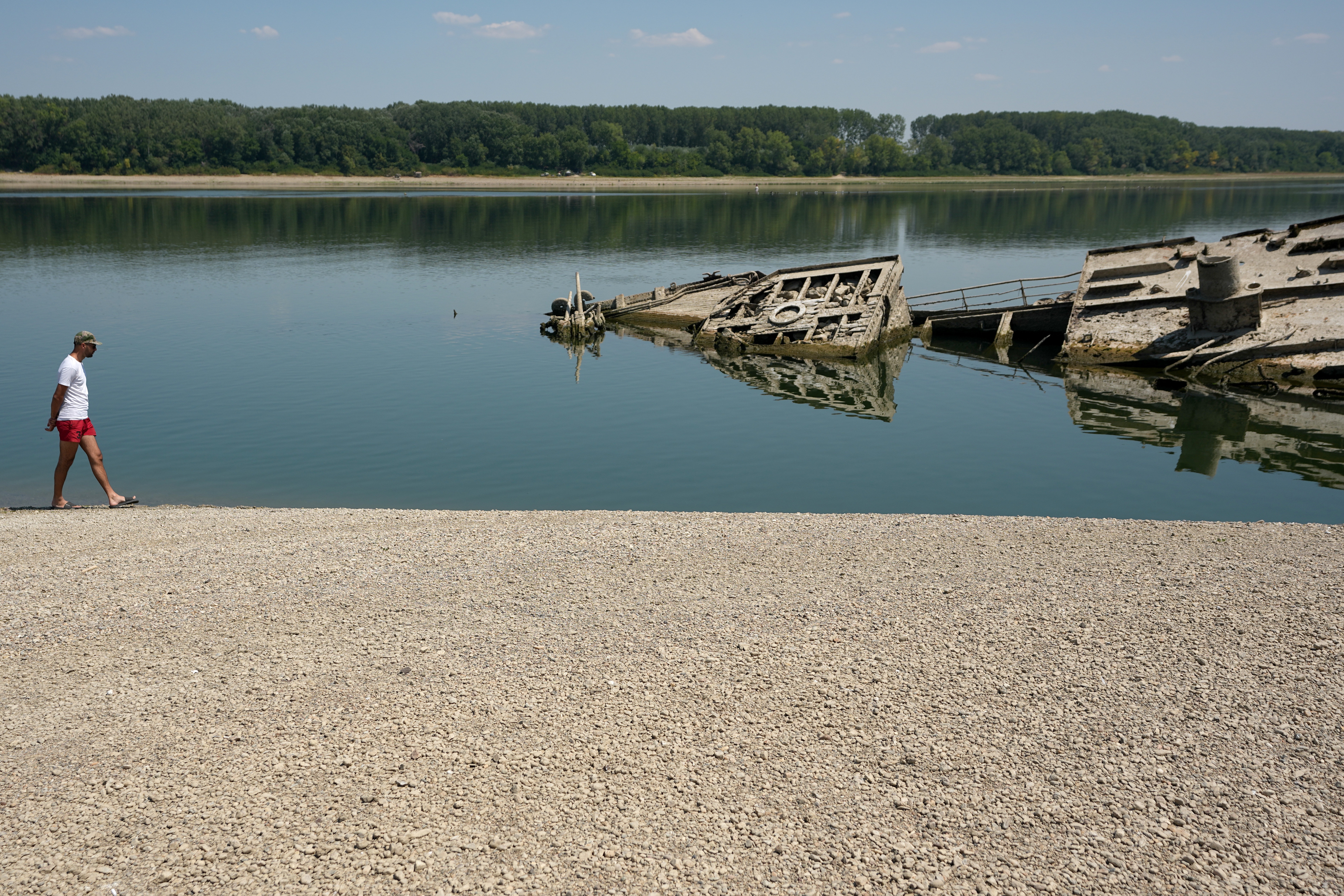

WWII Nazi Ships and Mammoth Bones Emerge as Danube River Dries Up
Translated from English, summarized and contextualized by DistantNews.
At a glance
News
From a news agency
Context piece
- Record low water levels on the Danube River, caused by drought, have exposed dozens of World War II German battleships and ancient mammoth remains.
- The low water levels are impacting power plant operations and forcing governments in Central and Eastern Europe to conserve electricity.
- The sunken warships, deliberately scuttled by Nazi Germany in 1944, pose a challenge due to explosives, though some have been partially removed over the years.
A severe drought has caused the Danube River, Europe's second-longest waterway, to recede to record low levels, revealing a startling collection of World War II German battleships and even the skeletal remains of a woolly mammoth.
Water levels on the Danube River, the second longest in Europe, have dropped so low because of drought that the hulks of dozens of World War II German battleships, and even the remains of an ancient woolly mammoth, are emerging into view.
Near the Serbian port of Prahovo, the rusty hulls and broken masts of dozens of Nazi German warships, deliberately sunk by their retreating forces in September 1944 as Soviet troops advanced, are now visible. Historians estimate up to 200 vessels were scuttled in the area to impede the Soviet advance. Some of these ships, potentially still laden with explosives, have remained submerged for decades, with attempts by Yugoslav authorities to remove them proving difficult.
The dramatic emergence of these wrecks is a stark visual reminder of the ongoing heat crisis affecting Central and Eastern Europe. The low water levels have pushed power plants to the brink of shutdown, prompting governments across the region to implement electricity conservation measures. The Danube's reduced navigability is also creating hazardous conditions for shipping traffic, with larger vessels unable to pass.
The Danube's record-low water levels have also forced power plants to the brink of shutting down, and governments across Central and Eastern Europe are taking steps to conserve electricity.
This is not the first time the Danube's drought-induced low levels have brought these historical relics to light. Similar phenomena occurred in 2024 and 2022, when sunken Nazi ships became visible. The Serbian government, with European Union support, has long sought solutions for the submerged fleet, but the presence of explosives has complicated removal efforts.
The ships, some still laden with weapons, belonged to Nazi Germany's Black Sea fleet that the Germans deliberately sank as they retreated from Romania and as Soviet forces advanced deeper into Europe near the end of the war.
The exposed warships and mammoth bones offer a curious, albeit somber, distraction from the summer heat, drawing public interest. However, accessing the wrecks remains challenging for many, despite their proximity to the riverbanks.
Historians say up to 200 German warships were scuttled in September 1944 near Prahovo in the Danube gorge as they came under Soviet fire.
DistantNews Editorial
Originally published by CBS News in English. Translated, summarized, and contextualized by our editorial team with added local perspective. Read our editorial standards.
More Stories



From Our Blog

How the Same Story Looks Different in Different Countries

What Gets Lost (and Found) When News Is Translated

The Critical Role of Diaspora Media in Global News

What Travellers Should Know About Countries with Restricted Press

A Digital Nomad's Guide to Following Local News
