


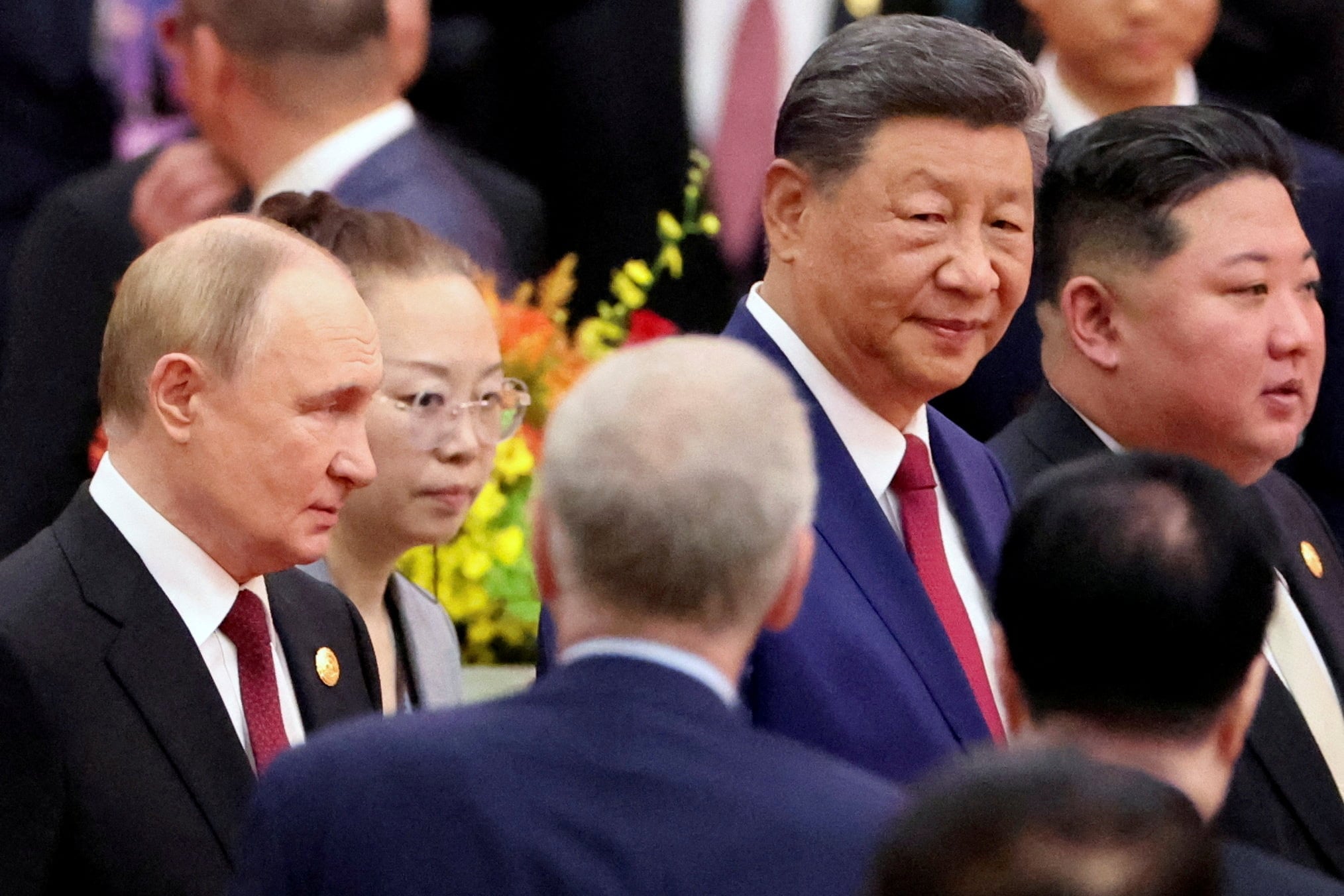
Xi Jinping calls for frequent exchanges with North Korea, highlighting strategic communication ahead of visit
Translated from Korean, summarized and contextualized by DistantNews.
At a glance
News
Sources not specified
New plan
- Chinese President Xi Jinping emphasized strategic communication with North Korea ahead of his state visit, calling for frequent exchanges like relatives.
- Xi contributed an article to North Korea's Rodong Sinmun, advocating for strategic cooperation and a UN-centered international order while rejecting U.S. hegemony.
- The visit, Xi's first to North Korea in seven years, aims to strengthen bilateral ties and jointly navigate a multipolar world.
Chinese President Xi Jinping is set to make his first state visit to North Korea in seven years, signaling a strategic deepening of ties between the two nations. Ahead of his arrival, Xi penned an article for the Rodong Sinmun, the official newspaper of the Workers' Party of Korea, highlighting the importance of frequent exchanges and robust strategic communication.
Xi's piece underscored a commitment to strengthening bilateral cooperation and jointly navigating a multipolar international landscape. This approach explicitly rejects what he termed the "hegemonic system" centered around the United States. The visit is framed as an opportunity to reinforce the traditional friendship between China and North Korea and to align on key international issues, including the promotion of a UN-centered global order.
The emphasis on strategic communication and cooperation suggests a coordinated effort to address regional security concerns and to bolster economic ties. For North Korea, the visit offers a significant diplomatic engagement with its most important ally, potentially providing a boost to its international standing. For China, it reaffirms its influence in the region and its role as a key player in challenging the existing global power structure.
DistantNews Editorial
Originally published by Chosun Ilbo in Korean. Translated, summarized, and contextualized by our editorial team with added local perspective. Read our editorial standards.
More Stories


From Our Blog

What Gets Lost (and Found) When News Is Translated

The Critical Role of Diaspora Media in Global News

What Travellers Should Know About Countries with Restricted Press

A Digital Nomad's Guide to Following Local News

How the Same Story Looks Different in Different Countries
