


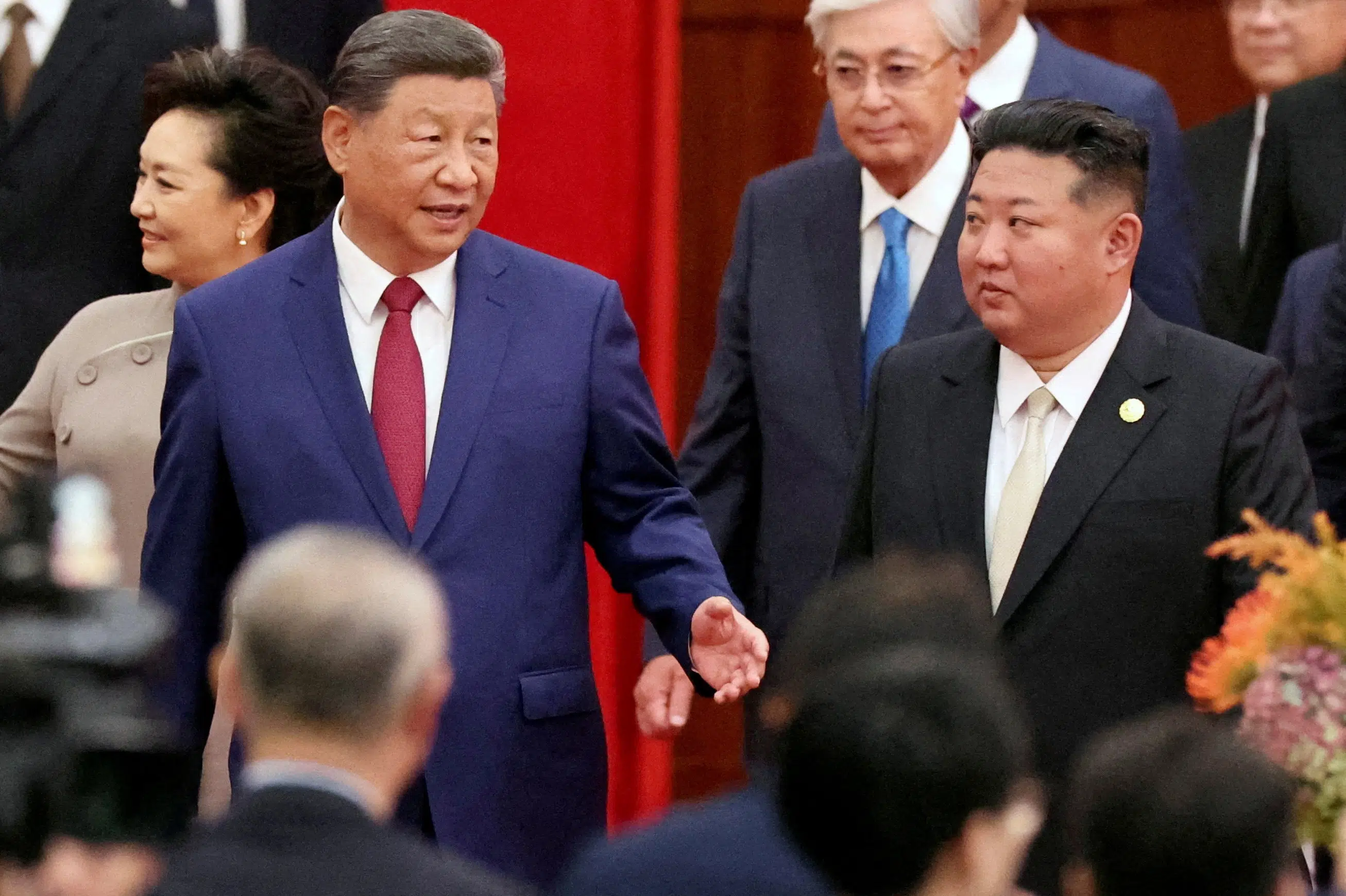
Xi vows to strengthen China-North Korea ties, oppose hegemony ahead of visit
Translated from Danish, summarized and contextualized by DistantNews.
At a glance
News
From a news agency
New plan
- China's President Xi Jinping stated an unwavering policy to strengthen ties with North Korea and cooperate against hegemony.
- Xi's remarks were published in North Korea's Rodong Sinmun ahead of his two-day visit, his first in seven years.
- The visit aims to bolster exchanges and jointly oppose what Xi called hegemonic and authoritarian principles threatening regional stability.
Chinese President Xi Jinping declared an "unshakeable policy" to strengthen ties with North Korea and jointly oppose "hegemony, authoritarian principles and all attempts and conspiracies to revive militarism." His remarks were published Monday in the state-run North Korean newspaper Rodong Sinmun, ahead of his two-day visit to Pyongyang, his first in seven years.
Xi stated that the two neighbors will enhance "exchanges" in all areas to protect what he termed a fair and just global order. The term "hegemony" typically refers to a superpower dominating the world.
This visit comes as China has reportedly worked to strengthen its relationship with North Korea, particularly after Pyongyang developed closer ties with Russia. In September, Xi invited both Kim Jong Un and Russian President Vladimir Putin to a military parade in Beijing. Following that event, North Korea reopened several border crossings with China.
China serves as a crucial source of diplomatic and political support for North Korea, one of the world's most isolated nations, which is subject to extensive international sanctions. Xi's previous visit to North Korea in 2019 marked the first time a Chinese leader had visited the country since 2005.
We must oppose hegemony, authoritarian principles and all attempts and conspiracies to revive militarism, which endanger regional security and stability.
DistantNews Editorial
Originally published by Berlingske in Danish. Translated, summarized, and contextualized by our editorial team with added local perspective. Read our editorial standards.
More Stories



From Our Blog

What Gets Lost (and Found) When News Is Translated

The Critical Role of Diaspora Media in Global News

What Travellers Should Know About Countries with Restricted Press

A Digital Nomad's Guide to Following Local News

How the Same Story Looks Different in Different Countries
