


'You're not listening to me'; or yes, people can attend to two conversations at once
Translated from Spanish, summarized and contextualized by DistantNews.
At a glance
News
Documents & data
Context piece
- Scientists have discovered that the human brain can process two conversations simultaneously for short periods, challenging the traditional view of single-source focus.
- Electroencephalograms revealed a 'neuronal overlap' allowing individuals to attend to two sound sources at once.
- This finding could aid in developing smarter hearing aids and understanding why some people struggle in noisy environments.
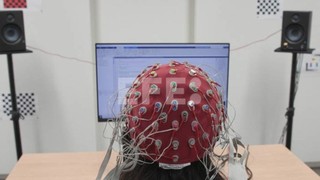
The long-held belief that humans can only focus on one sound source at a time has been challenged by new research from Trinity College Dublin. Scientists have now demonstrated, using electroencephalograms (EEGs), that the human brain is capable of processing two conversations simultaneously for brief periods, a phenomenon they term 'neuronal overlap'. This discovery suggests a greater capacity for auditory multitasking than previously understood.
The research team measured participants' brain activity as they listened to two people speaking concurrently amidst background noise. Participants were instructed to shift their attention between the speakers. The EEGs revealed that the brain begins to engage with the new speaker before completely disengaging from the previous one. This creates a short window where both conversations are represented in the brain, evidenced by a unique neural signal observed during the process.
This ability for 'dual tracking,' which appears to vary among individuals, could provide some people with a natural advantage in situations requiring rapid attention shifts. The findings have significant practical implications, potentially leading to the development of more sophisticated auditory technologies. Understanding how the brain naturally distinguishes between competing voices could help create smarter hearing aids that not only allow users to focus on a single speaker but also to more naturally process a broader sound environment.
Furthermore, this research may shed light on why certain individuals, including older adults and those with hearing impairments, find crowded places like restaurants, noisy workplaces, or family gatherings particularly exhausting. The brain's effort to manage multiple auditory streams in such environments could be a key factor in this fatigue.
No me estás escuchando
DistantNews Editorial
Originally published by El Deber in Spanish. Translated, summarized, and contextualized by our editorial team with added local perspective. Read our editorial standards.
More Stories



From Our Blog

What Gets Lost (and Found) When News Is Translated

The Critical Role of Diaspora Media in Global News

What Travellers Should Know About Countries with Restricted Press

A Digital Nomad's Guide to Following Local News

How the Same Story Looks Different in Different Countries
