


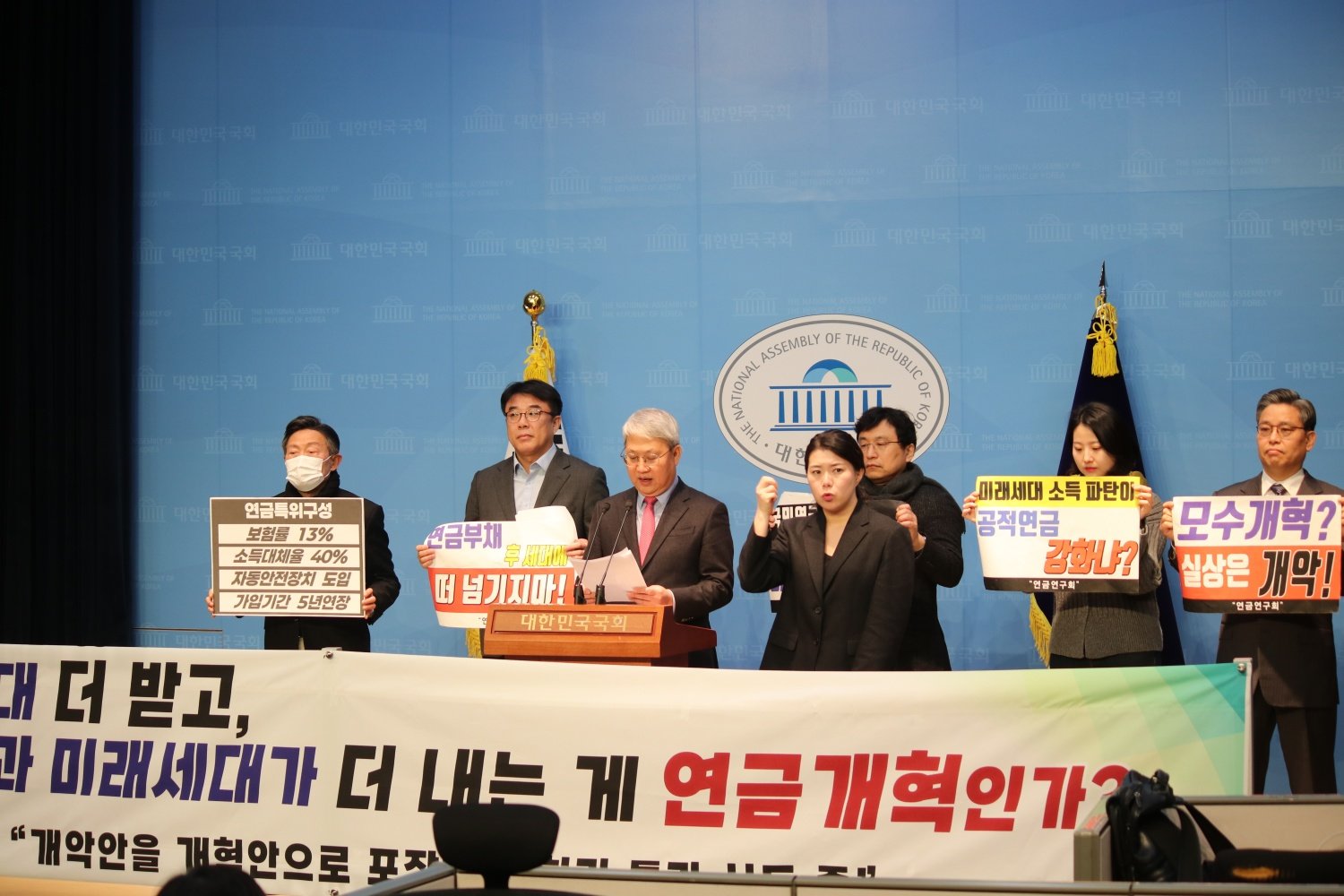
Young South Koreans accuse basic pension reform of shifting costs onto future generations
Translated from Korean and summarized by DistantNews. Read the original for the full story.
At a glance
News
Named sources
New plan
- South Korean youth representatives criticized the government’s proposed 2027 basic pension reforms, saying they abandon structural changes while passing costs to future generations.
- The plan would keep the income-based eligibility threshold at the bottom 70%, provide an additional 30,000 won to the lowest-income 30%, reduce the married-couple deduction, and expand eligibility to some occupational pension recipients.
- The Future Generations Network said the changes would increase next year’s budget by 2.6 trillion won.
South Korean young people have reacted angrily to the government’s proposed reform of the basic pension, accusing it of shifting the cost onto future generations.
The Pension Research Association’s Future Generations Network issued an emergency statement on September 1. It said the government had abandoned structural reform aimed at better supporting the poorest older people while retaining the financial burden for younger generations.
It is passing only the cost on to the next generation while giving up structural reform to properly help the poorest older people.
The group said the original reform discussion began with a proposal to revise what it called an unrealistic 70% eligibility standard. Savings from a narrower and more rational group of recipients could then have been used to provide stronger protection for older people in the greatest need.
The starting point of this reform discussion was to correct the unrealistic 70% standard, rationally adjust the recipients, and use the savings to protect truly vulnerable older people more strongly.
The Health and Welfare Ministry’s 2027 plan would instead keep the income-based eligibility threshold at the bottom 70%. It would add 30,000 won for people in the lowest-income 30%, reduce the deduction applied to married couples, and newly include some recipients of occupational pensions.
The network said these measures would increase next year’s budget by 2.6 trillion won. It argued that the final plan had removed the central issue of reform while expanding payments and eligibility.
But in the government’s final plan, this core point has disappeared.
About this summary
Originally published by Dong-A Ilbo in Korean. Translated, summarized, and contextualized automatically by DistantNews, with a note on how the source frames the story. Not individually reviewed before publishing. How this works.
More Stories


From Our Blog

What Gets Lost (and Found) When News Is Translated

The Critical Role of Diaspora Media in Global News

What Travellers Should Know About Countries with Restricted Press

A Digital Nomad's Guide to Following Local News

How the Same Story Looks Different in Different Countries
